Introduction
Glass surrounds daily life, yet few people notice it. The Glass Industry supports buildings, solar panels, packaging, and fiber networks across modern society.However, glass production requires extreme heat and continuous furnaces, which creates high energy demand and rising emissions.
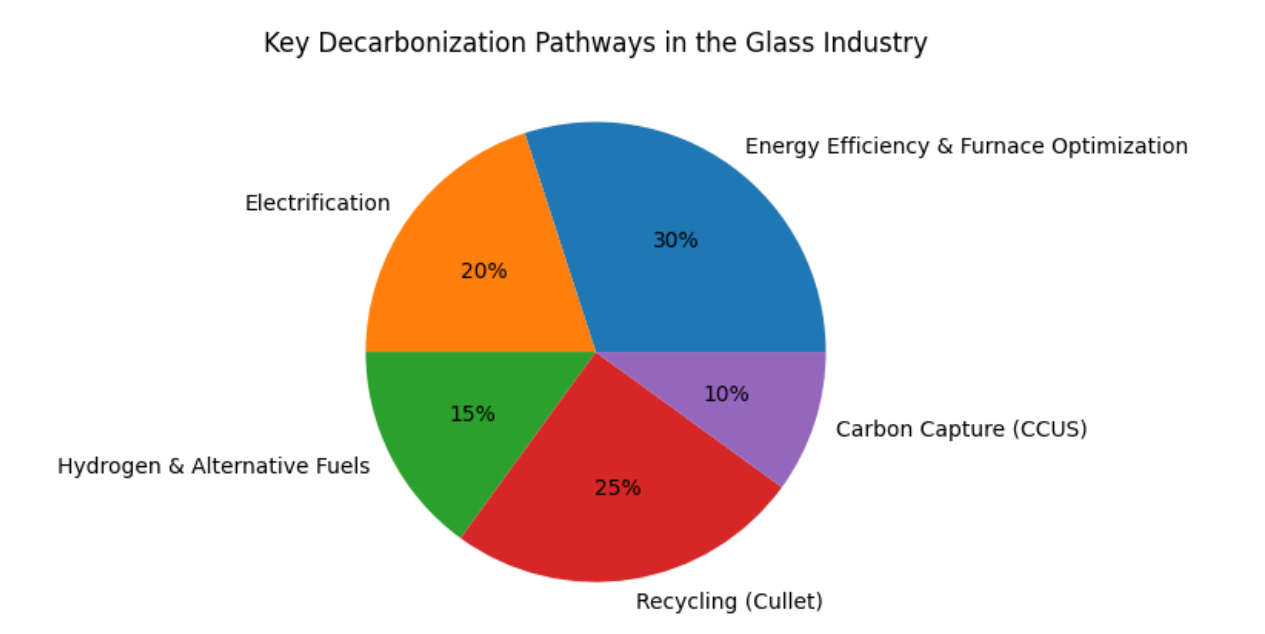
In this article, you will learn how the Glass Industry is moving toward low-carbon production, circular materials, and responsible global standards.
Why the Glass Industry Is Difficult to Decarbonize
High-Temperature Melting and Energy Intensity in Glass Manufacturing
Glass manufacturing begins with raw materials such as silica sand, soda ash, and limestone. These materials must be melted into liquid glass before forming into bottles, flat panels, or specialty products. The melting stage occurs at extremely high temperatures, often between 1500°C and 1600°C.
This process requires enormous amounts of energy. In most glass plants, the melting stage alone accounts for 70–80% of total production energy consumption. Because furnaces must operate continuously, energy demand remains constant around the clock.
The table below illustrates the typical energy distribution in glass production.
Production Stage | Temperature Range | Energy Share |
Batching | 100–400°C | Low |
Melting | 1500–1600°C | 70–80% |
Forming | 900–1100°C | Moderate |
Finishing | <600°C | Low |
This thermal requirement makes the Glass Industry difficult to decarbonize. Many low-carbon energy sources struggle to deliver the same continuous high-temperature heat required by industrial furnaces.
Major Sources of Carbon Emissions in the Glass Industry Value Chain
Carbon emissions in the Glass Industry arise from several stages of production. These emissions generally follow the standard greenhouse gas classification framework.
● Scope 1 emissions originate from fuel burned in furnaces.
● Scope 2 emissions come from purchased electricity used in processing equipment.
● Scope 3 emissions occur in upstream supply chains, including raw material mining and transport.
For most factories, furnace fuel combustion remains the largest emission source. Natural gas combustion generates large quantities of CO₂ while maintaining the high temperatures required for melting.
The complexity of these emission sources means that decarbonization strategies must address the entire production chain, not only the furnace itself.
Structural Constraints in the Glass Industry’s Production Infrastructure
Glass furnaces represent long-term industrial infrastructure. Once constructed, they typically operate for 15–20 years without shutdown. Cooling a furnace prematurely can damage internal refractory materials and reduce operational lifespan.
The cost of building a new furnace can reach tens of millions of dollars depending on plant capacity. Because of these costs, manufacturers rarely replace furnaces outside scheduled rebuild cycles.
This long lifecycle slows technology adoption in the Glass Industry. Even when new low-carbon technologies exist, companies must wait until the next furnace rebuild to integrate them.
Growing Global Demand vs. Sustainability Pressure
Demand for glass continues to expand. Urban construction requires architectural glazing, while electric vehicles and smart electronics use advanced glass materials. Renewable energy infrastructure also depends heavily on specialized glass products.
At the same time, sustainability expectations increase across global supply chains. Beverage brands, automotive manufacturers, and construction firms now evaluate suppliers based on environmental performance.
This combination of rising demand and sustainability pressure forces the Glass Industry to balance production growth with emissions reduction.
Key Technologies Driving Decarbonization in the Glass Industry
Energy Efficiency Improvements in Modern Glass Furnaces
Energy efficiency remains the most immediate decarbonization strategy. Many manufacturers have already improved furnace insulation, burner systems, and process controls.
Modern glass furnaces use advanced monitoring technologies that optimize combustion and reduce heat losses. Waste heat recovery systems also capture excess heat from exhaust gases and reuse it within the production process.
Oxy-fuel combustion represents another major improvement. Instead of burning fuel with air, furnaces burn fuel with pure oxygen. This approach reduces nitrogen dilution and increases flame temperature efficiency.
Industrial studies suggest that oxy-fuel systems can reduce furnace energy consumption by 10–20% depending on plant configuration.
Electrification of Glass Melting Processes
Electrification offers a promising route toward low-carbon glass production. Electric furnaces generate heat using electrical resistance rather than direct combustion.
Key advantages include:
● lower direct emissions
● higher thermal efficiency
● compatibility with renewable electricity
Electric furnaces are already used in specialty glass production and smaller manufacturing facilities. However, large container and flat glass plants still rely on hybrid systems combining electric boosting with conventional fuel combustion.
Scaling electric melting technologies for large industrial furnaces remains a key research focus for the Glass Industry.
Hydrogen and Alternative Low-Carbon Fuels
Hydrogen is increasingly considered a viable replacement for fossil fuels in high-temperature industrial processes. When burned, hydrogen produces heat and water vapor instead of carbon dioxide.
Several pilot projects have demonstrated hydrogen-fueled glass furnaces. These trials show that hydrogen combustion can reach the necessary temperatures for glass melting.
However, hydrogen introduces new technical challenges. Higher flame temperatures may affect furnace materials, and increased water vapor in the combustion atmosphere can influence glass quality.
Biofuels and biogas offer another transitional solution. Because these fuels originate from biological sources, they can reduce lifecycle carbon emissions compared with fossil fuels.
Carbon Capture, Utilization, and Storage (CCUS)
Carbon capture technologies remove CO₂ directly from furnace exhaust streams. Captured carbon can then be stored underground or reused in other industrial processes.
In controlled conditions, CCUS systems can capture over 90% of CO₂ emissions from industrial exhaust gases. For industries that require combustion at extremely high temperatures, carbon capture may become an essential long-term decarbonization strategy.
Although current systems remain expensive, ongoing research continues to improve efficiency and reduce operational costs.

Circular Economy Strategies in the Glass Industry
Increasing Recycled Glass (Cullet) Usage
Recycling provides one of the most effective emission reduction strategies in the Glass Industry. Recycled glass, commonly called cullet, melts at lower temperatures than raw mineral materials.
Higher cullet content therefore reduces both energy consumption and carbon emissions. Industry studies estimate that each 1% increase in cullet content can reduce furnace energy consumption by about 0.3%.
Cullet Content | Energy Demand | Emission Impact |
20% | Moderate reduction | Moderate |
50% | Significant reduction | Significant |
80% | Large reduction | Very high |
Higher recycling rates also reduce demand for virgin raw materials such as silica sand and limestone.
Lifecycle Thinking in Glass Manufacturing
Modern sustainability strategies analyze the entire lifecycle of glass products. Lifecycle assessments measure environmental impacts from raw material extraction to product disposal.
This lifecycle approach includes:
● mining and raw material processing
● manufacturing energy consumption
● transportation emissions
● recycling and reuse potential
Lifecycle assessments help manufacturers identify emission reduction opportunities across the full value chain.
Waste Reduction and Refractory Material Recycling
Glass furnaces rely on refractory materials that withstand extreme temperatures. Over time these materials degrade and must be replaced during furnace rebuilds.
Instead of sending these materials to landfills, some manufacturers now recycle refractory components. Recovered materials can be reused in industrial processes or converted into secondary raw materials.
Circular Supply Chains and Secondary Raw Materials
Circular supply chains connect recycling facilities, manufacturers, and product designers. Glass containers collected after use can be processed and returned to production as cullet.
Closed-loop recycling systems reduce landfill waste while supporting sustainable production in the Glass Industry.
Carbon Pricing and Policy Mechanisms Shaping the Glass Industry
Carbon Taxes and Their Impact on Glass Manufacturing
Many governments now impose carbon taxes on industrial emissions. These taxes place a direct financial cost on greenhouse gas emissions.
For energy-intensive industries, carbon pricing significantly affects operational costs. Glass manufacturers must therefore reduce emissions to remain competitive.
Investments in efficient furnaces, renewable energy integration, and recycled materials help companies lower carbon tax exposure.
Carbon Trading Systems in Industrial Emissions Markets
Carbon trading programs operate in several regions worldwide. Companies receive emission allowances and can trade unused permits within regulated markets.
Factories that reduce emissions below their allowance levels can sell excess permits. This market-based mechanism encourages companies to adopt cleaner production technologies.
Using Activity-Based Costing (ABC) for Carbon Accounting
Activity-based costing improves cost transparency within complex manufacturing operations. Instead of distributing costs evenly, ABC assigns costs to specific production activities.
In the Glass Industry, this method allows companies to calculate carbon costs associated with individual processes such as melting, forming, or finishing.
Accurate carbon accounting helps managers identify the most effective areas for emission reduction investment.
Applying the Theory of Constraints (TOC) in Low-Carbon Production
The theory of constraints focuses on identifying production bottlenecks. When applied to sustainable manufacturing, it helps companies prioritize improvements that generate both environmental and operational benefits.
By focusing on critical production stages such as furnace efficiency, manufacturers can reduce emissions while improving overall throughput.
Global Low-Carbon Standards and Responsible Glass Certification
The Rise of Responsible Glass Initiatives
Industry-wide sustainability programs are emerging to standardize responsible production practices. One example is the Responsible Glass initiative, which promotes transparent sourcing, worker safety, and emissions reduction across the supply chain.
Such initiatives bring together manufacturers, suppliers, and environmental organizations to create shared sustainability standards.
Environmental Product Declarations (EPDs) in the Glass Industry
Environmental Product Declarations provide verified lifecycle environmental data for building materials. Architects and developers increasingly rely on EPDs when selecting materials for sustainable construction projects.
Glass manufacturers publishing EPDs demonstrate transparency and environmental accountability.
International Climate Agreements Driving Industry Transformation
Global climate agreements have accelerated decarbonization across energy-intensive industries. National governments now translate these agreements into regulatory frameworks that require emission reporting and reduction targets.
These policies influence investment decisions throughout the Glass Industry.
Supply Chain Transparency and ESG Compliance
Environmental, social, and governance standards increasingly influence supplier selection. Large corporations expect suppliers to report emissions, improve energy efficiency, and adopt responsible sourcing practices.
Manufacturers that align with ESG requirements gain stronger credibility in international markets.
Economic Opportunities in a Low-Carbon Glass Industry
Competitive Advantages of Early Decarbonization
Companies that adopt sustainable manufacturing practices early often gain competitive advantages. Many customers now prioritize suppliers that offer low-carbon materials.
Low-carbon glass products already appear in building construction, automotive glazing, and sustainable packaging.
New Product Lines and Low-Carbon Glass Innovations
Manufacturers continue developing new glass products with lower embodied carbon. These innovations combine renewable energy sources, recycled materials, and improved furnace technologies.
Such products allow manufacturers to differentiate themselves in sustainability-driven markets.
Cost Savings from Energy Efficiency and Recycling
Energy efficiency improvements generate long-term operational savings. Reduced fuel consumption lowers both production costs and carbon emissions.
Recycling programs also reduce raw material costs while improving sustainability performance.
Industry Collaboration and Investment
Decarbonizing the Glass Industry requires collaboration across the entire industrial ecosystem. Equipment suppliers, research institutes, energy providers, and manufacturers must work together to develop scalable solutions.
Joint research programs accelerate technological innovation while reducing development risks.
Future Outlook: The Path to Net-Zero in the Glass Industry
Development of Carbon-Neutral Glass Furnaces
Experts widely agree that commercial carbon-neutral furnace technologies must emerge before 2030 to meet global net-zero targets by 2050.
Research facilities and pilot plants continue testing hybrid furnaces that combine hydrogen combustion, electric boosting, and renewable energy.
Renewable Energy Integration in Glass Production
Renewable electricity will increasingly power industrial processes. Wind and solar generation can supply electricity for electric furnaces or hydrogen production.
Energy storage systems will play an important role in balancing fluctuating renewable energy supply.
Cross-Industry Collaboration for Decarbonization
Industrial decarbonization requires coordinated collaboration between governments, manufacturers, research organizations, and technology developers.
Shared innovation platforms allow companies to test new technologies while spreading financial risk.
Building a Sustainable Global Glass Industry
The future Glass Industry must balance environmental responsibility with economic competitiveness. Manufacturers that successfully integrate low-carbon technologies, circular materials, and transparent sustainability standards will shape the next generation of glass production.
Conclusion
The Glass Industry is entering a critical low-carbon transition. High-temperature production and long furnace lifecycles create challenges, yet technologies such as efficient furnaces, electrification, hydrogen fuel, carbon capture, and expanded recycling are steadily reducing emissions.
As sustainability standards strengthen, companies that adopt responsible production will gain long-term advantages. REACH BUILDING contributes to this shift with durable, high-performance glass solutions that improve building efficiency, support sustainable construction goals, and deliver reliable value for modern projects.
FAQ
Q: Why must the Glass Industry reduce carbon emissions?
A: The Glass Industry uses high-temperature furnaces and fossil fuels. Reducing emissions helps meet climate rules and sustainability targets.
Q: How can the Glass Industry lower production emissions?
A: The Glass Industry can adopt electric furnaces, hydrogen fuel, carbon capture, and higher recycled glass use.
Q: What role does recycling play in the Glass Industry?
A: Recycling lowers melting temperature and energy demand. It helps the Glass Industry cut emissions and support circular production.
Q: What are low-carbon standards in the Glass Industry?
A: These standards guide the Glass Industry to measure carbon output, improve efficiency, and verify responsible production.
Q: Why is decarbonizing the Glass Industry challenging?
A: The Glass Industry requires continuous furnaces above 1500°C, making energy replacement and emission reduction complex.
Q: What technologies support a low-carbon Glass Industry?
A: Key solutions include electrification, hydrogen fuels, advanced furnaces, carbon capture, and digital efficiency systems.