Introduction
Remodeling your bathroom? The shower enclosure decision matters more than most people expect. Frameless Shower Glass looks sleek and modern, while semi-frameless offers structure and cost balance.
Which one fits your layout and budget? In this article, you will learn the real differences in design, cost, and performance so you can choose with confidence.
Frameless vs. Semi-Frameless Shower Glass: The Decision Framework (Start Here)
The best way to choose is not by asking which looks better. It is by asking which works better for your remodel tier, layout condition, and long-term plan.
When Frameless Shower Glass Makes Sense
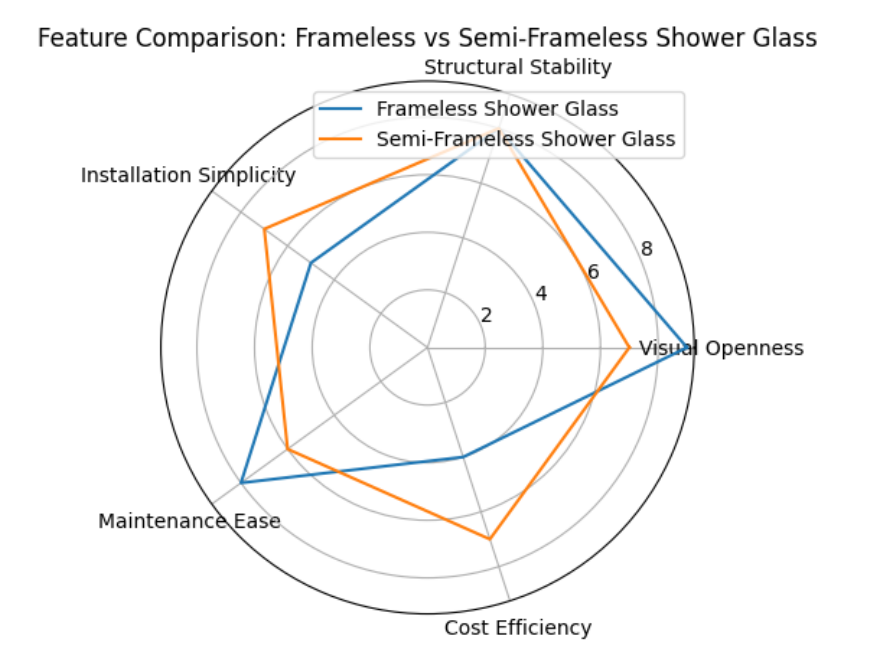
If your remodel focuses on openness, visual continuity, and a high-end finish, Frameless Shower Glass aligns naturally. It removes perimeter metal framing and allows tile, stone slabs, or feature walls to become the visual centerpiece. In smaller bathrooms, this lack of framing reduces visual interruption, which makes the room feel larger and brighter.
Frameless systems typically use 3/8" to 1/2" tempered glass. That thickness allows the glass to stand independently using heavy-duty hinges and clamps. The result feels architectural rather than accessory-driven. In luxury remodels, especially those using large-format tile or custom niches, frameless glass enhances the design instead of competing with it.
When Semi-Frameless Is the Smarter Fit
Semi-frameless shower glass blends structure and modern aesthetics. It retains partial metal framing around fixed panels while keeping the door panel largely exposed. This added framing increases structural tolerance and simplifies installation when walls are slightly uneven.
This option works particularly well in guest bathrooms, rental upgrades, or mid-range remodels where cost control matters. It offers a cleaner look than fully framed systems while maintaining more alignment stability than fully frameless builds. If your goal is contemporary style without entering premium pricing territory, semi-frameless often delivers balanced value.
Budget Drivers You Should Understand
Cost differences between the two systems stem from material weight, hardware strength, and installation precision. Frameless builds use thicker glass and heavy-duty hinge systems, which increases both fabrication and labor complexity. Semi-frameless units rely on lighter glass supported by framing, which reduces overall material and structural demands.
Below is a simplified comparison:
Factor | Frameless Shower Glass | Semi-Frameless |
Glass Thickness | 3/8"–1/2" | 1/4"–3/8" |
Hardware Strength | Heavy-duty hinges | Standard-supported hinges |
Installation Precision | High | Moderate |
Average Cost Range* | $900–$2,500+ | $500–$1,500 |
*Regional variation applies
Align enclosure investment with overall remodel tier to maintain budget balance.
Layout Compatibility and Space Constraints
Before selecting either system, assess your layout carefully. Door swing clearance, showerhead direction, curb height, and bathroom traffic flow all matter. Pivot doors pair naturally with frameless builds, while sliding bypass systems are often more stable in semi-frameless formats due to track support.
In curbless designs, water control becomes critical. Frameless panels depend heavily on slope accuracy and precision sealing. If splash control is a primary concern, especially in family bathrooms, semi-frameless framing can offer slightly more containment tolerance.
Wall and Tile Readiness
Heavy glass requires structural anchoring into studs or blocking behind tile. Frameless installations place direct stress on hinge points, so reinforcement behind finished walls is essential. Semi-frameless systems distribute weight through partial framing, which can compensate for minor wall irregularities.
If your tile work is not perfectly square or your walls deviate from plumb, frameless installations may require corrective preparation before measurement. This adds time and sometimes cost to the project.

Design & Visual Impact: What You Live With Daily
How Frameless Shower Glass Shapes the Room
The strongest argument for Frameless Shower Glass is visual flow. Without framing lines breaking up the space, tile veining, mosaic accents, and floating benches remain fully visible. Light travels across the room more freely, especially in bathrooms without windows.
In high-end remodels, frameless glass feels intentional and permanent. It does not draw attention to itself. Instead, it amplifies surrounding finishes. For homeowners investing in designer tile or statement fixtures, frameless systems protect that visual investment.
The Subtle Influence of Semi-Frameless Framing
Semi-frameless glass introduces slim metal borders that outline the structure. This can add geometric definition, particularly in industrial or transitional designs. Matte black framing, for example, complements modern hardware finishes and creates contrast against light tile.
While not as visually open as frameless glass, semi-frameless still feels significantly lighter than fully framed enclosures. It maintains modern appeal without eliminating structural reinforcement.
Glass Types That Shift the Aesthetic
Glass selection can dramatically alter the final look regardless of framing style.
Glass Option | Effect on Space | Best Use Case |
Clear | Maximum openness | Small bathrooms |
Low-Iron | Ultra-clarity | Luxury installs |
Frosted | Added privacy | Shared bathrooms |
Textured | Softens interior view | Transitional styles |
Low-iron glass removes the slight green tint found in standard glass, enhancing clarity in high-end designs. Frosted panels maintain brightness while limiting visibility, which can be valuable in shared spaces.
Cost, Resale, and Long-Term Value
Frameless enclosures often signal higher remodel quality to potential buyers. Real estate professionals frequently associate frameless glass with luxury-tier renovations. This perception can enhance buyer appeal and resale positioning.
Semi-frameless systems still elevate bathroom design but may not communicate the same premium tier. However, in rental properties or secondary bathrooms, allocating budget strategically often produces better overall ROI than concentrating spending in one area.
Choosing between the two should reflect your long-term ownership plan. If you expect to sell soon in a competitive market, frameless may strengthen perception. If you plan long-term occupancy, comfort and structural practicality may matter more.
Performance in Daily Use
Stability and Glass Feel
Frameless panels feel solid due to thickness and weight. That rigidity contributes to durability and high-end perception. Semi-frameless panels feel lighter but rely on structural framing for support.
Both use tempered safety glass designed to crumble safely upon impact. Longevity largely depends on hardware quality and installation precision rather than framing style alone.
Alignment and Long-Term Integrity
Heavy glass doors require high-quality hinges. Poor hardware can cause sagging over time. Semi-frameless framing distributes load more evenly, which can reduce hinge strain.
Routine inspection of hinge screws and sweeps helps maintain performance regardless of style.
Leakage Control
Water containment depends more on slope design and sealing strategy than framing type. Frameless builds use minimal barriers and rely on vinyl sweeps and silicone seams. Semi-frameless systems incorporate channels that offer additional splash tolerance.Improper floor slope causes leakage regardless of enclosure type.
Installation Reality
Measurement accuracy is critical for both systems. Frameless installations often require custom templating to ensure precise alignment. Minor miscalculations create visible gaps or operational issues.
Professional installation significantly reduces risk, especially for frameless systems where hinge placement directly affects glass integrity. Semi-frameless kits sometimes allow experienced DIY installation, but professional fitting improves durability and seal quality.
Cleaning and Maintenance
Frameless glass is often easier to maintain because it eliminates tracks and corners where buildup accumulates. A simple squeegee routine after each shower prevents mineral spotting. Semi-frameless systems require occasional cleaning around metal channels to prevent residue accumulation.
Hard water conditions increase maintenance demands for both styles. Hydrophobic coatings can reduce spotting and shorten cleaning time. Non-abrasive cleaners preserve protective finishes and prevent scratching.
Customization & Finish Decisions
Hardware finish selection should coordinate with faucets, lighting, and cabinet pulls. Matte black creates contrast, chrome reflects light, brushed nickel provides neutrality, and satin brass adds warmth.
Door configuration must also align with space constraints. Pivot doors require swing clearance, while sliding doors suit narrow layouts. Neo-angle and fixed-panel screens serve corner installations or minimalist designs.
Privacy and lighting require balance. Clear glass enhances depth but exposes interior details. Frosted or textured glass adds discretion without fully blocking light.
Conclusion
Choosing between Frameless Shower Glass and semi-frameless should follow planning, not trend. Frameless fits open, premium remodels and supports long-term resale value. Semi-frameless suits budget control and adds structural flexibility for practical spaces.
Measure carefully, confirm wall strength, set a clear budget, and select glass and hardware with purpose. Both options perform well when installed correctly. REACH BUILDING delivers reliable shower glass solutions with durable materials and precise fabrication, helping projects achieve lasting performance and modern appeal.
FAQ
Q: What is the main difference between Frameless Shower Glass and semi-frameless?
A: Frameless Shower Glass uses thick panels without perimeter framing, creating a clean, open look. Semi-frameless adds partial metal support for added stability and cost balance.
Q: Is Frameless Shower Glass more expensive?
A: Yes, Frameless Shower Glass typically costs more due to thicker tempered glass and precision installation requirements.
Q: Does Frameless Shower Glass leak more than semi-frameless?
A: Properly installed Frameless Shower Glass performs well, but it relies on seals and slope rather than framing for water control.
Q: Which option is easier to maintain?
A: Frameless Shower Glass is often easier to clean because it has fewer tracks and metal joints where buildup collects.
Q: Is Frameless Shower Glass better for resale value?
A: Many buyers view Frameless Shower Glass as a premium upgrade, which can improve perceived home value.