Introduction
For decades, wire glass stood as the sentinel of school safety. You see it everywhere: in gymnasium doors, hallway partitions, and stairwell windows. Its distinctive diamond-patterned mesh was designed for one primary job—to keep fire from spreading. However, as educational safety standards evolve in 2026, we must address a hidden danger. While it excels at fire containment, traditional wire glass is surprisingly fragile when it comes to human impact.
In this comprehensive guide, we examine the dual nature of this material. We will explore why it remains a staple in fire rated zones while simultaneously posing a significant injury risk in high-traffic student areas. More importantly, we provide actionable pathways for schools to implement safety upgrades, transitioning from hazardous legacy glazing to modern, impact resistant alternatives. By understanding these risks, administrators can create a learning environment that is both fire-safe and impact-secure.
The Historical Context: Why Schools Relied on Wire Glass
To solve a problem, you must first understand why it exists. For much of the 20th century, wire glass was the only affordable option for fire protection in educational settings. Building codes required doors and windows in "means of egress"—like hallways—to hold back flames and smoke for at least 45 to 90 minutes.
The wire mesh within the glass serves a specific structural purpose. During a fire, the glass cracks due to thermal shock. The embedded wire holds these shards in place, preventing the window from falling out and allowing oxygen to feed the fire. It was never intended to make the glass "stronger" against physical hits. In fact, the process of embedding wire into molten glass creates internal stress points, making it significantly weaker than standard tempered glass. Schools chose it because it met the fire rated requirements of the time, not because it was tough against a stray basketball or a running student.

Understanding the Impact Risks: The "Safety Paradox"
The "Safety Paradox" of traditional wire glass is its most dangerous trait. Many students and staff see the wire and assume it is "security glass." They think it can withstand a heavy blow. In reality, when a student accidentally runs into a wire glass pane, it breaks relatively easily.
Unlike safety glass that crumbles into small cubes, this material breaks into large, jagged shards. Even worse, the wire mesh acts like a spiderweb of serrated edges. If an arm or leg goes through the pane, the wire snags the limb, preventing the person from pulling back without sustaining deep, horrific lacerations. Statistics suggest that thousands of injuries have occurred in schools globally due to this specific failure. Modern safety experts now categorize non-safety-rated wire glass as a "significant hazard" in any area where students are active.
Regulatory Shifts and Current Safety Standards
Building codes have changed drastically to address these injuries. The International Building Code (IBC) and various national standards now strictly limit where non-impact-rated wire glass can be used. Today, any glass in "hazardous locations"—defined as doors, sidelights, and large windows near the floor—must meet Category I or II impact safety requirements.
| Glass Type | Fire Rating | Impact Rating | Common School Use |
| Traditional Wire Glass | High (45-90 min) | Very Low | Legacy fire doors |
| Laminated Safety Glass | Low to None | High | Hallway partitions |
| Fire Rated Ceramic | High (Up to 3 hrs) | High | New construction fire zones |
| Polished Wired (Filmed) | High | High (Modified) | Safety retrofits |
Most jurisdictions now mandate that if a school replaces a broken pane of old glass, the new piece must be a modern impact resistant material. You can no longer simply swap old wire for new wire if the location is considered high-risk.
Modern Safety Upgrades: Transitioning to Fire-Rated Ceramics
If traditional wire is the problem, fire-rated ceramics are the solution. These materials represent the "gold standard" for modern school safety upgrades. They look like standard polished glass—clear, wireless, and aesthetically pleasing—but they possess incredible thermal and physical strength.
The Benefits of Wireless Fire Glass
These ceramic options provide a clear line of sight, which is vital for school security. Teachers can see into hallways, and administrators can monitor common areas without the visual "prison-cell" feel of wire mesh. More importantly, they meet the highest fire rated standards without needing the internal wire support. They do not shatter into dangerous shards upon impact.
Combining Aesthetics with Safety
Modern ceramics can be polished to a high sheen, making them indistinguishable from regular window glass. They offer:
Total Transparency: No distracting wire patterns.
High Impact Resistance: Able to withstand accidental student collisions.
Sound Damping: Helping to keep noisy hallways quiet for nearby classrooms.
Laminated Alternatives and Safety Films: A Dual Approach
For schools on a tighter budget, a full replacement with ceramic might not be immediately feasible. This is where laminated technologies and safety films come into play. These solutions offer a middle ground by upgrading the impact safety of existing or new glazing.
How Laminated Glass Works
Laminated glass consists of two layers of glass with a clear plastic interlayer (PVB or SGP). If the glass breaks, the shards stick to the plastic. When we apply this technology to fire-safe materials, we get a window that is both fire rated and impact resistant. It stays in the frame even after a heavy hit, preventing the "snag and tear" injuries associated with old wire designs.
Retrofit Safety Films
We can also apply high-performance safety films to existing wire glass. These films are a cost-effective way to bring legacy glass up to modern impact standards. The film holds the shards together if the glass breaks. However, it is important to note that films have a limited lifespan and must be installed by professionals to ensure they don't interfere with the fire-rating of the assembly.

Identifying High-Risk Zones in Your Facility
Not every window in a school requires a top-tier upgrade immediately. Administrators must prioritize their budget by identifying "High-Risk Impact Zones." These are areas where the physics of student movement make a collision likely.
Gymnasiums and Locker Rooms: High-speed ball games and running make these the #1 priority for impact resistant glass.
Stairwells: These are high-traffic bottlenecks. A slip on the stairs can send a student's hand through a door lite.
Entry Vestibules: Constant movement and heavy doors create high stress on the glass.
Corridors near Cafeterias: Crowded spaces where "horseplay" often leads to accidental contact with partitions.
When evaluating these zones, look for wire glass that is lower than 48 inches from the floor. Anything within reach of a student's torso or arms should be at the top of your safety upgrade list.
The Aesthetic Advantage: Decorative and Polished Finishes
Safety doesn't have to look industrial. Modern manufacturing allows us to create glass that is as beautiful as it is safe. Schools are increasingly using decorative fire glass to enhance the learning environment while maintaining strict code compliance.
Beyond the Diamond Mesh
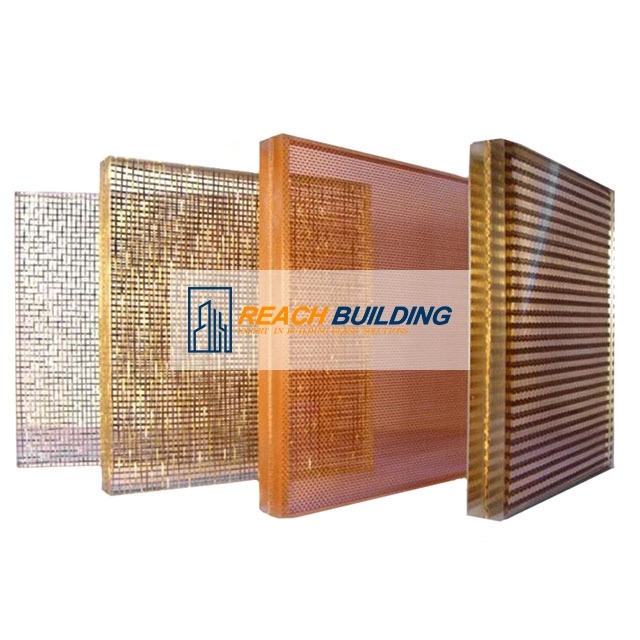
Gone are the days when fire glass only came in one pattern. We can now provide decorative options that include:
Tinted Ceramics: Reducing glare in sun-drenched hallways.
Frosted or Patterned Surfaces: Providing privacy for counseling offices while remaining fire rated.
Polished Clarity: Offering a high-end look that rivals architectural glass in luxury buildings.
Improving the Learning Environment
Bright, open spaces with lots of natural light are proven to improve student performance and mental health. By replacing opaque or wired partitions with high-quality polished safety glass, you open up the school. It feels less like a fortress and more like a modern campus.
Implementation Strategy: Developing a Multi-Year Safety Plan
Replacing all the glass in a school is a massive undertaking. We recommend a phased approach. A multi-year "Glazing Safety Plan" allows for responsible budgeting while addressing the most dangerous areas first.
Year 1: The Audit and Immediate Fix. Conduct a professional audit of all glass. Identify every pane of wire glass. Immediately apply safety film to the highest-risk panes in gymnasiums and stairwells.
Year 2: High-Traffic Replacement. Begin replacing filmed wire glass with permanent laminated or ceramic impact resistant glass in primary exit routes.
Year 3-5: Campus-Wide Standardization. Gradually replace all remaining wire glass. Transition all partitions to polished, wireless fire glass to unify the school's aesthetic and safety profile.
Conclusion
The presence of traditional wire glass in schools is a legacy of a time when we only understood half of the safety equation. We now know that fire protection cannot come at the cost of physical impact safety. By upgrading to modern fire rated, impact resistant, and polished alternatives, school districts can protect their students from both the heat of a fire and the sharp edge of an accident. Investing in these safety upgrades is not just a building code requirement—it is a commitment to the well-being of every child who enters the building.
FAQ
Q1: Is wire glass still legal in schools?
In many jurisdictions, old wire glass is "grandfathered" in, meaning you aren't forced to remove it immediately. However, most modern codes forbid installing new non-impact wire glass in doors or high-traffic areas. If you break a pane, you usually must replace it with a modern safety-rated alternative.
Q2: Can I just paint over wire glass to make it look better?
No. Painting over fire glass can interfere with its thermal performance and may violate fire codes. If you want a different look, consider decorative fire glass or frosted safety films that are specifically tested for fire-rated assemblies.
Q3: How can I tell if my school's glass is impact rated?
Look for a permanent etch (a "bug") in the corner of the glass. It should list the manufacturer, the fire rating (e.g., 45 min), and the impact safety rating (e.g., ANSI Z97.1). If there is no etch, or if it only mentions fire, it is likely not impact resistant.
Our Manufacturing Strength and Commitment
As a dedicated leader in the architectural glass industry, we operate a world-class manufacturing facility focused on high-performance glazing solutions. We understand the unique pressures school administrators face, which is why our factory is optimized for both precision and volume. From producing crystal-clear polished ceramics to specialized laminated safety panes, our production lines utilize the latest CNC and tempering technology to ensure every piece exceeds international safety standards.
We take pride in our "Expert Insight" approach to glass. Our facility isn't just a place of production; it is a center of innovation where we develop impact resistant and fire rated products tailored for the educational sector. We maintain a massive inventory of raw materials, allowing us to offer rapid turnaround times for school districts undergoing urgent safety upgrades. When you work with us, you are partnering with a factory that values student safety as much as structural integrity. We are committed to providing the durable, decorative, and high-quality glass products that modern schools deserve.