Introduction
Tempered glass is a type of safety glass produced through a controlled heating and rapid cooling process that improves its strength and thermal resistance. Compared with regular glass, it is around four to five times stronger and breaks into small granular fragments instead of sharp shards.
In this article, we will explain how tempered glass is made, covering the manufacturing steps from raw materials and glass forming to heating, quenching and final quality testing. Understanding this process helps explain how tempered glass achieves higher strength, improved safety and reliable performance in different applications.
What is Tempered Glass?
Before exploring the manufacturing process, it is important to understand the basic structure of tempered glass and how it differs from standard annealed glass.
Tempered glass, also known as toughened glass, is produced by applying controlled thermal treatment to annealed glass. During this process, the glass surface develops compressive stress while the inner layer remains under tension, creating a stronger structure that improves impact resistance and thermal stability.
This unique stress distribution allows tempered glass to achieve higher strength and better safety performance compared with untreated glass.
Advantage | Explanation |
Strength | Tempered glass is 4-5 times stronger than regular glass due to the stress created during tempering. |
Safety | It breaks into small, blunt pieces instead of sharp shards, reducing the risk of injury. |
Heat Resistance | Tempered glass can withstand high temperatures up to 470°F (243°C), making it suitable for hot environments. |
Impact Resistance | It resists impacts better than regular glass, making it ideal for high-traffic areas. |

Common Uses of Tempered Glass
Due to its improved strength, safety and thermal resistance, tempered glass is widely used in applications where reliable performance is required. Common applications include:
Architectural Glass Applications
Tempered glass is commonly used for glass doors, windows, shower enclosures, curtain walls and interior partitions where safety and durability are important.
Automotive Glass
It is widely used for vehicle side and rear windows because its safer breakage pattern helps reduce the risk of injury during accidents.
Furniture and Interior Glass
Tempered glass is often used for tabletops, shelves and decorative glass products that require better impact resistance.
How Tempered Glass Starts: Raw Materials and Glass Forming
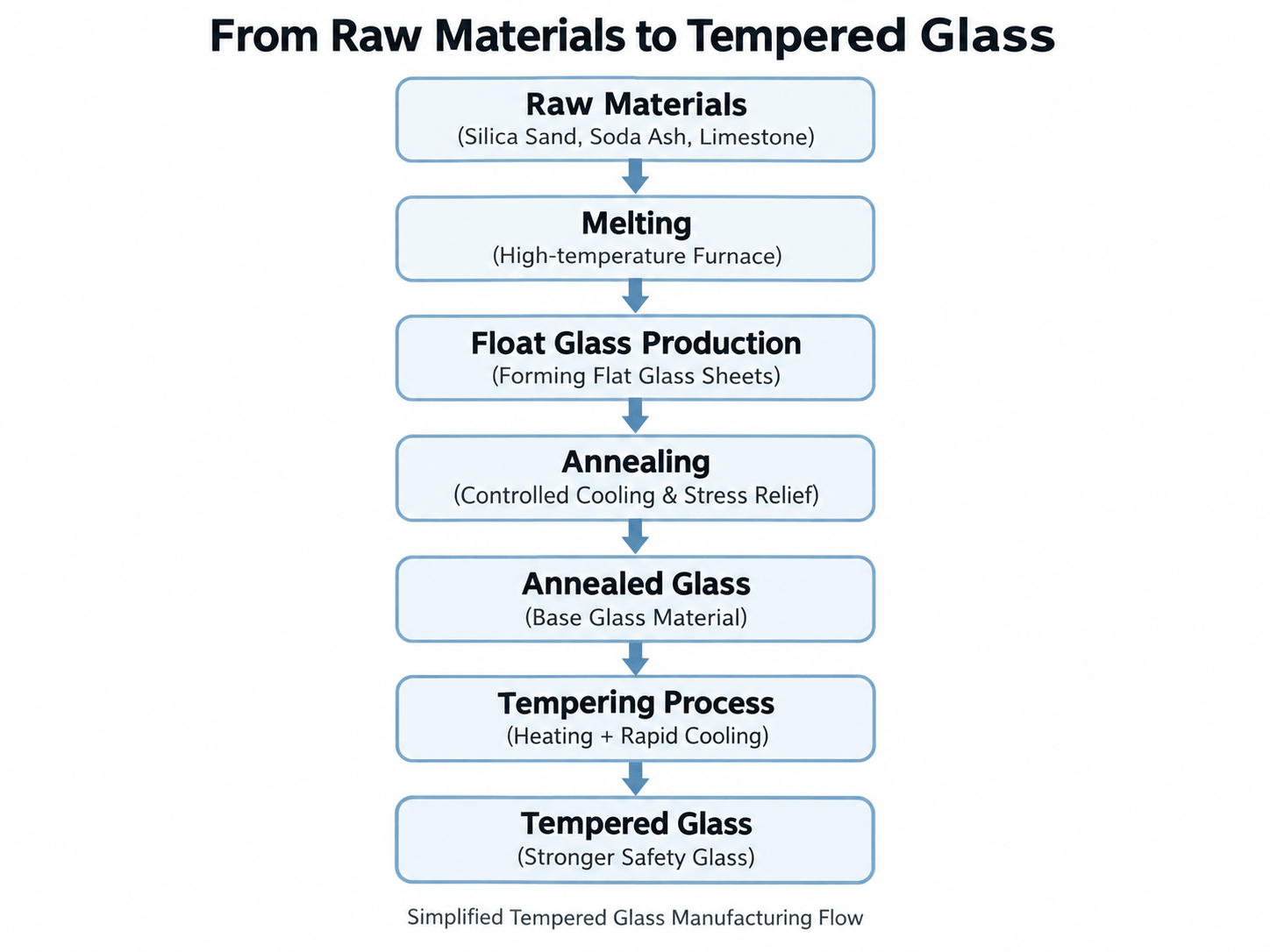
Tempered glass production begins with high-quality annealed glass as the base material. This glass is manufactured from carefully selected raw materials, including silica sand, soda ash and limestone. These materials are melted at high temperatures to form molten glass, which is shaped into flat glass sheets through the float glass manufacturing process.

| 
|
Raw Materials for Glass Production Silica sand, soda ash, and limestone are the primary materials used to produce high-quality annealed glass | Float Glass Sheets After the Float Manufacturing Process The float glass process creates flat, uniform glass sheets with excellent surface quality, providing the base material for further processing into tempered glass. |
During the float glass process, the glass passes through a controlled cooling stage called annealing, which relieves internal stress and produces stable annealed glass. The annealed glass can then undergo a heat treatment and rapid cooling process to create tempered glass with improved strength and safety performance.

Glass Cutting and Processing Before Tempering
Cutting and Shaping Before Tempering
Before the tempering process, glass must be cut and shaped to its final size and dimensions. This is crucial because once the glass is tempered, it cannot be modified further without shattering. All cutting, shaping, and edgework must be completed before the glass enters the tempering furnace.
Edge Work and Polishing
Edge work is an essential step in the preparation of tempered glass. The edges are polished or beveled to remove any sharpness. This step enhances the safety of the glass, especially in applications where people may come into contact with the edges. The polishing process also ensures that the glass is free from any imperfections that could compromise its strength.
For more details about glass edge finishing methods, see our guide on glass edge polishing.

Step-by-Step Tempered Glass Tempering Process
1. Heating the Glass
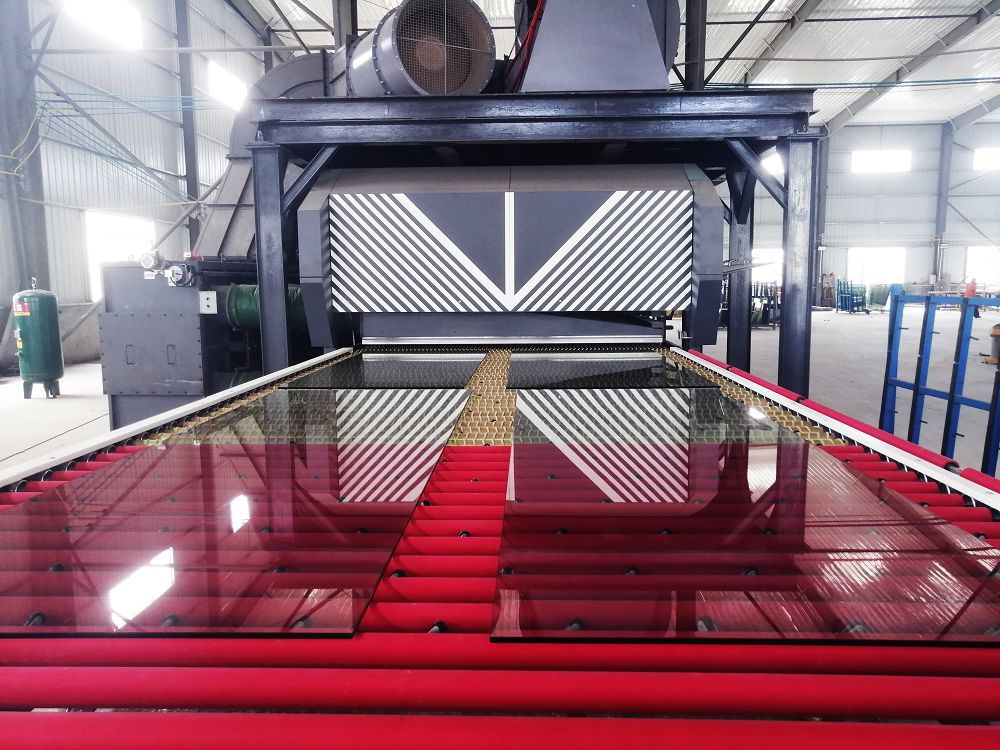
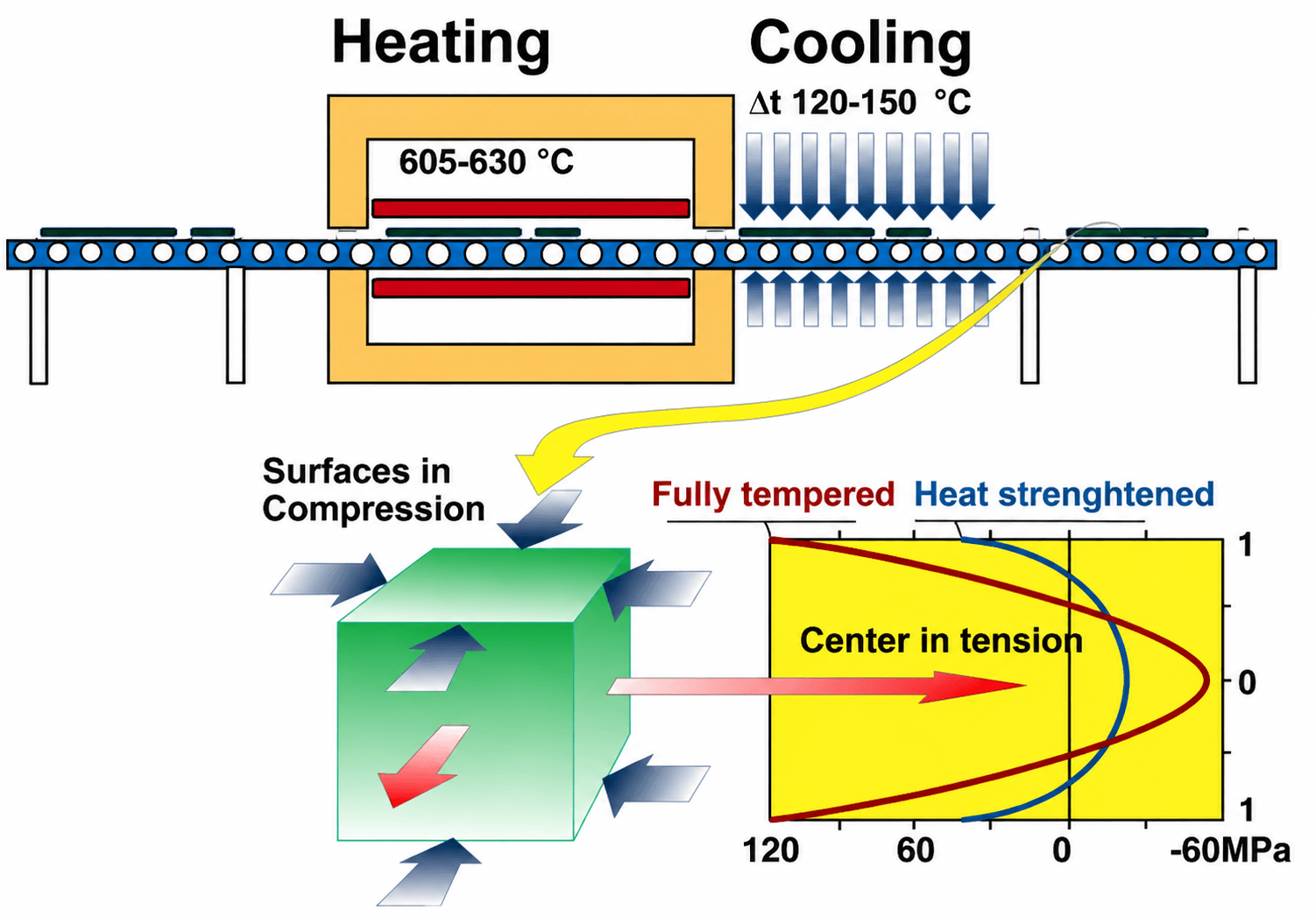
After the glass sheets are cut and processed, they are placed into a tempering furnace and heated to approximately 600–700°C, close to the glass softening point. The glass must be heated evenly throughout its surface to ensure consistent performance. This controlled heating prepares the glass for the rapid cooling stage that creates the required strength and safety characteristics.

2. Quenching (Rapid Cooling)
Once the glass reaches the required temperature, it undergoes rapid cooling, also known as quenching. High-pressure air is directed onto both surfaces of the glass, cooling the outer layers much faster than the inner core. This creates compressive stress on the surface and tensile stress inside the glass, giving tempered glass its improved strength and impact resistance.
3. Surface Compression and Internal Tension
The rapid cooling during quenching causes the outer surfaces of the glass to contract while the inner core remains in tension. The surface compression makes the glass more resistant to breaking under impact. The internal tension, while making the glass more susceptible to breakage under extreme force, ensures that the glass will fracture safely into small, blunt pieces when it does break. This unique combination of stress and tension is what gives tempered glass its outstanding strength and safety characteristics.

Tempered glass manufacturing process showing controlled heating, rapid cooling, and the formation of surface compression and internal tension.
4. Quality Control and Testing
After the tempering process, the glass undergoes quality inspections to verify its safety performance, strength and visual quality. These tests help ensure that the tempered glass meets required standards before being delivered for use.
Manufacturers inspect the tempered glass surface and edges to identify visible defects, including scratches, chips, optical distortion and other surface imperfections. This step ensures the final product meets appearance and quality requirements.
Fragmentation testing evaluates how tempered glass breaks under stress. Unlike ordinary annealed glass, properly tempered glass should break into small, relatively blunt fragments, reducing the risk of serious injury.
Surface stress testing measures the compressive stress created during the tempering process. This helps confirm that the glass has achieved the required strength and thermal resistance performance.
The following table summarizes the key steps in the tempering process and provides a clear overview of how annealed glass is transformed into tempered glass.
Step | Description |
Raw Material Preparation | Silica sand, soda ash, limestone, and other materials are mixed and melted to form glass. |
Glass Forming | The molten glass is shaped into uniform sheets using the float glass method. |
Heating | The glass is heated to over 600°C in a tempering furnace for uniform heating. |
Quenching (Rapid Cooling) | The glass is rapidly cooled with high-pressure air to create surface compression. |
Surface Compression | The rapid cooling creates compressive stress on the surface and tensile stress in the core. |
Final Inspection | The tempered glass undergoes quality control checks for clarity and defects. |
Why Tempered Glass is Stronger
Internal Stress Improves Strength
The key to the strength of tempered glass lies in the thermal stress created during the heating and cooling process. By applying heat to the glass and rapidly cooling it, manufacturers create a state of internal stress that makes the glass much more resistant to both impact and temperature changes. This engineered process, known as thermal stress engineering, is why tempered glass is about four to five times stronger than regular annealed glass, which doesn’t undergo this kind of treatment.
Safe Breakage Pattern
Another important feature of tempered glass is how it breaks. Regular glass typically breaks into large, jagged pieces with sharp edges, which can cause serious injury. In contrast, tempered glass fractures into small, cube-like pieces when broken. These pieces are much less likely to cause injury, making tempered glass a safer alternative in high-risk areas. This property makes it an ideal choice for applications where safety is paramount, such as in automobiles, building windows, and shower doors.

| 
|
Tempered Glass Breakage Pattern Tempered glass breaks into small, relatively blunt fragments due to the internal stress created during the tempering process. | Annealed Glass Breakage Pattern Annealed glass typically breaks into large, sharp shards that may create a higher risk of injury. |
Types of Heat-Treated Glass
Fully tempered glass is the most common type of safety glass produced through a complete tempering process. It achieves high surface compression and improved impact resistance, making it suitable for applications where safety and strength are required.

Heat-strengthened glass is a type of glass that undergoes a heat treatment similar to tempered glass but with a slower cooling process. While it is stronger than regular glass, it is not as strong as fully tempered glass. Heat-strengthened glass is often used in applications where the strength of tempered glass is not required, but the glass still needs to resist moderate stress.

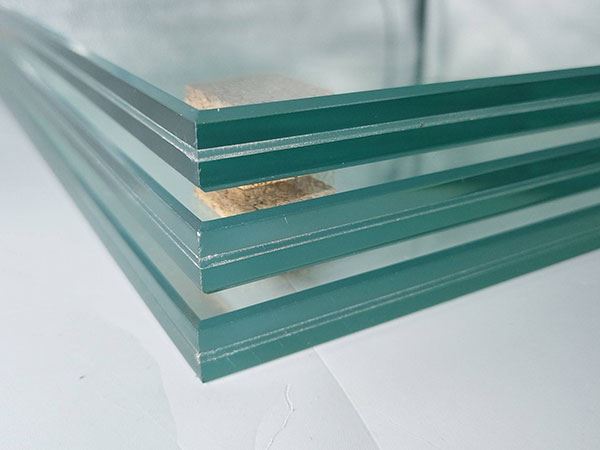
Laminated tempered glass combines two tempered glass panels with an interlayer such as PVB or SGP. The interlayer helps hold the glass together after breakage and provides additional safety and security.

Conclusion
The quality and performance of tempered glass depend on every stage of the manufacturing process, from the preparation of the base glass to precise heating, rapid cooling, and final quality inspection. Understanding these steps helps explain why tempered glass offers improved strength, thermal resistance, and safer breakage characteristics compared with standard annealed glass.
As an experienced glass supplier, REACH BUILDING provides high-quality tempered glass solutions manufactured to meet international standards for architectural, commercial, and customized glass applications.
Need tempered glass for your project? Contact REACH BUILDING to discuss your glass requirements, processing options, and supply solutions.
FAQ
Q: What is tempered glass?
A: Tempered glass is a type of safety glass that is four to five times stronger than regular glass. It undergoes a heat-treatment process where it is rapidly cooled, creating compressive stresses that enhance its strength.
Q: How is tempered glass made?
A: Tempered glass is made by heating standard glass to over 600°C and then rapidly cooling it with high-pressure air. This process creates internal stresses, making the glass stronger and safer.
Q: Why is tempered glass stronger than regular glass?
A: The heating and cooling process creates compressive stress on the surface of tempered glass, which makes it up to five times stronger than regular, annealed glass.
Q: Can tempered glass be cut after it is made?
A: No, tempered glass cannot be cut or drilled once it has been tempered. Cutting it after tempering will cause it to shatter.
Q: What are common applications of tempered glass?
A: Tempered glass is commonly used in car windows, shower doors, and glass railings due to its strength and safety. It is ideal for environments where safety is a concern.