Introduction
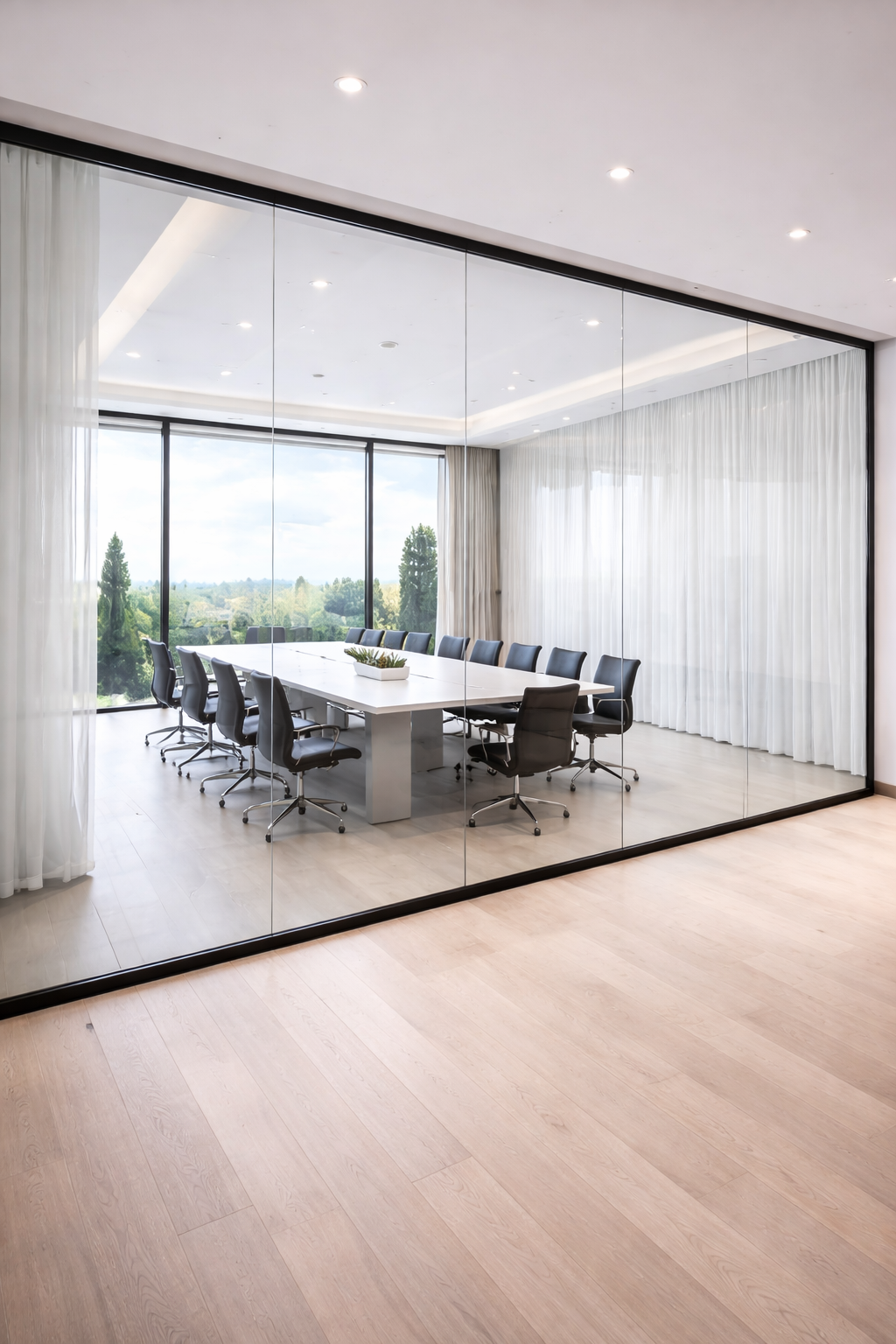
Low Iron Glass is changing how we design modern spaces. By removing the green tint found in standard glass, it offers crystal-clear views, brighter interiors, and accurate color. This clarity makes it ideal for architecture, retail, and interior design. As demand grows for premium, light-filled environments, more professionals turn to Low Iron Glass. Brands like REACH BUILDING support this shift with high-quality glass solutions used in façades, curtain walls, and custom interiors.
In this article, you’ll discover the key benefits of Low Iron Glass—and why it’s the clear choice for today’s most refined projects.
1. Crystal-Clear Transparency: The Core Advantage
Ever noticed how standard glass looks green at the edges? That’s iron oxide. Low iron glass reduces that impurity, giving it nearly perfect clarity—even in thick panels. This makes it the glass of choice when true color and visual accuracy matter.
Let’s break down what makes it different:
Feature | Standard Glass | Low Iron Glass |
Color Tint | Greenish | Virtually Colorless |
Light Transmission | ~80–83% | ~88–91% |
Edge Appearance | Dark Green | Pale Blue/Clear |
Color Fidelity for Displays | Distorted | True-to-Life |
Designers love using it in retail display cases, museum showcases, or ultra-modern glass partitions. Products behind low iron glass look vivid, not dulled by color filters. REACH BUILDING, known for premium display glass systems, provides crystal-clear solutions in many of its curtain wall and interior glass offerings.
2. Enhanced Light Transmission and Brightness
Higher Solar Light Penetration Explained
Low Iron Glass allows more visible light to pass through compared to standard glass. Light transmission often exceeds 88–90%, depending on thickness, coating, and installation type, making it ideal for clarity-driven and light-sensitive designs.
Making Spaces Brighter and More Open
More daylight means fewer shadows, stronger contrast, and improved visual comfort. Homes feel larger and more welcoming throughout the day. Commercial interiors appear cleaner, more vibrant, and visually spacious for both customers and staff.
Architectural Impact in Daylighting Strategy
Architects use Low Iron Glass in large windows, atriums, skylights, and glazed partitions to reduce dependence on artificial lighting—supporting energy-conscious design and enhancing long-term user well-being and spatial performance.
For commercial buildings, pairing Low Iron Glass with daylight modeling software helps optimize window size and placement before construction.

3. True-to-Life Color Rendering
No Color Distortion Through the Glass
Painted walls, fabrics, artwork—they all appear as intended. Low Iron Glass does not cool, mute, or distort colors, even in thicker or multi-layered applications where clarity, color fidelity, and visual sharpness are especially crucial for design performance, visual balance, and accurate presentation under natural or artificial lighting.
Ideal for Back-Painted Panels and Printed Graphics
Interior designers often choose it for colored splashbacks, decorative panels, and wall features in both residential and commercial projects. The pigment shows its real tone, not a green-shifted version, helping maintain both design intent and long-term visual accuracy in high-visibility areas like kitchens, bathrooms, lobbies, showrooms, or reception walls—anywhere visual impact matters.
4. Luxury Aesthetic Appeal
Minimal Tint for a Premium Look
Low Iron Glass simply looks cleaner and more refined. Even without knowing the material, people immediately notice the difference. Its lack of green tint offers a neutral, high-end appearance that enhances surrounding finishes and materials.
High-End Applications in Modern Homes and Commercial Spaces
Low Iron Glass is frequently chosen for upscale residential and commercial projects due to its clean, minimalist look and exceptional clarity. It supports modern design concepts where openness and material quality take center stage. Below are some of the most common applications where this glass enhances both function and aesthetics:
Application Area | Description |
Frameless Shower Enclosures | Offers a sleek, spa-like experience without visual obstruction |
Stair Railings | Adds safety while maintaining an open, airy staircase design |
Interior Glass Walls | Enhances light flow and creates seamless room transitions |
Gallery-Style Façades | Provides a clean, neutral canvas that elevates building exteriors |
These uses highlight how Low Iron Glass complements contemporary architecture while delivering superior visual performance.
Popularity in Frameless Shower Doors, Glass Railings, and Façades
REACH BUILDING integrates Low Iron Glass into aluminum curtain wall systems for luxury projects where visual purity, brightness, and structural performance must all work together in perfect balance.
5. Energy Performance in Solar and Green Building Applications
Low iron glass isn’t just for looks. Its ability to let in more solar radiation makes it a smart choice for green buildings and renewable systems.
Used in:
● Solar panels (as front protective covers)
● Passive solar homes
● Double or triple glazing windows
Now combine it with a Low-E coating, and you’ve got a system that transmits daylight but reflects indoor heat. Perfect for colder climates or buildings trying to meet stringent energy codes.
Use Case | Benefit of Low Iron Glass |
Solar Panels | More light to photovoltaic cells |
Skylights | Brighter interiors |
Glazing Systems | Better daylight + visual clarity |
It’s no surprise that leading solar system suppliers prefer low iron over float glass—it simply boosts output. For buildings, it can reduce lighting loads during daylight hours while still offering insulation when used in multi-pane systems.
6. Material Versatility and Processing Flexibility
Compatibility with Laminating, Tempering, and Coating
Low Iron Glass can be tempered for strength, laminated for safety, or coated for additional performance—just like standard glass. Its purity and clarity remain consistent through all major processing methods, making it reliable across both functional and aesthetic applications. Whether it's thermal treatment, acoustic enhancement, or solar control, it adapts without losing optical quality.
Customization for Thickness, Shape, and Finish
It supports a wide range of fabrication options that suit complex architectural demands, including:
● Curved or oversized panels for dramatic visual impact
● Polished or beveled edges that highlight craftsmanship
● Textured or frosted finishes that balance transparency and privacy
REACH BUILDING offers advanced processing capabilities for large-format, specialty, and multi-purpose glass elements—ensuring every panel meets both visual and structural requirements.
Creative Freedom for Architects and Designers
Designers gain exceptional flexibility without sacrificing clarity or performance. Low Iron Glass integrates easily into diverse environments—ideal for open-plan offices, minimalist residential interiors, modern retail spaces, or high-traffic commercial buildings where light and elegance go hand in hand.
7. Durability and Long-Term Visual Performance
Don’t be fooled by its clarity—low iron glass is rugged. When processed correctly, it performs just as well as any other safety-rated architectural glass.
It resists:
● Scratches
● UV degradation
● Weathering
● Chemical wear (when laminated or coated)
It also meets or exceeds global safety certifications like:
Certification | Standard |
ANSI Z97.1 | Safety glazing in buildings |
EN12150-1 | Thermally toughened glass |
ASTM C1048 | Heat-treated flat glass |
REACH BUILDING supplies certified glass solutions that meet these standards, ensuring both compliance and performance. From balconies to skyscraper facades, its panels hold up under pressure.

8. Ideal Applications of Low Iron Glass
Low Iron Glass fits a wide range of environments, offering both visual and functional value across diverse settings. Its unmatched clarity and neutral tone make it an excellent choice for spaces where both aesthetics and light performance matter.
Residential
● Kitchens and splashbacks – for a clean, seamless finish
● Balconies and railings – providing safety without visual heaviness
● Furniture and shelving – enhancing the look of glass elements
Commercial
● Storefronts – attracting attention with crystal-clear displays
● Display cases – showing products in true, undistorted color
● Glass walls and partitions – creating open yet defined interiors
Specialized
● Aquariums – offering unobstructed viewing experiences
● Solar panels – allowing more sunlight to reach photovoltaic cells
● Optical instruments – where maximum clarity is essential
Each use benefits from the same core strengths: clarity, brightness, and accurate color—making Low Iron Glass a versatile and high-performance choice across industries.
Let’s summarize where low iron glass makes the biggest impact. It’s not just for museums or million-dollar condos—it brings value across many industries.
Category | Example |
Residential | Splashbacks, Railings |
Commercial | Display Cases, Partitions |
Specialized | Solar Panels, Aquariums |
Across these sectors, clarity, color accuracy, and light transmission are key. So if your product, space, or building needs to show something off—or let light in—low iron glass earns its place.
Conclusion
Low Iron Glass combines clarity, brightness, and true color with a refined visual appeal. It enhances both design and function, making it ideal for premium interiors, façades, and display applications.
With added durability and energy compatibility, it suits modern architecture perfectly. HANGZHOU REACH BUILDING CO.,LTD. delivers certified low iron glass solutions that turn design ideas into high-performance spaces with lasting value.
FAQ
Q: What is Low Iron Glass and how is it different from regular glass?
A: Low Iron Glass is made with reduced iron content, which removes the green tint seen in standard glass. This results in clearer transparency and more accurate color rendering.
Q: Where is Low Iron Glass most commonly used?
A: It’s ideal for applications that require high clarity, such as storefronts, museums, kitchens, shower enclosures, and solar panels.
Q: Does Low Iron Glass improve natural lighting?
A: Yes, Low Iron Glass allows higher light transmission, making interiors brighter and reducing the need for artificial lighting during the day.
Q: Is Low Iron Glass more expensive than standard glass?
A: It typically costs more due to purer materials and tighter manufacturing, but its visual and performance benefits often justify the investment.
Q: Can Low Iron Glass be used in energy-efficient buildings?
A: Absolutely. It works well with Low-E coatings and multi-pane systems, making it suitable for sustainable architecture.
Q: Who supplies high-quality Low Iron Glass?
A: HANGZHOU REACH BUILDING CO.,LTD. provides certified low iron glass solutions for modern architectural and interior applications.