| Availability: | |
|---|---|
| Quantity: | |
| Thickness | 3-20mm (Other thicknesses available upon request) |
| Color | ultra clear |
| Optical Transmittance | ≥88%(Depends on thickness) |
| Bending Strength | 120-180Mpa |
| Impact Strength | 4-5 times higher than standard float glass |
| Temperature Resistance | 300-400℃ |
| Maximum Size | 12000mm x 3600mm (Custom sizes available) |
| Minimum Size | 150mm x 150mm(Custom sizes available) |
| Delivery time | 7 days |
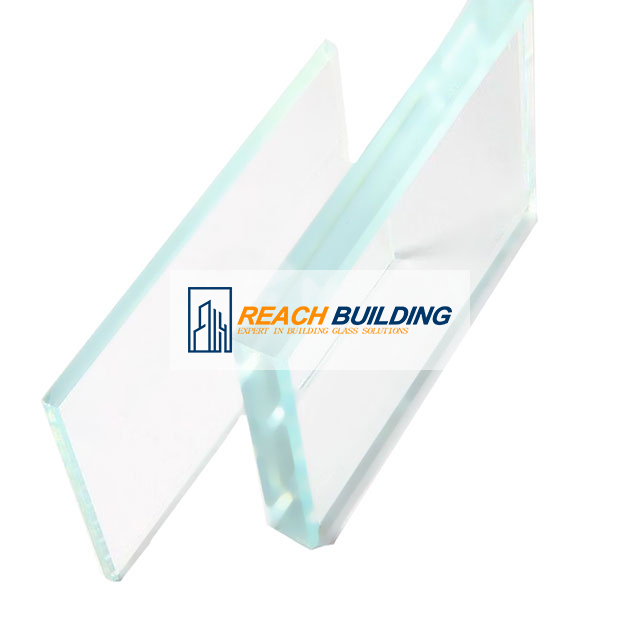
Low-iron glass contains less iron oxide than standard clear float glass, significantly reducing the green tint visible through the surface and edges. This provides a more neutral appearance and more accurate color rendering.
Depending on the glass thickness and configuration, visible light transmission can reach approximately 91% or higher. Low-iron ultra-clear glass is therefore suitable for façades, railings, display cases, partitions, furniture, solar applications, and other projects where transparency is important.
After tempering, low-iron glass is typically four to five times stronger than annealed glass of the same thickness. The heat-treatment process improves its resistance to bending and impact, making it suitable for demanding architectural and commercial applications.
Actual strength depends on the glass thickness, dimensions, edge quality, heat-treatment process, support conditions, and applied load.
Low-iron tempered glass offers better resistance to thermal stress and temperature changes than annealed glass. This makes it suitable for exterior glazing, doors, partitions, shower enclosures, railings, and other applications exposed to changing temperatures.
The permitted operating temperature and thermal differential should be confirmed according to the specific glass configuration and project conditions.
If low-iron tempered glass breaks, it fragments into relatively small, blunt pieces rather than large, sharp shards. This breakage pattern helps reduce the risk of serious injury compared with ordinary annealed glass.
For applications requiring the broken glass to remain in place, such as skylights, canopies, overhead glazing, and certain railings, laminated low-iron glass should be considered.
The reduced iron content creates a clearer, more color-neutral appearance, particularly on thick glass and exposed edges. It allows materials, products, printed patterns, and interior colors behind the glass to appear closer to their original tones.
Low-iron glass is widely used for architectural façades, retail displays, museums, aquariums, furniture, shower enclosures, and decorative glazing.
Low-iron tempered glass can be manufactured and tested according to applicable standards, including ANSI Z97.1, CPSC 16 CFR 1201, EN 12150-1, AS/NZS 2208, and ASTM C1048, depending on the product specification and target market. ASTM C1036 applies to flat glass quality, while ISO 9001 relates to the manufacturer’s quality management system rather than product safety performance.
Cutting, drilling, notching, beveling, and edge finishing must be completed before tempering. Applicable standards, testing, and certification should be confirmed for each project and destination market.
Curtain Walls and Facades: Low iron tempered glass is widely used in modern building facades and curtain walls due to its high transparency, which enhances the aesthetic value of buildings while maximizing natural light penetration.
Windows and Doors glass: It is used in both residential and commercial architectural for clear, safe,and impact resistance windows and doors. The glass helps create sleek, modern looks with enhanced light transmission.
Skylights: Low iron tempered glass is ideal for skylights as it allows maximum sunlight to penetrate into buildings, making interiors brighter while offering strong impact resistance.
Glass Railings: Tempered glass is used in railings for stairs, balconies, and terraces. It provides a sleek, unobstructed view while ensuring safety due to its strength.
Glass Roofs: Used in glass roofs of commercial or high-end residential buildings for both aesthetic appeal and structural integrity.
Glass Tabletops: Low iron tempered glass is used in high-end furniture like dining tables, coffee tables, and desks to provide clarity and strength. Its clear nature enhances the visual appeal of furniture.
Shelves and Display Units: Perfect for display shelves and showcases in homes, stores, and museums, as its transparency allows the products or items to be viewed without distortion.
Office Partitions: Tempered glass partitions are often used in office spaces, lobbies, and modern homes. The transparency helps create open, airy spaces while providing functional separation between areas
Oven Doors: Low iron tempered glass is used in oven doors because it can withstand high temperatures and thermal shock, providing safety and durability in cooking environments.
Cooktops and Stove Tops: Used in modern cooktops and stove tops for both functionality and aesthetics, allowing for clear visibility and resistance to heat.
Fireplace Screens: Used as the glass component in fireplaces, low iron tempered glass is ideal because of its high resistance to both heat and impact.
Showcases and Display Cases: Low iron tempered glass is often used in retail environments for display cases and showcases due to its clarity and impact resistance. It is perfect for displaying high-value items like jewelry, electronics, and artworks.
Shop Windows: Large display windows for stores use low iron tempered glass for a clean, clear view, contributing to an elegant appearance and improving the customer experience.
Exterior Architectural Glass: Low iron tempered glass is used in various public structures like airports, stations, and bus shelters for its impact strength and clarity. The glass is also used for public transport windows and safety glazing in areas requiring high transparency and durability.
Glass Walls and Architectural Glass for Partitions: In hospitals, hotels, and other commercial spaces, tempered glass partitions and walls create a visually appealing space with minimal visual distortion while providing safety.
Sun room and agricultural sun shed: full penetration of sunlight in the case of wind protection.
Surface Treatments:
Edge Treatment: Flat edge, rounded edge, or beveled edge
Drilling: Available for mounting or installation purposes
Sandblasting: Can be sandblasted for decorative finishes
Brushed Finish: Available for a matte surface texture
Coatings: UV protection, anti-reflective, or other coatings available upon request
Packaging: used wooden boxes or cases, the cases should be easy loading, unloading and transportation. Each case needs to be packed with stuff of the same thickness and size.
Q: The difference between ordinary tempered white glass and low iron tempered glass?
A: Summary of Key Differences:
Feature | Ordinary Tempered White Glass | Low Iron Tempered Glass |
Iron Content | Higher (0.1%-0.3%) | Very low (under 0.1%) |
Appearance | Slightly greenish tint,especially at edges | Clear,color-neutral,virtually colorless |
Optical Clarity | Lower transparency and light transmittance | Higher transparency and light transmittance (91%or more) |
Strength & Durability | Similar to low iron tempered glass, strong impact resistance | Superior clarity with similar strength and impact resistance |
Thermal Shock Resistance | Good (300-400℃) | Good (300-400℃) |
Applications | General building,windows, furniture | High-end architectural glazing,luxury furniture,automotive,solar panels |
Cost | Less expensive | More expensive due to higher purity materials |
Q: How do consumers distinguish between tempered white glass and low-iron tempered glass?
A: Ordinary float tempered white glass and low iron tempered glass have obvious differences in color and light transmission, and can be distinguished by observing the side of the glass block, the side of ordinary tempered white glass is green and dark, while the side of low iron tempered glass is clear white and blue.