| Availability: | |
|---|---|
| Quantity: | |
| Thickness | 3-20mm (Other thicknesses available upon request) |
| Color | Clear (Custom colors available upon request) |
| Optical Transmittance | 70%-90%(Depends on thickness) |
| Bending Strength | ≥ 120 MPa |
| Impact Strength | ≥ 5 times that of ordinary glass |
| Temperature Resistance | -40°C to +150°C |
| Maximum Size | 12000mm x 3600mm (Custom sizes available) |
| Minimum Size | 150mm x 150mm(Custom sizes available) |
| Delivery time | 7 days |
1. High Strength
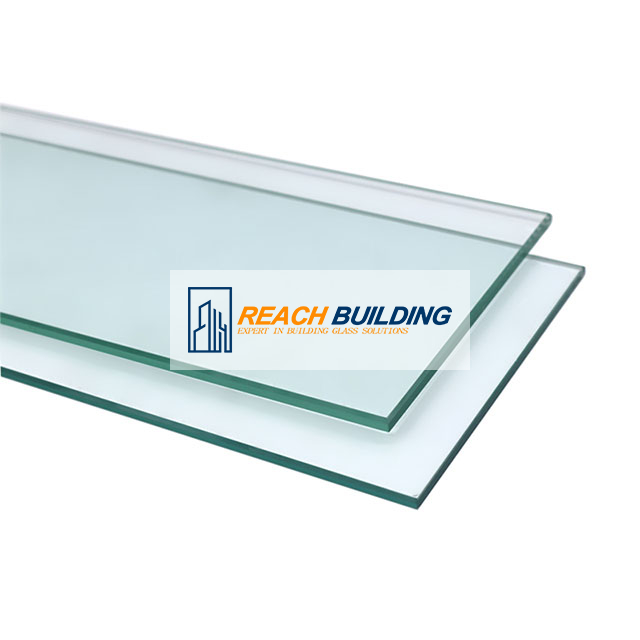
Tempered glass is approximately 3-5 times stronger than ordinary glass, providing excellent resistance to external forces and mechanical stress. Its enhanced strength makes it suitable for architectural and commercial applications requiring durable and reliable glazing solutions.
2. Safety Performance
When broken, tempered glass fractures into small granular pieces instead of sharp shards, reducing the risk of injury caused by broken glass.
3. High Temperature Resistance
Tempered glass offers excellent resistance to heat and sudden temperature changes, with typical temperature resistance ranging from -40°C to +150°C. It is suitable for applications exposed to sunlight, heat sources, and changing environmental conditions, including kitchens, bathrooms, and commercial spaces.
4. Impact Resistance
Compared with ordinary glass, tempered glass can better withstand accidental impacts and daily stress. Its improved impact resistance makes it suitable for high-traffic areas, doors, partitions, railings, and other applications requiring enhanced durability.
5. Optical Clarity
Featuring high light transmission and excellent transparency, tempered glass maintains clear visibility and a clean appearance while providing enhanced safety performance.
6. Corrosion Resistance
Tempered glass provides reliable resistance to moisture, humidity, and daily environmental exposure, helping maintain stable performance and long service life in both indoor and outdoor applications.
7. Customized Processing Options
REACH BUILDING provides customized tempered glass processing according to different project requirements. Available services include cutting, edge polishing, drilling, beveling, bending, and other fabrication options completed before the tempering process.
8. Certificates & Standards
REACH BUILDING tempered glass complies with international safety glass standards, including 16 CFR 1201, ANSI Z97.1, BS 6262, CCC, AS/NZS 2208-1996, EN 12150-1, and ASTM C1048. All processing operations, including cutting, edging, drilling, and other fabrication, are completed before tempering to ensure product performance and safety.
Tempered glass is widely used in modern architectural projects due to its high strength, safety performance, and excellent transparency. It provides reliable glazing solutions for curtain walls, building facades, windows, doors, and other exterior applications where both aesthetics and durability are required.
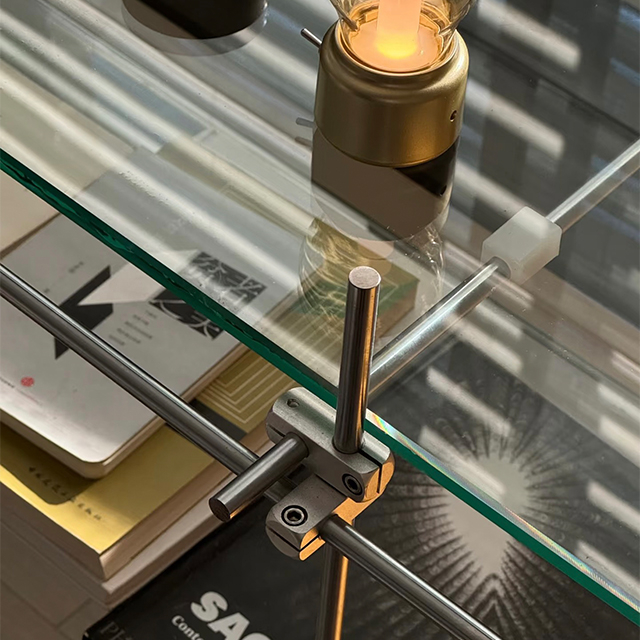
With excellent clarity and a clean appearance, tempered glass is commonly used for interior design applications. It is suitable for glass partitions, furniture, display cases, tabletops, shelves, and other decorative elements in residential and commercial spaces.
Tempered glass is widely selected for safety-critical applications because it breaks into small granular pieces instead of sharp fragments. It is commonly used in stair railings, balustrades, public facilities, transportation areas, and high-traffic environments.
Cutting: Customized sizes and shapes available according to project requirements.
Edge Processing: Options include flat edges, rounded edges, and beveled edges for different installation needs.
Drilling & Cut-outs: Precision drilling and customized openings are available for mounting and hardware installation.
Bending: Curved tempered glass can be produced for specific architectural applications.
Sandblasting: Creates decorative or privacy finishes for interior and architectural applications.
Brushed Finish: Provides a matte surface texture with a refined appearance.
Coatings: Additional options such as UV protection, anti-reflective coating, and other functional coatings are available upon request.
Secure Packaging: Tempered glass is packed in durable wooden cases designed for safe loading, unloading, and transportation.
Organized Packing: Glass panels are packed according to thickness and size to improve handling efficiency and reduce transportation risks.
Q: How to Choose the Right Thickness for Your toughened Glass Panels?
A: Consider the Application and Location of the toughened Glass Panels:
When choosing the right thickness for your toughened glass panels, it's important to consider the application and location where they will be installed. If you're installing glass panels in an area with high traffic or where there's a risk of impact, such as a storefront or balcony railing, then thicker glass panels are recommended. On the other hand, if you're installing glass panels in an area with lower risk of impact, such as a shower enclosure or tabletop, then thinner glass panels may suffice.
Q: The Most Common Thicknesses for toughened Glass Panels?
A: The most common thicknesses for toughened glass panels are 6mm, 8mm, and 12mm. Thicker glass panels offer higher resistance to impact and can support more weight than thinner ones. For instance, if you're installing a balcony railing that needs to withstand strong winds and heavy loads, then a 12mm thick toughened glass panel would be appropriate. However, if you're installing a shower enclosure that won't be subjected to much force or weight, then a 6mm thick toughened glass panel would work well.
Q: Will the glass explode in transit?
A: After the production is completed, we will carry out a hot dip test to detect potential nickel sulfide particles by heating them and allow them to self-explode in advance, which can reduce the self-detonation rate of tempered glass to 0.1-0.3%. At the same time, special packaging materials are used: high-strength wooden cases, laminated protective MATS or sponge partitions, high-strength wooden cases, laminated protective MATS or sponge partitions.
Q4:What is the difference between tempered glass and laminated glass?
A:Tempered glass and laminated glass are both safety glass types but serve different purposes. Tempered glass provides higher strength and breaks into small pieces after breakage, while laminated glass uses an interlayer to hold glass fragments together after breakage. The right choice depends on project requirements, safety standards, and application conditions.