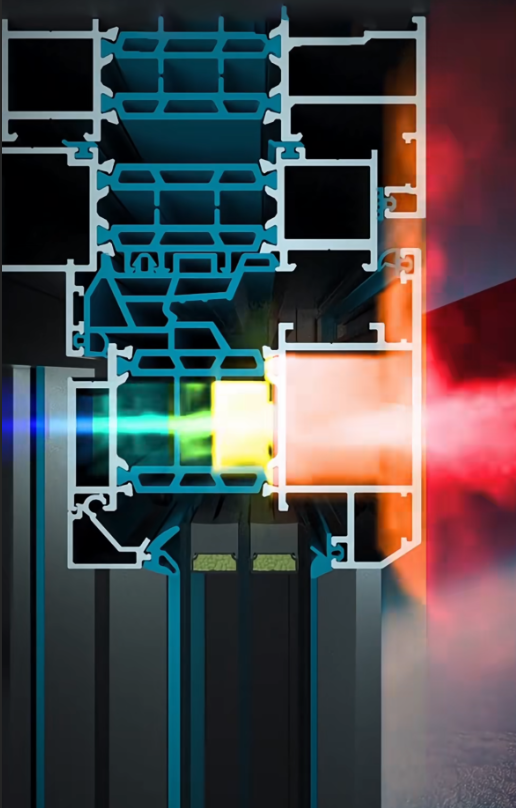
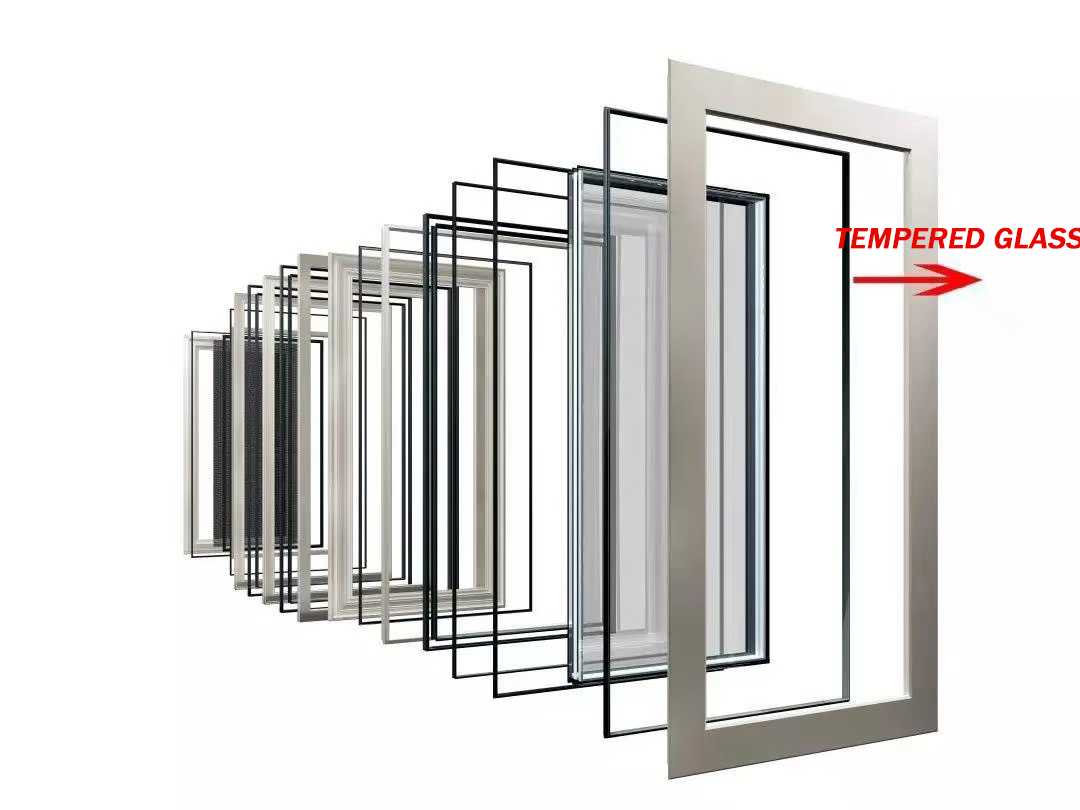
Research from the U.S. Department of Energy reveals that building envelope inefficiencies, particularly through doors, windows, and curtain walls, contribute to 10-25% of total HVAC energy consumption. With rising global focus on net-zero buildings and sustainable architecture, understanding window heat transfer mechanisms is critical for energy-saving home improvements and green building design.
1. Thermal Conduction: The Silent Energy Thief
Thermal conduction – the dominant heat transfer mode in single-pane windows – occurs when heat flows through glass via molecular vibration.
Glass conductivity (0.8–1.0 W/m·K): 5x higher than argon gas (0.016 W/m·K), explaining why single-pane windows perform poorly in Energy Star ratings.
Pro Tip: Look for thermal break window frames (polyamide barriers) to reduce conductivity by 60%.
2. Thermal Convection: Battling Airflow Heat Loss
In double-glazed windows, convection accounts for 30-40% of heat transfer.
Modern solutions leverage:
Gas fills: Argon gas windows (search volume: 3.6K/mo) outperform air with 30% lower λ. Krypton gas (λ = 0.009 W/m·K) for ultra-thin VIP (Vacuum Insulated Panels).
Spacer technology: Warm edge spacers (Swiggle®/TPS) reduce edge conduction by 50% vs aluminum.
Industry Trend: The passive house window standard (U-value ≤ 0.8) mandates argon/krypton fills with 16mm cavities.
3. Thermal Radiation: Solar Heat Gain & Low-E Breakthroughs
Radiation drives 60% of unwanted heat transfer in south-facing windows (per NREL studies).
Cutting-edge solutions: Low-E glasswindows (search volume: 14.8K/mo), Solar control Low-E (SHGC 0.25) vs passive Low-E (SHGC 0.55) for climate-specific performance.
Spectrally selective coatings: Reflective solar window film (1.2K/mo) rejects 99% UV while maintaining VLT >70%.
Case Study: A 2023 IGU market report showed triple-pane Low-E windows with argon achieve U-values of 0.14 – outperforming walls in some Passive Houses.
4. Holistic Solutions: Combining Technologies for Maximum Efficiency
Advanced framing: Fiberglass windows with U-factor 0.30-0.50.
Energy Savings Data:
Upgrade
Annual HVAC Savings
Payback Period
Single → Double Low-E
15-20%
5-7 years
Double → Triple Argon
10-12%
8-10 years
Key Takeaways for Homeowners & Architects:
✔ Prioritize Low-E + argon windows for balanced year-round performance ✔ In cold climates,Triple glazing outperforms double-pane ✔ Look for NFRC ratings and Energy Star certification
Miracle Co-founder of Reachbuilding
Miracle owns a glass factory that has been in operation for 40 years. His family has been engaged in the construction industry for over 60 years and possesses extensive engineering and production experience. At Reach Building, he focuses on product technical support, custom solutions, and industry trend analysis for global dealers, contractors, and builders.In his column, Miracle shares practical insights, project case studies, and expert advice to help construction professionals select the right glass for safer, more energy-efficient buildings.
With nearly 30 years of experience in building materials, REACH BUILDING provides customized glass products and technical solutions for global construction and interior projects.
We use cookies to enable all functionalities for best performance during your visit and to improve our services by giving us some insight into how the website is being used. Continued use of our website without having changed your browser settings confirms your acceptance of these cookies. For details please see our privacy policy.