| Availability: | |
|---|---|
| Quantity: | |
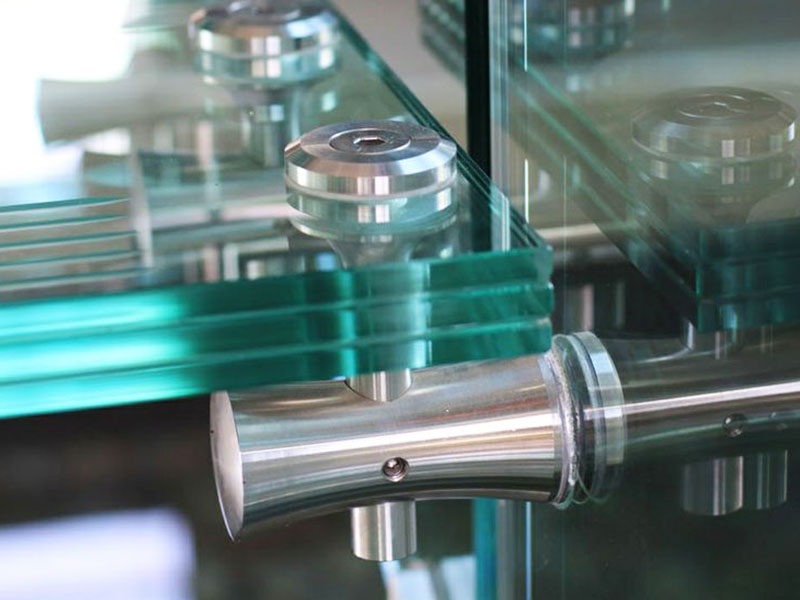
| THICKNESS DETAILS | 3+0.38pvb+3mm; 4+0.38pvb+3mm; 5+0.38pvb+5mm; 6+0.38pvb+6mm; 3+0.76pvb+4mm; 4+0.76pvb+4mm; 5+0.76pvb+5mm; 6+0.76pvb+6mm etc. |
| Visible Light Transmission (VLT) | 70-92%(Depends on thickness) |
| Tensile Strength | Around 100–150 MPa. |
| Impact Strength | 5-10 times that of ordinary glass |
| Thermal Strength | 300°C to 400°C |
| Sound Transmission Class (STC) | 30-35 STC |
| Maximum Size | 12000mm x 3600mm (Custom sizes available) |
| Minimum Size | 150mm x 150mm(Custom sizes available) |
| Delivery time | 7 days |
1. Safety and Impact Resistance
PVB laminated glass is designed to improve safety by holding broken glass fragments together when the glass breaks. The flexible PVB interlayer helps reduce the risk of falling shards and improves post-breakage safety performance in architectural applications. Performance depends on factors including glass type, thickness, PVB configuration, panel size, and installation conditions.
Where increased mechanical strength is required, PVB laminated glass can be manufactured using heat-strengthened or tempered glass plies. The appropriate configuration should be selected according to structural loads, panel dimensions, installation methods, and applicable standards.
2. Acoustic Performance
The flexible PVB interlayer can help reduce sound transmission through the glass. Actual acoustic performance depends on the pane thicknesses, asymmetric glass configuration, PVB type, framing, seals, and complete glazed assembly.
For projects with specific sound-insulation requirements, acoustic PVB and tested glass configurations can be selected. A fixed decibel or STC rating should only be stated when supported by a test report.
3. UV Protection
PVB laminated glass can reduce UV transmission and help limit UV-related fading of furniture, fabrics, artwork, merchandise, and interior finishes.
The exact UV-blocking performance depends on the PVB formulation, interlayer thickness, glass composition, and tested wavelength range.
4. Optical Clarity and Light Transmission
Clear PVB laminated glass provides excellent transparency and daylight transmission while maintaining safety performance. Low-iron glass options are available for improved colour neutrality. Different PVB interlayer options, including clear, coloured, translucent, and acoustic types, allow flexible design solutions for architectural and decorative applications.
5. Thermal Performance Compatibility
PVB laminated glass provides safety, acoustic, and UV-control benefits but should not be considered a standalone thermal insulation solution. For improved energy performance, it can be combined with Low-E coatings and insulated glass units (IGUs).
6. Optical Performance and Quality Control
PVB laminated glass provides excellent visual clarity when manufactured with high-quality glass materials and controlled lamination processes. Optical performance depends on glass flatness, interlayer consistency, lamination conditions, and production quality control.
During inspection, finished panels are checked for visible defects such as bubbles, foreign particles, edge separation, haze, scratches, and optical distortion according to agreed quality standards.
Building Exteriors (Curtain Walls and Facades):
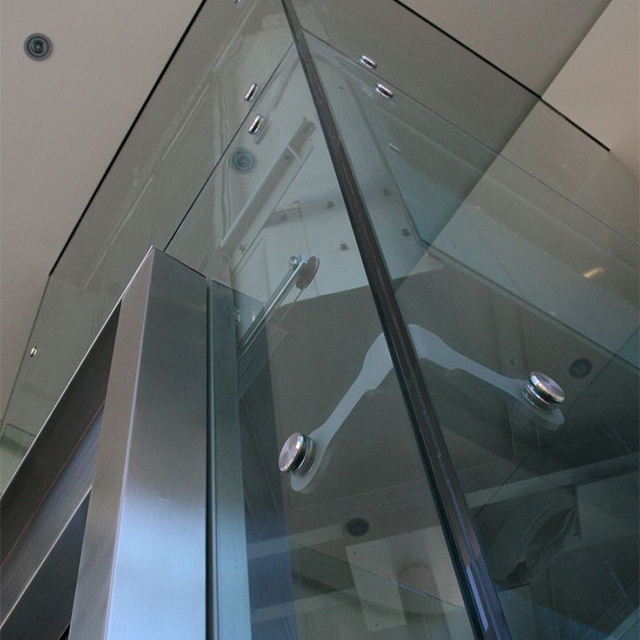
PVB laminated glass is widely used in building exteriors, including curtain walls, facades, balustrades, and glass canopy systems. Its excellent safety performance, impact resistance, and post-breakage integrity make it suitable for architectural applications where both protection and visual clarity are required.
![]() | ![]() | ![]() | ![]() |
| Glass Balustrades Safety glazing solution for balconies, staircases, and elevated applications. | Curtain Walls & Facades Architectural laminated glass for modern building exteriors and facade systems. | Glass Canopies Overhead glazing with enhanced safety and fragment retention performance. | Glass Doors & Entrances Durable laminated glass solutions for commercial and architectural entrances. |
PVB laminated glass is widely used in interior architectural applications where safety, transparency, and design flexibility are required. It can be used for glass partitions, interior doors, stair railings, and decorative glazing, providing enhanced safety while maintaining a modern and elegant appearance.
PVB laminated glass helps reduce sound transmission by damping vibrations between glass layers. It is commonly used for residential and commercial windows, office glazing, and architectural applications in urban areas or locations exposed to traffic noise, where improved acoustic comfort is required.
Edge Processing: Available options include flat edges, rounded edges, and beveled edges to meet different installation and aesthetic requirements.
Drilling and Cutouts: Drilling, notching, and custom cutouts are available for specific mounting and installation requirements. For tempered laminated glass, all processing must be completed before tempering.
Decorative Surface Options: Sandblasting and other decorative treatments can be applied to create customized textures, patterns, and visual effects.
Special Coatings: Additional coating options, including UV-control, anti-reflective, and other functional coatings, are available upon request depending on project requirements.
PVB laminated glass is packed in strong wooden crates designed for safe loading, unloading, and transportation. Glass panels are packed according to thickness and size to minimize movement during transit and ensure product protection.
Depending on the product configuration and destination market, PVB laminated glass can be manufactured and tested according to applicable standards, including ISO 12543, EN 14449, ANSI Z97.1, 16 CFR Part 1201, and AS/NZS 2208.
A:
Application | PVB Thickness | GlassThickness | Notes |
Residential Windows | 0.38mm | 5+5mm or 6+6mm | Sufficient for basic safety. |
High-Rise Curtain Walls | 0.76mm | 8+8mm | Handles higher wind loads. |
Skylights/Roof Glass | 0.76mm | 8+8mm or 10+10mm | Enhances impact resistance |
Floor and Rail Glass | 1.52mm | 10+10mm or 12+12mm | Ensures safety for pedestrian loads. |
Bulletproof Glass | 2.28mm or more | 20+20mm or thicker | Multi-layer configurations required. |
Acoustic Glass | 0.76mm or more | 6+6mm or 8+8mm | Use acoustic PVB for better soundproofing. |
A: Standard PVB laminated glass is not classified as fire-rated glass. Fire-resistant glazing requires specially designed glass assemblies using tested fire-resistant glass and interlayer materials. Fire performance should only be claimed when the complete glazing system has passed the required fire test.
A: PVB laminated glass is widely used for applications requiring enhanced safety, security, and durability, including curtain walls, facades, windows, doors, skylights, balustrades, glass canopies, and interior partitions. The PVB interlayer helps maintain glass integrity after breakage and provides additional functional benefits such as UV reduction and acoustic performance.
A: PVB laminated glass and tempered glass provide different performance benefits. Tempered glass offers higher mechanical strength and a safer breakage pattern, while laminated glass provides fragment retention and post-breakage safety. For higher performance requirements, tempered glass can be combined with PVB interlayers to create tempered laminated glass.
A: Yes. The flexible PVB interlayer helps reduce sound transmission by damping vibrations between glass layers. Acoustic performance depends on the glass thickness combination, PVB type, glazing configuration, and installation system.