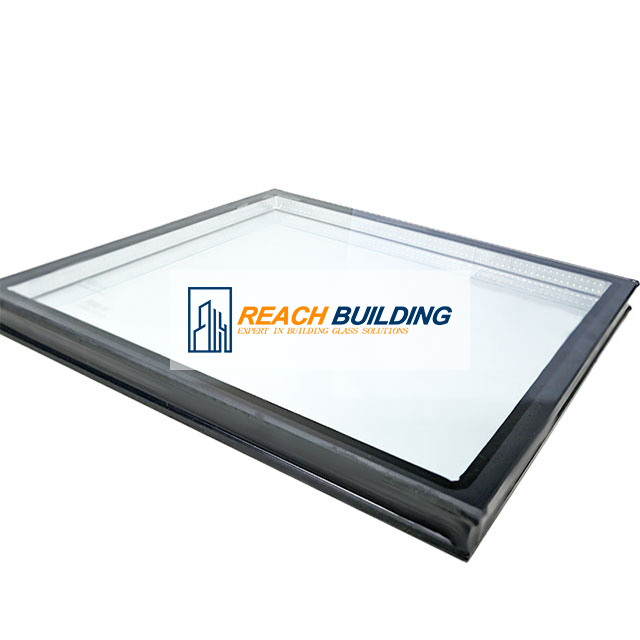
The shift toward stringent building energy codes has transformed commercial and residential glass procurement. Sourcing is no longer just about dimensions. It requires verifiable thermal performance. Subpar manufacturing leads to premature seal failures. It compromises energy efficiency and forces costly post-installation replacements. When glass fails, builders face severe reputation damage and mounting callback costs.
This guide provides builders, architects, and procurement teams a concrete evaluation framework. You will learn how to vet and shortlist reliable manufacturing partners for high-performance glazing. We uncover what truly separates adequate glass suppliers from top-tier partners. Procurement teams can use these insights to evaluate automated production lines and analyze warranty clauses. Securing the right insulated glass units manufacturer minimizes implementation risk. It also maximizes long-term building performance.
Key Takeaways
The credibility of an insulated glass units manufacturer is defined by their automated quality control and certified gas retention rates, not just theoretical thermal ratings.
Evaluating insulated glass panels requires a holistic look at the entire assembly: Low-E coatings, warm-edge spacers, and secondary sealants.
Mitigating implementation risk means scrutinizing a manufacturer’s warranty limitations regarding seal failure and defect replacement labor.
Successful procurement hinges on aligning project volume and lead-time requirements with the manufacturer’s proven capacity.
The Business Impact of Precision Manufacturing in Energy Efficient Windows
The hidden costs of inconsistent glass manufacturing often go unnoticed until installation is complete. Builders frequently discover poor unit performance during final building inspections. Failed blower door tests and thermal imaging audits expose invisible manufacturing flaws. These defects force HVAC systems to work harder. They decrease overall energy efficiency and elevate utility bills for building occupants.
Substandard manufacturing directly harms a builder's reputation. Clients expect a modern, energy efficient window to perform flawlessly. When units fog up or fail within the first few years, client trust evaporates. Negative word-of-mouth spreads quickly in the commercial real estate and residential construction sectors.
To avoid these pitfalls, procurement teams must define strict success criteria. A reliable manufacturing partner will consistently meet these benchmarks:
Consistent Batch-to-Batch U-values: Thermal performance must remain uniform across thousands of units. Variance indicates poor quality control.
Verifiable Code Compliance: Units must meet regional energy codes. Manufacturers should provide documentation for Energy Star or LEED certification standards.
Predictable Supply Chain Timelines: Delivery schedules must align with project phases. Delays cause expensive labor standstills.
Procurement teams must conduct a thorough cost-benefit analysis before selecting a supplier. An unusually low upfront unit cost often hides deeper risks. Cheaply made units carry high long-term callback rates. You might save ten percent on the initial purchase. However, replacing failed units on the fifth floor of a commercial building costs exponentially more. Investing in precision manufacturing yields a superior return on investment. Reduced callback rates and stellar energy performance ultimately protect your profit margins.
Core Evaluation Dimensions for Insulated Glass Panels
Evaluating insulated glass panels requires more than checking the glass thickness. You must scrutinize the entire assembly system. Every component impacts the final thermal and acoustic performance.
Spacer technology represents a massive leap in modern glass manufacturing. Traditional aluminum spacers conduct heat rapidly. They pull cold air from the outside directly into the building perimeter. This causes unwanted perimeter condensation and mold growth. Top-tier manufacturers have shifted entirely to warm-edge technology. They use silicone, structural foam, or composite spacers. These materials break the thermal bridge and vastly improve condensation resistance.
Spacer Type
Thermal Conductivity
Condensation Risk
Best Application
Standard Aluminum
High
High
Low-budget, non-conditioned spaces
Stainless Steel
Medium
Moderate
Moderate climates, standard commercial
Warm-Edge (Silicone/Composite)
Very Low
Low
High-performance LEED buildings, passive homes
Gas fill retention rates also define unit quality. Manufacturers fill the cavity with Argon or Krypton gas to slow heat transfer. However, the gas only works if it stays inside the unit. You must evaluate how the manufacturer seals the glass. Focus closely on the primary and secondary sealants. The primary sealant, usually polyisobutylene (PIB), blocks moisture vapor. The secondary sealant, often silicone or polysulfide, provides structural integrity. Ask potential suppliers about their sealant depth and robotic application methods. Uneven sealant depth guarantees premature gas leakage.
Glass and coating customization is another critical dimension. A versatile manufacturer can apply and orient Low-E (low-emissivity) coatings correctly. Coating placement depends entirely on the climate zone. In hot climates, coatings go on the outer panes for solar control. In cold climates, coatings go on inner panes to maximize passive solar gain. Verify that the supplier understands these regional requirements.
Finally, balance acoustic and thermal priorities. Projects near highways or airports demand high STC (Sound Transmission Class) ratings. Achieving better acoustics often requires laminated layers or varying pane thicknesses. Your manufacturer must know how to integrate these acoustic upgrades without ruining baseline thermal requirements.
Assessing the Production Capabilities of an Insulated Glass Units Manufacturer
Touring a manufacturing facility reveals the truth behind marketing brochures. You need to assess their actual production floor. Facility automation is the single largest indicator of unit longevity. Manual assembly lines inherently introduce human error. Workers may apply uneven pressure during sealing or leave smudges on the Low-E coatings.
Automated glass cutting and washing stations ensure pristine surfaces. Robotic sealing lines apply exact, uniform amounts of PIB and silicone. These automated systems produce significantly lower defect rates compared to manual assembly. They guarantee that the spacer alignment and sealant bite remain perfectly consistent across thousands of units.
You must also match the manufacturer's output capacity with your project demands. Scalability matters deeply for large commercial projects. If a supplier maxes out their production line for your order, delays are inevitable. Evaluate their Minimum Order Quantities (MOQs) for custom configurations. Some factories penalize small, specialized batches with exorbitant fees. A flexible partner can handle both high-volume runs and small custom orders without halting their main lines.
Testing and compliance provide the ultimate proof of quality. Do not accept self-reported data. Look for rigorous third-party certifications. Required credentials include:
IGCC/IGMA Certification: Essential for North American markets, ensuring units survive rigorous weathering tests.
CE Marking: Mandatory for European markets, proving adherence to health, safety, and environmental protection standards.
Accelerated Weathering Tests: In-house testing chambers that simulate decades of UV exposure, humidity, and extreme temperature swings.
Dew Point Testing: Non-destructive tests ensuring zero moisture exists inside the sealed cavity upon production completion.
Risk Mitigation: Preventing Failures in Thermal Barrier Glass
Procurement is fundamentally an exercise in risk management. Acknowledging the reality of seal failure is the first step. Technically, all double glazing will eventually fail. The seals degrade over decades of thermal pumping. However, manufacturing precision determines when this happens. A poorly made unit fails in 5 years. A premium unit of thermal barrier glass lasts 25 years or more.
Handling and transport present massive risks before the glass ever reaches the job site. Units often suffer micro-fractures during transit. Poorly designed crates allow glass edges to chip. Even a microscopic edge defect acts as a stress concentrator. Once installed, thermal expansion causes this invisible flaw to spiderweb into a massive crack. Scrutinize how manufacturers package, crate, and ship their units. They should use robust edge protection and proper A-frame racking to prevent impact damage.
Warranty anatomy requires brutal honesty. You must strip away marketing claims and read the fine print. A "20-year warranty" often sounds better than it is. Does it cover just the replacement unit, or does it contribute to replacement labor? Most manufacturers only provide a new piece of glass. The builder eats the cost of the glazing crew, scaffolding, and disposal.
Furthermore, understand what explicitly voids the warranty. Improper glazing systems or blocked weep holes often nullify coverage. Installing standard units at high altitudes without capillary tubes will cause the glass to bow or shatter from pressure differences. If your project sits above 4,000 feet, your manufacturer must address pressure equalization.
Shortlisting and Selecting Your Double Glazing Partner
Transitioning from evaluation to selection requires a structured approach. The Request for Quote (RFQ) process sets the tone for the relationship. Do not just send a spreadsheet of dimensions. Your initial outreach must include comprehensive data. Provide architectural specs, schedule milestones, delivery logistics, and strict U-value requirements. How a manufacturer responds to a detailed RFQ reveals their technical competence.
Sample verification is a non-negotiable step. Always request physical cross-section samples of their double glazing products. Do not just look at the glass clarity. Inspect the spacer alignment. Check if the desiccant is fully integrated into the spacer matrix. Measure the sealant bite to ensure it meets structural requirements.
During the vetting process, watch out for glaring warning signs. Use this chart to distinguish between risky vendors and reliable partners.
Vendor Evaluation Chart: Red Flags vs. Best Practices
Evaluation Area
Red Flags to Avoid
Partner Best Practices
Testing Data
Unwilling or slow to share third-party testing reports.
Provides IGCC/CE certificates proactively with the RFQ response.
Lead Times
Unusually short lead times suggesting bypassed curing phases.
Realistic schedules that account for proper silicone curing.
Component Sourcing
Evasive answers on spacer brands or sealant chemicals used.
Transparent about utilizing industry-leading chemical suppliers.
Communication
Treats the quote as a pure commodity transaction.
Asks engineering questions about wind loads and altitude.
Initiate concrete next-step actions once you narrow down the list. For large-scale commercial contracts, schedule a site visit to their manufacturing facility. If a site visit is unfeasible, initiate a paid pilot order. Test their communication, crating quality, and delivery punctuality on a small batch before awarding the master contract.
Conclusion
Selecting an insulated glass manufacturer remains a critical strategic risk management decision. High-quality double glazing demands precision engineering and transparent performance data. It also requires robust quality assurance processes that eliminate human error. When you source glass, you are buying long-term thermal reliability.
Take actionable steps to safeguard your projects. First, audit potential suppliers based on their automation and robotic sealing capabilities. Second, demand physical cross-sections to verify spacer technology and sealant depth. Third, read the warranty fine print regarding replacement labor and high-altitude shipping rules.
Prioritize manufacturers who treat the transaction as a technical partnership rather than a mere commodity sale. A true partner engineers solutions for your specific climate zone and project constraints. By applying this rigorous vetting framework, you protect your building's energy efficiency, your project budget, and your professional reputation.
FAQ
Q: What is the standard lead time for wholesale insulated glass units?
A: Standard lead times typically range from 3 to 6 weeks. However, timelines vary heavily based on custom Low-E coatings, specialized gas fills, and current supply chain realities. Tempered or laminated acoustic upgrades can add another 1 to 2 weeks to production schedules.
Q: How do manufacturers verify the gas fill percentage in double glazing?
A: Quality manufacturers use non-destructive testing methods on the production line. They utilize spark emission technology or optical spectroscopy. These tools beam light or high-voltage sparks through the glass to accurately measure the Argon or Krypton concentration without breaking the seal.
Q: What is the difference between single-seal and dual-seal insulated glass panels?
A: Single-seal units use one material for both moisture blocking and structural adhesion. They fail much faster. Dual-seal units use a primary sealant (PIB) strictly to block moisture and gas loss, while a secondary sealant (silicone) provides structural strength. Dual-seal is the industry standard for longevity.
Q: Do manufacturers install capillary tubes for high-altitude shipping?
A: Yes. If units travel across mountain passes or are installed above 4,000 feet, manufacturers install tiny breather tubes (capillary tubes). These allow internal cavity pressure to equalize with atmospheric pressure. This prevents the glass from bowing or shattering during transit.
Miracle Co-founder of Reachbuilding
Miracle owns a glass factory that has been in operation for 40 years. His family has been engaged in the construction industry for over 60 years and possesses extensive engineering and production experience. At Reach Building, he focuses on product technical support, custom solutions, and industry trend analysis for global dealers, contractors, and builders.In his column, Miracle shares practical insights, project case studies, and expert advice to help construction professionals select the right glass for safer, more energy-efficient buildings.
With nearly 30 years of experience in building materials, REACH BUILDING provides customized glass products and technical solutions for global construction and interior projects.
We use cookies to enable all functionalities for best performance during your visit and to improve our services by giving us some insight into how the website is being used. Continued use of our website without having changed your browser settings confirms your acceptance of these cookies. For details please see our privacy policy.