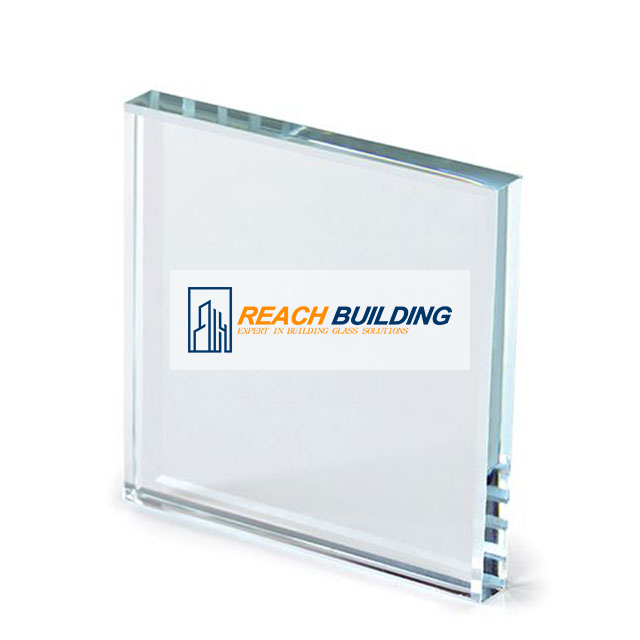
Specifying glass for high-end architectural facades, retail displays, or photovoltaic arrays leaves no room for optical distortion. You cannot tolerate subtle color tinting in premium projects. Standard "clear" glass contains high iron oxide levels. These trace elements produce a distinct green edge. They alter transmitted colors drastically. This visual interference becomes a fatal flaw for luxury storefronts and pristine museum exhibits. Furthermore, many manufacturers struggle to maintain rigorous batch consistency. You absolutely need this uniformity for large-scale clarity.
Selecting a reliable low iron glass supplier requires serious technical evaluation. You must move beyond simple marketing claims of "invisible glass." Project managers must evaluate exact light transmittance metrics. We also need to assess secondary processing capabilities. You will learn to verify supply chain stability carefully. Proper sourcing ensures your architectural or retail vision becomes a flawless reality.
Key Takeaways
True ultra clear glass requires iron oxide levels below 120 ppm to achieve light transmittance exceeding 91%.
Supplier evaluation must prioritize batch-to-batch color consistency to prevent mismatched panels in large architectural installations.
Advanced processing—specifically yielding low iron tempered glass without roller wave distortion—separates premium fabricators from commodity brokers.
Procurement decisions should factor in secondary processing capabilities, including anti-reflective (AR) coatings for display glass and texturing for solar glass panels.
The Business Case for Ultra Clear Glass vs. Standard Clear
Designers often assume standard glass is completely colorless. This assumption leads to costly design failures. You must understand the chemical differences driving visual clarity. The underlying chemistry dictates light transmission and edge aesthetics.
The Iron Oxide Reality
Standard clear glass contains roughly 1000 parts per million (ppm) of iron oxide. This high iron content causes a distinct green tint. You notice this hue immediately when viewing the glass edge. The green coloration thickens exponentially as glass thickness increases. An 8mm standard pane looks noticeably greener than a 4mm pane. Low iron formulations solve this elemental problem. Premium manufacturers reduce the iron content to around 100-120 ppm. This dramatic reduction strips away the green tint. It leaves behind a remarkably pristine viewing medium.
Color Fidelity & ROI
Luxury retail and museum environments demand exact color rendering. The exact Color Rendering Index (CRI) of displayed items translates directly to perceived value. Standard glass absorbs specific light wavelengths. It dulls vibrant reds and whites. Customers viewing merchandise through green-tinted panes perceive lower quality. Conversely, ultra clear glass maintains a CRI approaching 100. Shoppers see the true colors of jewelry, apparel, or artifacts. This precise color fidelity enhances the overall aesthetic experience. High visual clarity directly boosts retail engagement and prestige.
Performance vs. Aesthetics
Commercial architecture requires thick glazing for structural safety. However, engineers face a dilemma. Thicker standard glass turns incredibly dark at the edges. It reduces interior natural daylighting significantly. Low iron options eliminate this compromise entirely. Architects can specify heavy structural glazing without sacrificing edge neutrality. You gain superior safety margins. You also maximize light transmission into commercial lobbies. This balance defines modern luxury architecture.
Standard Clear vs. Ultra Clear Formulations
Feature
Standard Clear Glass
Ultra Clear Glass
Iron Oxide Content
~1000 ppm
~100 - 120 ppm
Visible Light Transmittance (6mm)
~88% - 89%
≥ 91%
Edge Appearance
Prominent Green
Neutral / Slight Azure Blue
Color Rendering Accuracy
Moderate color distortion
Exceptional true-color fidelity
Critical Evaluation Criteria for a Low Iron Glass Supplier
You cannot judge glass quality by eye alone. Subtle variations exist between different factory runs. Procurement teams must enforce strict qualification standards. You must demand verifiable data from your manufacturing partners.
Verifiable Optical Metrics
Require suppliers to provide documented performance sheets. Visible Light Transmittance (VLT) serves as your primary baseline. The industry benchmark demands a VLT of at least 91% at 6mm thickness. Do not accept estimates. Ask for precise iron ppm limits certified by laboratory testing. High-quality fabricators share these metrics willingly. Transparent data ensures you get the purity you specify.
Batch-to-Batch Consistency
Color variance represents the biggest risk in large-scale procurement. Float glass plants produce low iron runs in periodic campaigns. They alter the tin bath chemistry between standard and low iron runs. This transition can cause slight color shifts. You must evaluate the supplier's quality control framework. Request strict consistency tolerances before signing contracts. Mismatched panels on a massive architectural facade look disastrous. Ensure your supplier guarantees single-campaign sourcing for major projects.
Compliance and Certification
Global projects require strict adherence to recognized safety and manufacturing codes. Verify alignment with regional and international standards. Look for compliance with ASTM C1036 for flat glass in North America. European projects require adherence to EN 572-2 standards. These certifications prove the material meets fundamental density and blemish tolerances. Lack of certification signals a high-risk commodity broker rather than a reliable partner.
Coating Compatibility
Raw transparency rarely suffices for modern structural needs. Assess the supplier’s ability to apply advanced coatings. Low-E coatings improve thermal performance dramatically. Anti-glare coatings reduce annoying reflections. You must verify these coatings bond securely to low iron substrates. Some coatings react differently based on surface energy. A premium partner engineers specific coatings optimized for pristine substrates.
Sector-Specific Applications and Sourcing Requirements
Different industries demand specific secondary processing capabilities. You must match your project requirements to specialized factory capabilities. Sourcing for retail differs vastly from sourcing for energy sectors.
Architectural Facades and Structural Glazing
Modern commercial buildings utilize vast expanses of structural glass. Jumbo sizes dominate this sector.
Requirement: Projects demand jumbo sheets spanning several meters. You will frequently specify heavy glass ranging from 12mm to 19mm (3/4"). These thick panes build frameless structural walls, balustrades, and interior partitions.
Supplier Lens: Suppliers must handle oversized logistics seamlessly. Heavy pane transportation requires specialized crating. Furthermore, the supplier must provide precise edge-polishing. Flat polish and mitre edges remain fully exposed in frameless designs. Poor polishing ruins the neutral edge effect completely.
Display Glass for Retail and Museums
High-end retail displays demand invisibility. Shoppers should notice the product, not the barrier.
Requirement: Absolute color neutrality defines this application. You also need minimal reflectance to eliminate viewing distractions. Premium projects require specialized display glass solutions.
Supplier Lens: Evaluate their expertise in applying multi-layer anti-reflective (AR) coatings. AR coatings drop surface reflection below 1%. Additionally, cases require laminated safety options. The supplier must use ultra-clear interlayers. Standard PVB interlayers re-introduce a yellow tint. True experts use SentryGlas® or specialized ultra-clear PVB.
Solar Glass Panel Manufacturing
Renewable energy infrastructure relies heavily on optical purity. Photovoltaic cells need maximum light exposure to generate power.
Requirement: You must maximize solar energy transmittance. Higher transmission improves photovoltaic (PV) module efficiency instantly. Every percentage point of light yields more electricity. You need specialized solar glass panel substrates for this application.
Supplier Lens: The fabricator must provide rolled or textured formats. Texturing captures angled sunlight efficiently throughout the day. They must also apply specialized anti-reflective treatments. Finally, the glass must resist harsh environmental degradation over decades of sun exposure.
Processing Risks: Sourcing Low Iron Tempered Glass
Cutting and polishing represent only the first steps. Most architectural applications require heat tempering for safety. However, heat-treating high-purity substrates presents unique thermodynamic challenges. You must vet your fabricator's tempering expertise carefully.
The Tempering Challenge
Low iron glass absorbs and retains heat differently than standard glass. Its altered chemical composition changes its radiant heat absorption profile. Standard glass absorbs heat quickly. High-purity glass allows radiant heat from furnace elements to pass straight through. This anomaly forces operators to rely more on convection heating. Improper furnace profiling leads to uneven heating across the pane.
Defect Mitigation
Evaluate the supplier’s tempering lines rigorously. Inexperienced fabricators often introduce severe optical defects. They create high levels of anisotropy. Anisotropy appears as dark leopard spots visible under polarized light. This ruins the view through polarized sunglasses. Uneven heating also causes roller wave distortion. The softened glass sags between ceramic furnace rollers. True experts calibrate their ovens specifically to yield pristine low iron tempered glass.
Tempering Defect Mitigation Chart
Defect Type
Root Cause
Supplier Mitigation Strategy
Roller Wave Distortion
Uneven heating; slow roller speed
Use advanced convection ovens; adjust oscillation speeds
Customized thermal profiling for low iron chemistry
Safety Standards
Optical purity means nothing without structural integrity. Ensure the final tempered product meets stringent safety glazing standards. It must pass SGCC testing. It needs to meet CPSC 16 CFR 1201 and ASTM C1048 specifications. These tests prove the glass fragments safely upon impact. Premium suppliers achieve full safety compliance without compromising visual clarity.
Shortlisting Logic and Procurement Next Steps
You have defined the technical requirements. Now you must transition to active procurement. Vetting a shortlist requires practical physical inspections. You must also evaluate backend logistics before issuing purchase orders.
Sample Verification Best Practices:
Always mandate physical samples before committing.
Request samples at the exact thickness specified for the final project.
Compare 6mm and 12mm samples side-by-side. Edge color shifts dramatically at higher thicknesses.
Evaluate samples outdoors under natural daylight to reveal hidden tints.
Lead Times and Capacity:
Assess factory production capacity for your specific grade.
Remember specialized floats run less frequently than standard clear floats.
Factor campaign schedules into your construction timeline.
Discuss buffer inventory for emergency replacements during installation.
Packaging and Transit Risk:
Review the supplier’s crating methods thoroughly. Low iron sheets represent a premium investment.
Check their interleaving powder usage. This powder prevents glass surfaces from fusing together.
Verify their moisture-prevention strategies. Trapped moisture causes irreversible glass corrosion during global shipping.
Demand A-frame steel transport racks for oversized jumbo panels.
Conclusion
Partnering with the right fabricator represents a critical risk-management decision. It stretches far beyond aesthetic choices. True optical purity demands extreme manufacturing precision and rigorous quality control. The chemical makeup of the raw float glass merely starts the journey.
We recommend prioritizing suppliers who offer completely transparent performance data. They must demonstrate proven tempering expertise to avoid optical distortion. Furthermore, they need a track record of batch consistency in your specific vertical. Your needs vary greatly whether you build architecture, retail displays, or solar energy farms.
Take action early in your design phase. Request a technical consultation with prospective partners. Demand a detailed specification sheet to compare VLT and iron ppm metrics directly against your project requirements. Securing physical samples today prevents costly visual disappointments tomorrow.
FAQ
Q: What is the maximum thickness available for ultra clear low iron glass?
A: Manufacturers typically provide availability ranging from 3mm up to 19mm (3/4 inch). You should note that edge neutrality is best judged at thicker dimensions. Standard glass looks extremely green at 19mm, making ultra clear formulations mandatory for thick structural applications.
Q: Does low iron glass cost significantly more than standard clear glass?
A: Yes, it carries a cost premium typically 20-40% higher. However, you justify this investment through superior aesthetic clarity and excellent color fidelity. In retail, it boosts merchandise perceived value. In energy applications, the increased solar transmission directly improves power yields.
Q: Can low iron glass be insulated (IGU) or laminated?
A: Yes, it offers full compatibility with standard IGU fabrication. You must emphasize the need for ultra-clear PVB or SentryGlas® (SGP) interlayers. Using standard laminating interlayers will re-introduce a yellow tint, defeating the purpose of pristine substrates in laminated applications.
Q: Why do some low iron glasses still have a slight blue or yellow tint?
A: Residual trace elements remain even after purification. The specific float manufacturing process can leave microscopic color shifts. Sometimes this creates a very faint azure blue edge. This reality reinforces the need for strict supplier batch testing and single-campaign sourcing for large projects.
Miracle Co-founder of Reachbuilding
Miracle owns a glass factory that has been in operation for 40 years. His family has been engaged in the construction industry for over 60 years and possesses extensive engineering and production experience. At Reach Building, he focuses on product technical support, custom solutions, and industry trend analysis for global dealers, contractors, and builders.In his column, Miracle shares practical insights, project case studies, and expert advice to help construction professionals select the right glass for safer, more energy-efficient buildings.
With over 20 years of experience in building materials, Reach Building provides customized glass products and technical solutions for global construction and interior projects.
We use cookies to enable all functionalities for best performance during your visit and to improve our services by giving us some insight into how the website is being used. Continued use of our website without having changed your browser settings confirms your acceptance of these cookies. For details please see our privacy policy.