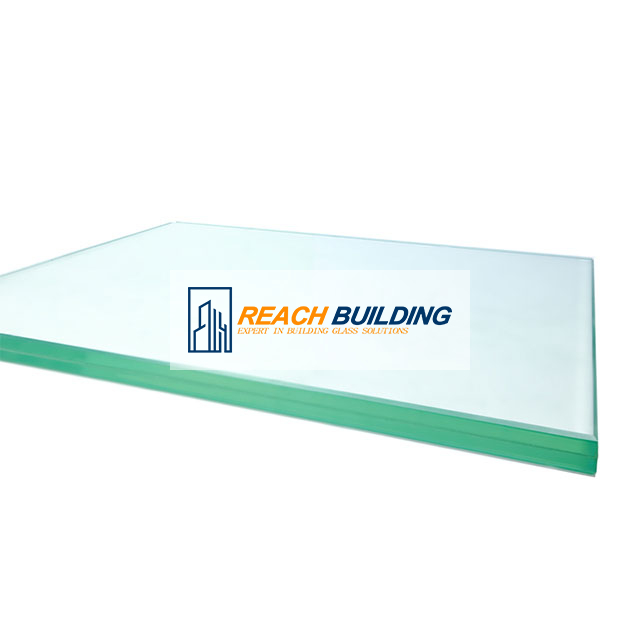
Specifying architectural glazing demands a high-stakes balance. You must weigh structural integrity against occupant comfort and tight project budgets. Monolithic tempered glass meets basic building code requirements. However, modern building envelopes demand much more. They require multi-functional solutions to handle diverse environmental stressors. Today, PVB (Polyvinyl Butyral) interlayers serve as the vital baseline for comprehensive building performance. These advanced interlayers transform ordinary glass into a highly resilient barrier.
This guide delivers a detailed technical evaluation of PVB laminated glass. It explores core performance capabilities, strict specification limits, and comparisons against alternative materials. We aim to help architects, engineers, and procurement teams make evidence-based sourcing decisions. We provide actionable insights for seamless integration into your next architectural project. You will discover practical ways to avoid common specification errors.
Key Takeaways
Post-Breakage Integrity: PVB interlayers retain glass fragments upon impact, preventing spalling and maintaining the building envelope until replacement.
Acoustic & Solar Control: Standard PVB naturally blocks >99% of UV radiation while improving Sound Transmission Class (STC) ratings compared to monolithic glass.
Application Boundaries: While excellent for contained safety and acoustics, PVB requires careful specification regarding edge exposure to prevent delamination, where structural ionoplast (SGP) might be required.
The lamination process transforms brittle glass into a robust composite material. Fabricators place a flexible PVB film between two or more lites of glass. They then subject this sandwich to extreme heat and pressure inside an industrial autoclave. This process melts the PVB slightly, forcing it to bond permanently to the glass surfaces. The resulting single unit looks like ordinary glass but performs very differently under stress.
Post-Glass Breakage Behavior
You must understand how glass fails to appreciate its safety value. Monolithic tempered glass shatters into thousands of small, evacuated cubes. This prevents deep lacerations but immediately destroys the physical barrier. PVB layers behave differently. They hold broken shards firmly in place. This spider-web cracking pattern prevents dangerous fall-through incidents. It minimizes laceration risks and keeps the building envelope temporarily sealed. True pvb laminated glass safety relies on this post-breakage integrity. It buys facility managers critical time before replacement.
Security Applications
Architects frequently specify this glazing as a highly dependable security building material. When properly captured inside a robust frame, it thwarts forced-entry attempts. Intruders cannot simply smash and grab. They face a resilient polymer barrier. Furthermore, laminated units offer baseline blast mitigation and severe weather protection. They can absorb significant impact energy. However, you must establish realistic load-bearing limits. PVB is flexible, meaning it will deflect under heavy sustained loads.
Compliance & Certifications
Procurement teams must verify strict impact testing standards. You cannot rely on visual inspections alone. Always demand official test reports. Critical standards include:
ANSI Z97.1 (Category II): Establishes safety glazing requirements for buildings in the United States.
CPSC 16 CFR 1201 (Category II): A federal standard for architectural glazing materials.
EN 14449 / EN 12600: European standards defining pendulum impact tests and laminated glass performance.
Urban environments constantly bombard building facades with noise. Monolithic glass performs poorly against low-frequency traffic sounds. PVB interlayers solve this through viscoelastic dampening. The polymer core absorbs sound energy. It interrupts sound wave transmission physically. This proves especially crucial in the "coincidence dip" frequency range. Standard glass naturally resonates and fails to block noise in this specific range. By absorbing these vibrations, the interlayer significantly upgrades the acoustic barrier.
STC and OITC Metrics
Industry professionals measure noise reduction using Sound Transmission Class (STC) and Outdoor-Indoor Transmission Class (OITC). STC covers typical interior noises like speech. OITC focuses on lower-frequency outdoor noises like traffic. Adding a PVB laminated lite to an Insulating Glass Unit (IGU) dramatically boosts both numbers. We have outlined benchmark expectations below.
Typical Acoustic Performance Metrics
Glass Configuration
Estimated STC
Estimated OITC
Standard 1-inch IGU (Monolithic)
31 - 33
26 - 28
1-inch IGU (One Laminated Lite, Standard PVB)
35 - 37
30 - 32
1-inch IGU (One Laminated Lite, Acoustic PVB)
38 - 40+
33 - 35+
Acoustic vs. Standard PVB
While standard PVB provides noticeable noise reduction, specialized acoustic glass pushes performance further. Acoustic PVB features a multi-layer extrusion. Fabricators sandwich a softer, highly dampening core between two standard PVB outer layers. This three-layer interlayer targets specific noise frequencies aggressively. It offers superior noise reduction for high-traffic or airport-adjacent projects. Best of all, it achieves this without increasing the overall glazing thickness.
UV Blocking Glass: Protecting Interior Assets
Solar Radiation Filtering
Natural daylighting brings immense value to commercial and residential spaces. However, unfiltered sunlight carries destructive ultraviolet radiation. PVB acts as a highly effective UV blocking glass solution. The interlayer inherently absorbs solar radiation. It filters out up to 99% of harmful UVA and UVB rays. This protection operates continuously without requiring secondary aftermarket window films.
Visible Light Transmission (VLT)
Many clients harbor a common misconception. They assume blocking UV rays requires dark, tinted glass. This is entirely false. PVB achieves near-total UV blockage without significantly reducing Visible Light Transmission (VLT). Standard clear PVB remains optically transparent. It does not alter the neutral color of clear or low-iron glass. Occupants enjoy bright, natural daylighting without the associated ultraviolet damage.
ROI on Interior Preservation
You can easily justify the premium of laminated glass through interior preservation. Ultraviolet radiation causes irreversible fading and material degradation. For commercial retail spaces, this means protecting expensive window displays and merchandise. In high-end residential builds, it prevents the fading of premium hardwood floors, bespoke furniture, and valuable artwork. This embedded protection yields a direct return on investment. Property owners avoid costly interior replacements over the building's lifecycle.
Material Selection: PVB vs. SGP (Ionoplast) vs. Tempered Glass
PVB vs. Tempered
Standard tempering creates strong glass suitable for basic thermal stress and heavy direct impacts. It works well for standard windows or shower doors. However, building codes legally require laminated safety glass for specific high-risk zones. You must specify laminated units for overhead glazing, skylights, and glass floors. Laminated assemblies also dominate blast resistance and hurricane-rated applications. Tempered glass shatters and falls; laminated glass shatters and stays in place.
PVB vs. SGP (SentryGlas Plus)
Architects often face a choice between standard PVB and SGP (Ionoplast) interlayers. Both offer profound safety benefits. However, they serve different structural and environmental purposes. We provide a strict, unbiased comparison framework below to aid your decision-making process.
Stiffness and Tear Strength
SGP behaves very differently from PVB. Ionoplast is significantly stiffer and more tear-resistant. While PVB stretches and droops under load after breakage, SGP remains rigid. It can often support weight even when both glass lites shatter. This makes SGP mandatory for structural glass fins, glass staircases, and point-supported facades.
Moisture Resistance
SGP outperforms standard PVB in exposed-edge applications. Frameless canopies and open-edge balustrades expose the interlayer to rain and humidity. Standard PVB absorbs moisture over time. This leads to edge creep and ugly delamination. SGP resists moisture inherently, maintaining a pristine edge without framing.
Cost-to-Performance Ratio
SGP commands a significant price premium over PVB. Therefore, position PVB as your primary choice for fully captured or framed applications. If the framing conceals and protects the glass edges, PVB remains the most cost-effective option. It dominates acoustic control projects and standard safety glazing requirements.
Material Comparison Chart
Feature
PVB Interlayer
SGP (Ionoplast) Interlayer
Rigidity After Breakage
Flexible; tends to sag or droop.
Highly rigid; maintains structural shape.
Edge Moisture Resistance
Vulnerable to edge creep if exposed.
Highly resistant; ideal for open edges.
Acoustic Performance
Excellent, especially multi-layer acoustic PVB.
Average; stiffer material transmits more sound.
Primary Application
Framed windows, doors, acoustic walls.
Frameless railings, canopies, structural glass.
Implementation Risks and Specification Criteria
Edge Stability and Delamination Risks
You face significant delamination risks if you ignore chemical compatibility. The PVB edge often interacts with weather-seal silicones, glazing tapes, and setting blocks. Incompatible chemical sealants react badly. They dissolve the interlayer slowly, causing bubbling and separation at the glass edges. Always mandate compatibility testing. Require your glazing contractor to submit written approval from the sealant manufacturer validating its use against the specific PVB brand.
Best Practices & Common Mistakes
Mistake: Using standard acetoxy curing silicones near exposed PVB edges. This acidic cure degrades the interlayer.
Best Practice: Specify neutral-cure silicones exclusively. Always design framing systems with proper weep holes to prevent standing water from resting against the laminated glass edge.
Visual Defect Tolerances
Laminating multiple layers introduces potential visual flaws. Do not leave quality up to chance. You must mandate strict visual defect tolerances in your supplier agreements. Define acceptable limits for optical distortion, roller wave, and haze. Address the maximum allowable size and frequency of bubbles or lint trapped inside the PVB. Reference ASTM C1172 standards to establish objective, measurable quality baselines for your fabricator.
Thermal Stress Considerations
Laminated assemblies absorb more solar heat than monolithic glass. The PVB layer traps thermal energy. In high-solar-absorption environments, this localized heating causes massive thermal stress. If the glass edge is cold but the center is hot, thermal breakage occurs. Address this risk early. You will likely need to heat-strengthen or fully temper the individual glass lites before the lamination process. This preparation prevents spontaneous thermal failure after installation.
Shortlisting Suppliers and Next Steps
Vendor Evaluation Checklist
Sourcing high-quality safety glazing requires rigorous supplier vetting. Do not select a fabricator based on price alone. Use the following metrics to evaluate their manufacturing capabilities:
Autoclave Capabilities: Verify their maximum width and length constraints. Ensure they can actually process your required oversized glass dimensions.
Cleanroom Standards: PVB assembly must occur in a climate-controlled, dust-free environment to prevent trapped debris.
Quality Assurance Documentation: Demand recent optical distortion reports and certified impact test results.
Edge Processing Quality: Review their grinding and polishing machinery. Poor edge work leads to immediate breakage during installation.
Prototyping and Mockups
We strongly recommend requesting visual mockups before volume purchasing. A 12-inch by 12-inch sample helps you verify critical details. You can assess the color neutrality of the combined glass and interlayer. You can inspect the edge quality firsthand. Mockups also allow your engineering team to test sealant compatibility in a controlled setting.
Call to Action
Proper specification prevents costly delays. Direct your teams to consult with structural engineering partners immediately. Finalize your required glass thickness, interlayer type, and framing constraints. Reach out to qualified fabricators to request a comprehensive technical data sheet and a project-specific quote.
Conclusion
Specifying architectural glazing demands careful consideration of both safety and occupant comfort. PVB laminated glass safety extends far beyond basic impact resistance. It offers a comprehensive solution engineered for the modern building envelope. It mitigates dangerous noise pollution while aggressively filtering destructive UV radiation.
Takeaway action steps include:
Specify PVB for all captured overhead and security glazing applications.
Upgrade to specialized acoustic PVB interlayers for high-traffic or urban facades.
Ensure complete chemical compatibility between the PVB edge and your selected glazing sealants.
Mandate thermal stress analysis to determine if the raw glass needs prior heat-strengthening.
While PVB does not serve as a structural substitute for SGP in exposed-edge scenarios, it remains the undisputed standard for framed architectural safety glazing. When you specify it with correct tolerances and compatible framing systems, you guarantee long-term durability, security, and exceptional performance.
FAQ
Q: Does PVB laminated glass weaken over time?
A: When installed correctly within a compatible framing system, PVB maintains its integrity for decades. However, its lifespan drastically reduces if the edges endure prolonged moisture exposure or incompatible chemical sealants. Poorly sealed edges absorb water, leading to edge creep and delamination, which compromises both aesthetics and safety.
Q: Can PVB laminated glass be cut to size on-site?
A: On-site modification is highly discouraged and often impossible. Factory fabrication ensures clean cuts and proper edge sealing. Cutting laminated units requires specialized saws and heat application to separate the PVB layer. If the lites are heat-strengthened or tempered, attempting to cut them on-site will cause the entire panel to shatter instantly.
Q: What is the minimum thickness for PVB acoustic glass?
A: Standard interlayer thicknesses include 0.38mm, 0.76mm, and 1.52mm. For notable acoustic improvement and safety, fabricators typically use a 0.76mm PVB core. Specialized multi-layer acoustic PVB also starts around 0.76mm. Thicker 1.52mm interlayers are reserved for high-security applications, blast resistance, and severe hurricane zones requiring maximum impact retention.
Q: How does PVB affect the thermal insulation (U-value) of an IGU?
A: A PVB interlayer improves acoustics, blocks UV rays, and guarantees post-breakage safety. However, it has a negligible impact on the actual thermal insulation (U-value) of the unit. To improve thermal performance, you must combine the laminated lite with Low-E coatings, argon gas fills, and warm-edge spacers inside the Insulating Glass Unit.
Miracle Co-founder of Reachbuilding
Miracle owns a glass factory that has been in operation for 40 years. His family has been engaged in the construction industry for over 60 years and possesses extensive engineering and production experience. At Reach Building, he focuses on product technical support, custom solutions, and industry trend analysis for global dealers, contractors, and builders.In his column, Miracle shares practical insights, project case studies, and expert advice to help construction professionals select the right glass for safer, more energy-efficient buildings.
With nearly 30 years of experience in building materials, REACH BUILDING provides customized glass products and technical solutions for global construction and interior projects.
We use cookies to enable all functionalities for best performance during your visit and to improve our services by giving us some insight into how the website is being used. Continued use of our website without having changed your browser settings confirms your acceptance of these cookies. For details please see our privacy policy.