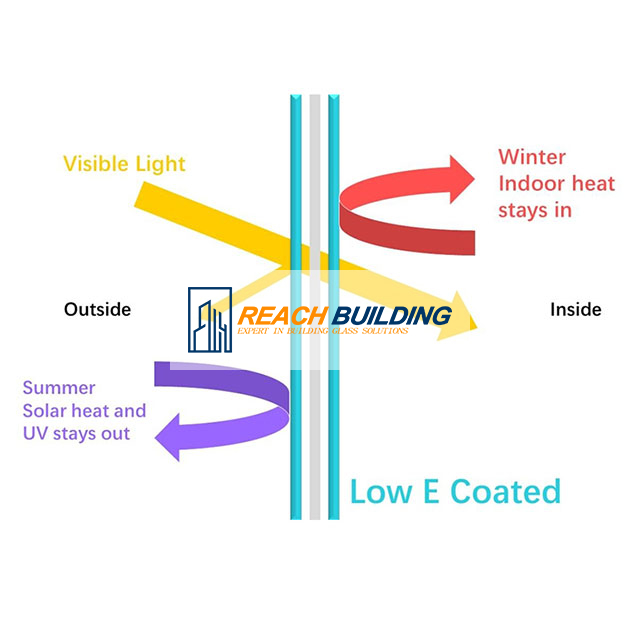
Modern architecture increasingly demands expansive, highly transparent building envelopes to connect occupants with the outdoors. However, designing these striking facades directly clashes with progressively strict commercial energy codes and tight operational carbon limits. Standard clear glazing is simply no longer viable for large-scale commercial projects. To address this challenge, the construction industry has transitioned toward advanced structural solutions. This shift establishes low-emissivity technology as the undeniable baseline for modern, high-performance facades.
You need a reliable framework to navigate these complex specifications effectively. Choosing the wrong glass type can severely compromise building performance and inflate utility costs. This article provides the precise technical and commercial guidance necessary for your designs. We will help you evaluate, specify, and integrate low-E glass into your commercial and high-end residential projects seamlessly.
Key Takeaways
Energy Code Compliance: High-performance low-E coatings are mandatory for meeting progressive global and regional energy efficiency standards (e.g., LEED, BREEAM, local energy codes).
Metric-Driven Selection: Specification relies on balancing the U-Value (insulation), Solar Heat Gain Coefficient (SHGC), and Visible Light Transmittance (VLT) against specific climate requirements.
System Integration: Maximizing ROI requires integrating low-E coatings correctly within insulated glass units (IGUs) alongside proper framing systems.
Climate Customization: There is no universal solution; coatings must be tailored—passive low-E for heating-dominated climates, and solar control low-E for cooling-dominated (tropical/hot) climates.
How Low-E Coated Glass Drives ROI in Building Envelopes
Uncoated glass creates massive inefficiencies in building envelopes. It acts as a thermal bridge, allowing interior heat to escape during winter and inviting unwanted solar heat during summer. These rapid temperature fluctuations force HVAC systems into overdrive. Consequently, property owners face steep operational costs. Beyond financial strain, inefficient buildings routinely fail to meet strict Environmental, Social, and Governance (ESG) compliance targets.
High-performance energy saving glazing solves this business problem directly. It transforms windows from thermal liabilities into active energy-management assets. By applying microscopic layers of silver or tin oxide to the glass surface, manufacturers create a selective barrier. This barrier reflects long-wave infrared heat while still permitting visible daylight to enter the space.
When you invest in advanced glazing, you generate highly measurable outcomes across the project lifecycle. Consider these core benefits:
Reduction in Peak Loads: Advanced coatings drastically lower peak heating and cooling loads. This reduction allows engineers to specify smaller, less expensive HVAC systems. Downsizing mechanical equipment yields immediate capital expenditure (CapEx) savings.
Long-Term Cost Savings: The operational savings accrued from reduced energy consumption quickly outpace the initial premium paid for advanced glass. Lifecycle cost analyses consistently prove the financial viability of high-performance envelopes.
Improved Occupant Comfort: Proper glazing mitigates radiant temperature asymmetry. Occupants sitting near expansive windows no longer feel a distinct chill in winter or intense heat in summer. Additionally, tailored coatings significantly reduce harsh glare.
Decoding the Metrics: How to Evaluate Energy Saving Glazing
Specifying glass based on marketing claims is a dangerous practice. We must guide specifiers toward objective, tested performance data. To select the right energy saving glazing, you must evaluate three foundational metrics. Balancing these metrics against your specific site conditions ensures optimal building performance.
U-Value (Thermal Transmittance)
The U-value measures the rate of heat transfer through a window. A lower U-value indicates better insulation. It defines how effectively the glass prevents expensive interior furnace heat from escaping outdoors. This metric is absolutely crucial for cold, heating-dominated climates.
However, the coating alone cannot do all the work. To achieve optimal U-values, you must pair the low-E coating with an insulated glass unit (IGU). Filling the sealed airspace between the glass panes with dense noble gases, like argon or krypton, dramatically slows conductive heat transfer.
Solar Heat Gain Coefficient (SHGC)
The SHGC defines the fraction of incident solar radiation admitted through a window. It measures how well the product blocks heat from the sun. The scale ranges from 0 to 1. A lower SHGC translates to less solar heat entering the building.
You must carefully navigate the trade-offs here. A very low SHGC drastically reduces cooling costs in hot climates. However, aggressive solar control coatings can sometimes darken the glass, which may reduce natural daylighting and increase reliance on artificial lighting.
Visible Light Transmittance (VLT) & Light-to-Solar Gain (LSG)
Visible Light Transmittance (VLT) indicates the percentage of natural daylight that passes through the glass. High VLT keeps interior spaces bright and welcoming.
To truly evaluate the efficiency of a coating, you must calculate the Light-to-Solar Gain (LSG) ratio. You find the LSG by dividing the VLT by the SHGC. It tells us how effectively the glass allows daylight in while simultaneously keeping solar heat out. A higher LSG ratio signifies a more advanced, efficient product.
| | | Chart: Quick Reference Guide for Glazing Metrics |
Metric | What It Measures | Ideal Value for Hot Climates | Ideal Value for Cold Climates |
U-Value | Insulation / Heat retention | Low to Moderate | Extremely Low |
SHGC | Solar heat blocking | Extremely Low | Moderate to High |
VLT | Natural daylight entry | Moderate to High | Moderate to High |
LSG Ratio | Overall coating efficiency | High (>1.5) | Moderate |
![Energy Saving Glazing in Modern Architecture]()
Passive vs. Solar Control: Matching Coating to Climate Reality
There is no universal solution in facade engineering. We must break down the fundamental split in low-E coated glass technologies. Selecting the wrong category will ruin your energy model. The industry divides these solutions into two main categories: passive coatings and solar control coatings.
Passive Low-E (Hard Coat / Pyrolytic)
Passive low-E glass utilizes a pyrolytic manufacturing process. Manufacturers fuse a thin layer of tin oxide onto the glass ribbon while it is still extremely hot on the float line. This creates a "hard coat" that becomes part of the glass surface.
The mechanism here is deliberate. Hard coats are designed to maximize solar heat gain from the outside while efficiently retaining interior furnace heat. They allow the winter sun to warm the space naturally. Therefore, passive low-E is the ideal specification for heating-dominated, northern climates. Additionally, this pyrolytic layer is highly durable during manufacturing, handling, and installation.
Solar Control Low-E (Soft Coat / Sputtered / MSVD)
Solar control glass requires a completely different process known as Magnetron Sputtering Vapor Deposition (MSVD). Manufacturers apply microscopic layers of silver to pre-cut glass in a vacuum chamber. You can specify single, double, or even triple-silver layers.
This mechanism is engineered to reject harsh solar heat while maintaining exceptionally high VLT. It reflects the sun's infrared energy outward. Solar control glass is absolutely essential for cooling-dominated, tropical climates or any commercial structure featuring massive expanses of glass. However, there is a strict performance constraint. The silver layers are highly susceptible to oxidation. Fabricators must protect the soft coat within the sealed airspace of an insulated glass unit.
Feature | Passive Low-E (Hard Coat) | Solar Control Low-E (Soft Coat) |
Manufacturing Process | Pyrolytic (fused during float) | MSVD (sputtered in vacuum) |
Primary Metal Used | Tin Oxide | Silver (Single, Double, Triple) |
Best Climate Match | Cold / Heating-Dominated | Hot / Cooling-Dominated |
Handling Durability | High (exposed surfaces allowed) | Delicate (must be sealed in IGU) |
Implementation Realities: Integration, Fabrication, and Risks
System synergy dictates real-world success. Advanced coated glass does not perform in a vacuum. It relies heavily on surrounding structural elements and precise fabrication techniques.
Curtain Wall and Window Wall Integration
Large-scale commercial facades demand careful design considerations. You cannot assess the glass performance independently of the framing system. Aluminum frames are highly conductive. Without proper engineering, they will sabotage the thermal performance of the best glass.
You must incorporate advanced thermal breaks—such as polyamide struts—within the framing materials. This prevents heat from bypassing the glass and traveling directly through the metal. Always evaluate the overall system U-value (fenestration performance) rather than just the center-of-glass performance.
Processing and Structural Dependencies
Fabricating high-performance IGUs introduces complex manufacturing steps. One critical step is edge deletion. Fabricators must carefully remove the soft silver coating around the very edge of the glass pane before sealing the unit. If they fail to strip this coating, the primary sealant will not adhere properly to the glass. This leads to premature argon gas leakage and catastrophic IGU seal failure.
Furthermore, advanced coatings absorb and reflect significant amounts of solar energy. This creates uneven temperature gradients across the glass surface. To prevent thermal breakage caused by this stress, specifiers frequently require the product to undergo heat-strengthening. In many commercial applications, you must utilize fully tempered glass to meet safety codes and handle the thermal load safely.
Visual Aesthetics and Quality Control
Managing visual aesthetics is a common challenge on large projects. Complex silver coatings can exhibit a slight color shift depending on the viewing angle or sky conditions. Exterior reflectance must also be managed to prevent blinding glare for neighboring buildings. It is crucial to ensure visual uniformity across multiple glass batches. Always view physical samples on the actual job site before making a final decision.
Specification Checklist: Shortlisting Your Glazing Partner
You must vet your suppliers rigorously before signing any procurement contracts. High-performance facades represent a massive portion of the project budget. Use this evaluation criteria to verify supplier competence.
Require Third-Party Testing and Certification: Never rely solely on in-house data. Demand validated performance reports from recognized authorities. Look for National Fenestration Rating Council (NFRC) ratings and Insulating Glass Certification Council (IGCC) credentials. These verify that the thermal data matches reality.
Assess Coating Capabilities: Not all manufacturers possess the technology for advanced coatings. Verify whether the supplier has modern multi-silver sputtering lines. Triple-silver capabilities are generally required if you need exceptionally high LSG ratios for premium commercial towers.
Scrutinize Warranty and Longevity Terms: Review the standard warranties meticulously. Ensure they explicitly cover IGU seal failure and internal coating degradation (oxidation). Evaluate their track record for post-installation support and replacement logistics.
Execute Thermal Modeling: Before finalizing the order, engage your engineering team to run comprehensive thermal modeling software using the specific glass data.
Request Physical Mock-Ups: Order full-size physical glass mock-ups. Evaluate them under site-specific lighting conditions at different times of the day to confirm the aesthetic intent.
Conclusion
Advanced low-emissivity technology is a precise, climate-dependent engineering choice. It is far from a simple commodity product. Your specification carries long-term consequences for the operational efficiency and carbon footprint of the building.
Careful alignment of the U-value, SHGC, and VLT is mandatory. You must pair this data with robust structural integration, including proper framing thermal breaks and strict fabrication standards like edge deletion. This holistic approach is the only proven way to realize your promised energy savings and architectural aesthetic goals.
Do not wait until the late stages of design to address these metrics. We encourage specifiers and architects to engage with technical engineering teams early in the schematic design phase. Prioritizing accurate thermal modeling and physical product sampling will secure your project's success.
FAQ
Q: Is all coated glass considered low-E?
A: No. You must differentiate between simple tinted or reflective glass and genuine low-emissivity glass. Tinted glass simply absorbs heat to reduce glare. True low-E glass uses microscopic, transparent layers of silver or tin oxide specifically engineered to reflect long-wave infrared heat while maximizing visible light transmission.
Q: Can low-E coatings be applied to existing windows?
A: While aftermarket low-E films exist, they are vastly inferior to factory-sealed low-E IGUs. Applying aftermarket films can alter the thermal stress on existing glass, potentially causing it to shatter. Furthermore, retrofitting films often voids the original manufacturer's window warranty and degrades over time.
Q: Does low-E glass look different from standard clear glass?
A: Yes, slightly. While modern coatings are highly transparent, complex multi-silver solar control coatings often exhibit a faint color shift. Depending on the thickness of the glass, the specific coating type, and the exterior viewing angle, you may notice a subtle blue, green, or neutral grey tint.
Q: Where is the low-E coating placed within an insulated glass unit?
A: Placement dictates performance. Surfaces are numbered from the outside in. For hot climates, placing the coating on Surface #2 (the inside of the exterior pane) maximizes solar heat rejection. For cold climates, placing it on Surface #3 (the outside of the interior pane) helps reflect furnace heat back into the room.