Modern architecture is moving toward lighter, safer, more energy-efficient, and environmentally responsible buildings. While glass brings openness, daylight, and views to facades, every building still needs solid wall areas for insulation, fire protection, privacy, and architectural expression.
To address this challenge, Reach Building developed Lightweight Microcrystalline Stone, a proprietary green building material for modern exterior walls. In this Blog, Reach Building will explain what Lightweight Microcrystalline Stone is, how it works, and why it is becoming a practical solution for modern exterior wall design.
A New Building Material That Can Float on Water — Lightweight Microcrystalline Stone.
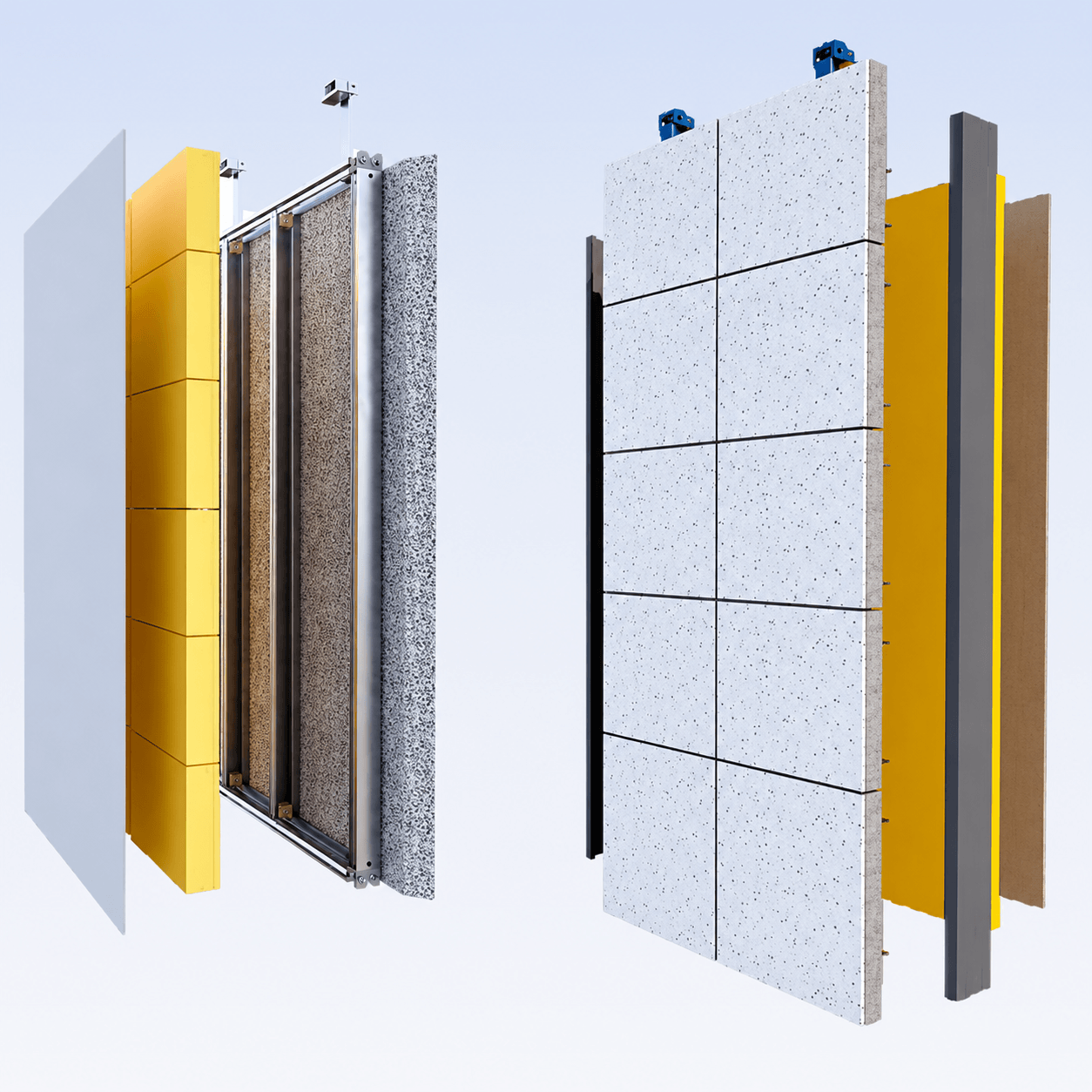
Product diagram of Lightweight Microcrystalline Stone from Reach Building.
It is created through material formulation, high-temperature crystallization, foaming, and precision processing. The finished material has a microcrystalline stone surface and a lightweight honeycomb inner structure, giving it both a refined stone-like appearance and practical wall performance.
Turning Waste Into Green Building Value
One of the most important reasons Reach Building developed Lightweight Microcrystalline Stone is environmental responsibility.
The material uses silicon-based solid waste, such as tailing sand, aeolian sand, and silt, as key raw materials. Its comprehensive solid waste utilization rate can reach 75%–90%, helping transform low-value or discarded resources into long-term architectural value.
Reach Building also adopts a cleaner production process. Instead of relying on traditional coal-fired kiln production, the process uses electric heating, which helps reduce combustion-related emissions. Wastewater and production residue can also be recycled and reused during manufacturing, supporting a cleaner and more resource-efficient production model.
The material also supports safer long-term use in buildings. Its radioactivity level is less than one quarter of the national standard limit, making it a safer and greener option for exterior wall applications.
The process of transforming silicon-based solid waste into eco-friendly materials.
Lightweight Microcrystalline Stone supports a cleaner and more sustainable production process. Waste residue, dust, and offcuts generated during production are 100% recycled and reused, helping achieve a green production model with near-zero wastewater, solid waste, and exhaust emissions.
One Panel, Multiple Wall Functions
Traditional exterior wall systems often require several separate layers to complete decoration, insulation, fire protection, and enclosure. Lightweight Microcrystalline Stone integrates these functions into one material system.
It can support:
Exterior decorative appearance
Thermal insulation
Fire resistance
Sound insulation
Moisture resistance
Weather resistance
Lightweight wall construction
Factory processing and unitized assembly
This integrated design can reduce construction complexity and make exterior wall systems more suitable for industrialized building methods.
Raw material formats can include specifications such as 1200 × 1600 × 100 mm and 1200×800×100 mm. Panels can be cut, processed, and assembled according to project requirements. This gives architects and facade contractors more flexibility when designing solid wall areas, curtain wall components, and prefabricated wall systems.
Compared to traditional wall materials, Lightweight Microcrystalline Stone simplifies complex materials.
Tested for Building Safety and Reliability
For international projects, a new material must prove more than environmental value. It must also show that it can perform safely and reliably in real buildings.
Lightweight Microcrystalline Stone is not only a laboratory-developed material. Reach Building has carried out comprehensive testing and project trials on structural Lightweight Microcrystalline Stone unit wall systems, verifying its suitability for modern exterior wall and facade applications.
In seismic testing, the Lightweight Microcrystalline Stone unit wall system remained intact under rare earthquake conditions equivalent to a 9-degree seismic intensity level. The system met national seismic fortification requirements, and its overall performance reached the requirements for civil building applications.
Fire safety is also an important part of the material’s value. As an inorganic material formed through high-temperature processing, Lightweight Microcrystalline Stone has strong fire-resistant characteristics and can support fire-resistance certification requirements for exterior wall and facade applications.
Typical applications for Lightweight Microcrystalline Stone
Lightweight Microcrystalline Stone is designed for the opaque and solid wall areas of modern building facades. It can be used independently as an exterior wall material, or combined with glass, aluminum framing, and other facade components to form a more complete building envelope system.
Typical applications include:
Opaque areas of glass curtain walls
Unitized curtain wall systems
Exterior wall panels
Fire-rated wall applications
Insulation-decorative wall systems
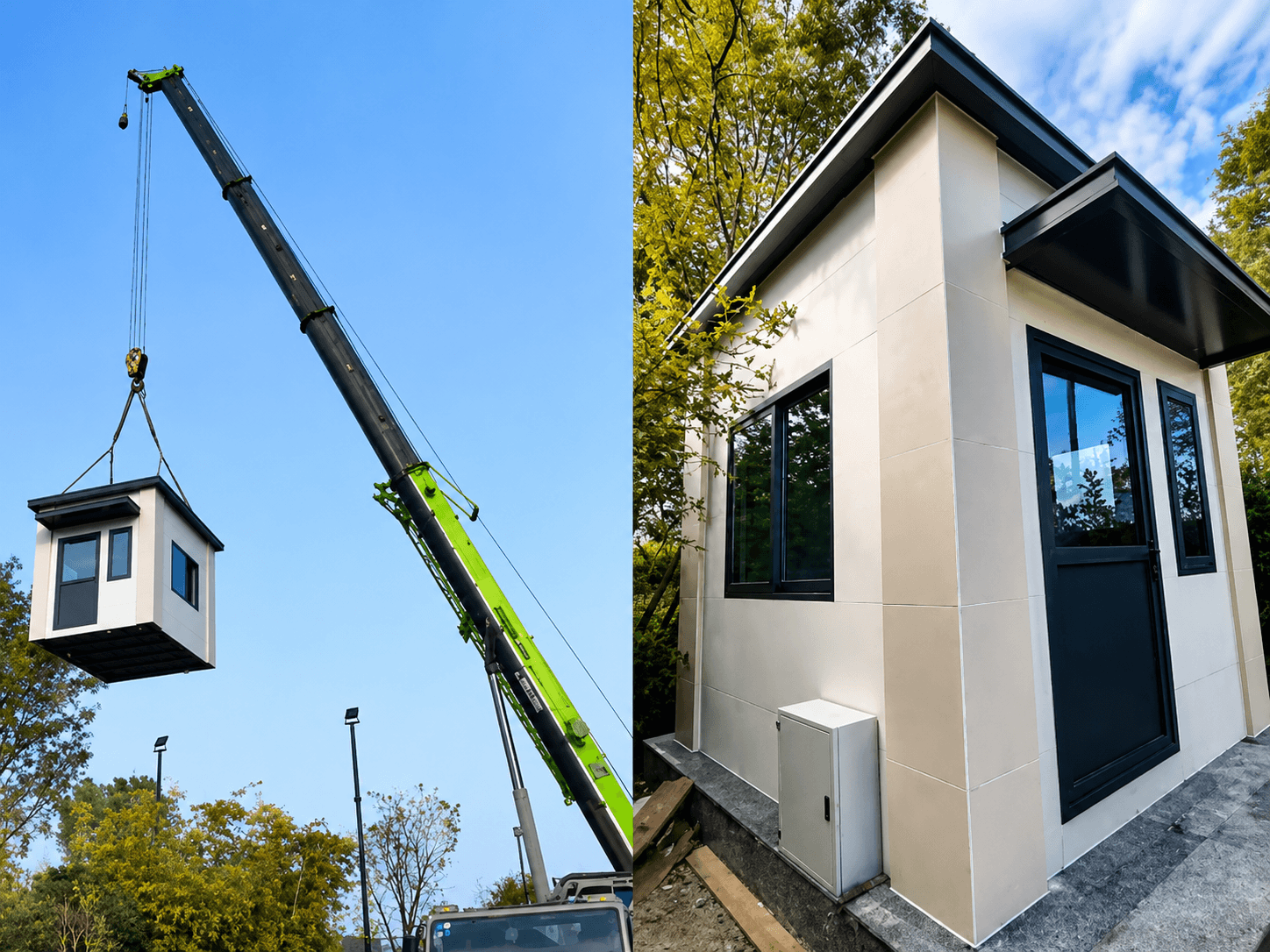
Prefabricated buildings
Lightweight microcrystalline stone prefabricated house
Lightweight microcrystalline stone unit wall forms
Because the material is lightweight, insulated, fire-resistant, and suitable for factory processing, it can support projects that need both facade performance and design flexibility.
A New Companion to Glass Curtain Wall Systems
Reach Building developed Lightweight Microcrystalline Stone with modern facade design in mind. In many building envelopes, glass is used for transparency, daylight, and visual openness, while opaque wall areas are still needed for insulation, fire resistance, sound control, privacy, and architectural expression.
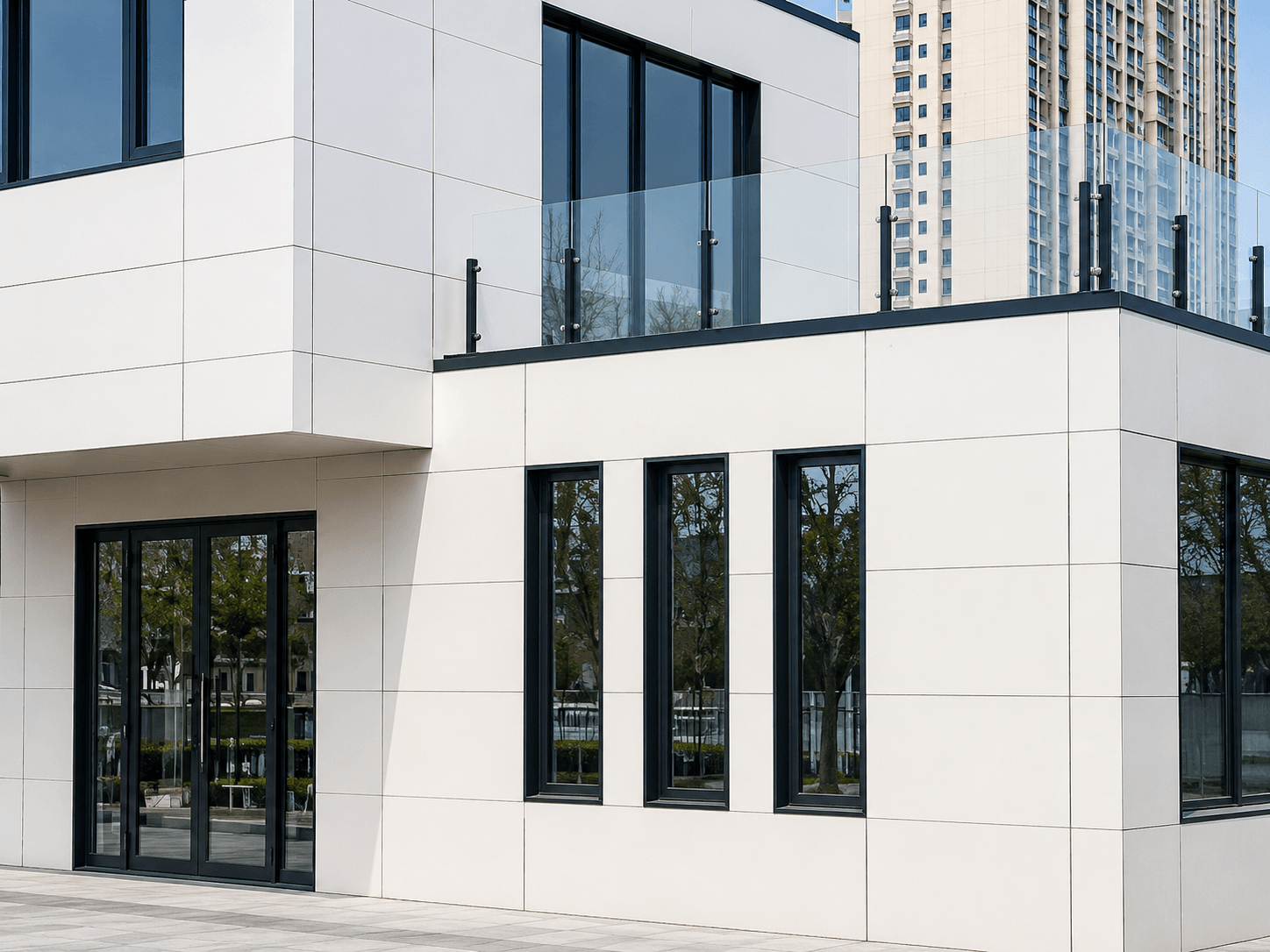
Lightweight Microcrystalline Stone helps complete this balance. It can be used together with insulated glass, Low-E glass, laminated glass, and other facade glazing products to create curtain wall systems where transparent and opaque areas work as one design.
This makes it a practical “glass companion” for modern facades. Glass brings openness. Lightweight Microcrystalline Stone brings protection, insulation, and solid wall performance. Together, they support a more complete building envelope solution.
Lightweight Microcrystalline Stone Paired with Glass.
Reach Building also provides facade and curtain wall glass solutions for different project types, including full glass curtain wall systems, point-supported glass systems, and framed curtain walls. Beyond glass supply, Reach Building can support project-oriented facade solutions with glass selection, aluminum framing systems, hardware accessories, sealants, glazing components, and technical coordination based on project drawings.
For architects, contractors, and facade consultants, Lightweight Microcrystalline Stone can be considered together with Reach Building’s curtain wall solutions for opaque facade areas, unitized curtain walls, fire-rated wall applications, insulation-decorative wall systems, prefabricated buildings, and modular construction projects.
If you are interested in new-material curtain wall solutions, Reach Building is ready to discuss your project. Our team can help integrate Lightweight Microcrystalline Stone with glass curtain wall systems based on proven project experience.
From Material Innovation to Real Projects
Lightweight Microcrystalline Stone is a new material, but Reach Building’s work does not stop at material development. Based on the experience in glass tempering equipment, glass processing, mechanical-electrical design, and industrial manufacturing, Reach Building has developed a complete production and processing path for this material.
Reach Building's Lightweight Microcrystalline Stone production line
The production line is designed specifically for Lightweight Microcrystalline Stone panels and includes electrically heated and annealed roller conveyor furnaces, automated feeding and loading systems, intelligent conveying, and integrated process control. This supports the complex high-temperature inorganic foaming process required to form lightweight panels with an integrated decorative surface.
From raw material preparation and crystallization forming to precision cutting, surface finishing, unit wall assembly, and integration with glass facade systems, Reach Building can support the material from manufacturing to architectural application.
The material has already been used in real project applications, including Lightweight Microcrystalline Stone unit curtain walls in South Korean schools, Lightweight Microcrystalline Stone buildings in Chinese hospitals, Lightweight Microcrystalline Stone unit curtain walls in Chinese factories and so on.
This proves that the material is not only innovative, but also project-ready. It can be manufactured, processed, assembled, and installed as part of real building envelope systems.
Reach Building’s Responsibility Behind the Innovation
For Reach Building, Lightweight Microcrystalline Stone is more than a new product. It reflects our commitment to green construction, resource reuse, and the future of building materials.
We believe industrial waste materials should not simply be treated as waste. With the right technology and manufacturing system, they can be transformed into high-value building materials for modern architecture. This is the reason Reach Building has invested its technical experience in glass processing, equipment manufacturing, and facade engineering into the development and application of Lightweight Microcrystalline Stone.
The goal is to help move construction from heavy site work toward cleaner, more efficient factory manufacturing. It also gives architects and facade designers more freedom to create building envelopes that are lighter, greener, safer, and more visually expressive.
Lightweight Microcrystalline Stone combines environmental value, controlled production, and flexible design potential. It is Reach Building’s answer to a simple but important question: how can building materials do more for architecture, people, and the environment?
Conclusion
Lightweight Microcrystalline Stone represents Reach Building’s proprietary green innovation for modern building facades. It integrates decoration, insulation, fire resistance, sound insulation, moisture resistance, and weather resistance. It can work with glass curtain walls, unitized wall systems, and prefabricated buildings. It has also been tested and applied in real projects.
Reach Building welcomes projectcooperation on new-material curtain wall systems, combining proven Lightweight Microcrystalline Stone applications with glass facades for greener and more expressive modern buildings.
Miracle Co-founder of Reachbuilding
Miracle owns a glass factory that has been in operation for 40 years. His family has been engaged in the construction industry for over 60 years and possesses extensive engineering and production experience. At Reach Building, he focuses on product technical support, custom solutions, and industry trend analysis for global dealers, contractors, and builders.In his column, Miracle shares practical insights, project case studies, and expert advice to help construction professionals select the right glass for safer, more energy-efficient buildings.
With nearly 30 years of experience in building materials, REACH BUILDING provides customized glass products and technical solutions for global construction and interior projects.
We use cookies to enable all functionalities for best performance during your visit and to improve our services by giving us some insight into how the website is being used. Continued use of our website without having changed your browser settings confirms your acceptance of these cookies. For details please see our privacy policy.