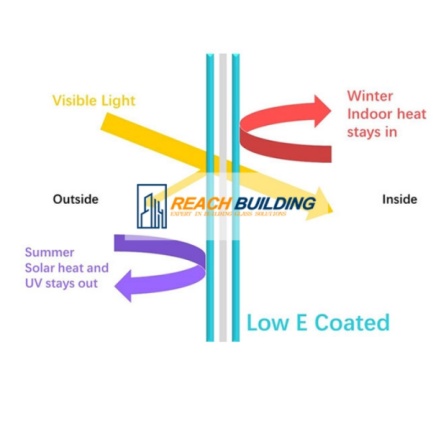
If you are comparing glazing options for a home, office, curtain wall, or renovation project, one of the most common questions is also one of the most practical: does low e glass block heat and UV rays? The short answer is yes, but not in an absolute or identical way across every product. Low-E glass is designed to reduce heat transfer and manage solar energy more effectively than ordinary clear glass, while also limiting ultraviolet and infrared transmission without heavily sacrificing visible light. In real projects, that usually means better indoor comfort, lower cooling or heating demand, and less fading pressure on interior finishes. At the same time, performance depends on the coating type, glass make-up, whether the unit is insulated, and what climate the building is in. So the smarter answer is not just “yes,” but “yes, with important differences that buyers should understand before choosing a specification.”
What Low E Glass Actually Is
The Department of Energy defines a low-E coating as a microscopically thin, virtually invisible metal or metallic oxide layer deposited on one or more surfaces of glass. That thin coating changes how the glass handles radiant energy, especially infrared heat. Vitro similarly explains that low-e coatings are engineered to manage ultraviolet and infrared light while maintaining useful levels of visible light. So, even though the glass may look fairly normal to the eye, its energy behavior is very different from standard clear glazing.
1.It is mainly a heat-management technology
Low-E glass is fundamentally a thermal-performance product. DOE says the coating lowers U-factor and can be tailored for high, moderate, or low solar gain, while Cardinal describes low-E glass generally as energy-efficient glass designed to prevent heat from escaping or entering a building. That means low e glass helps in both winter and summer, but the exact balance depends on whether the selected coating is meant to retain indoor heat, reject solar heat, or do both.
2.It also helps with UV control
Low-E glass is not only about infrared heat. DOE’s consumer guide says low-E glass reflects ultraviolet light away from the house and can help protect furnishings from UV-induced fading, while Vitro says low-e glass minimizes ultraviolet transmission as part of its broader spectral control. So, when people ask whether low e glass blocks UV rays, the accurate answer is yes, it reduces them, though the amount varies by product and glazing configuration.
Does Low E Glass Block Heat?
Yes, low e glass blocks or reflects a meaningful portion of heat energy, but it is more accurate to say it reduces heat transfer than to suggest it creates a perfect barrier. DOE explains that spectrally selective low-E coatings can filter out about 40% to 70% of the heat normally transmitted through insulated window glass while still allowing daylight through. Vitro adds that low-e glass helps keep interiors warmer in winter and cooler in summer, which is a good summary of how the coating works in day-to-day use.
In winter, certain low-E coatings help reflect interior heat back into the room instead of letting it radiate outward. In summer, solar-control low-E coatings can reduce incoming solar heat and help lower cooling demand. Cardinal’s product literature shows this difference clearly: some coatings are positioned to let in more useful winter solar heat, while others are designed to reject more summer heat gain. That is why a low-E specification that works well in a cold climate may not be the best one for a hot, cooling-dominated building.
Does Low E Glass Block UV Rays?
Yes, low e glass reduces UV transmission, and that is one of the reasons it is widely used in modern buildings. Vitro states plainly that low-e glass minimizes ultraviolet and infrared light transmission, and DOE says low-E glass reflects UV away from the home and can help protect interior furnishings from fading. Cardinal’s solar-control literature also describes certain low-E products as rejecting damaging UV rays along with summer heat.
That said, low e glass should not be described as an all-or-nothing UV shield. Different coatings, pane combinations, laminates, and insulated glass assemblies perform differently. Some high-performance glazing options can reduce UV transmission dramatically, but product-level numbers vary. For buyers, that means the right question is not simply “does it block UV,” but “how much UV reduction does this exact glass make-up provide?”
Not All Low E Glass Performs the Same
One reason low e glass is often misunderstood is that it is treated like a single product category, when in reality it includes several performance strategies. DOE notes that different low-E coatings are designed for high solar gain, moderate solar gain, or low solar gain. Cardinal’s lineup makes the same point from a product perspective: some coatings are optimized for cold climates by limiting heat loss while allowing more solar gain, and others are optimized for solar control by rejecting more incoming heat.
Here is the practical takeaway:
· Cold-climate low-E glass often focuses on keeping indoor heat from escaping while still welcoming more solar warmth.
· Solar-control low-E glass focuses more on reducing heat gain from the sun in warmer climates or on heavily exposed façades.
· Low-E insulated glass units combine coated glass with an IGU structure to improve overall thermal insulation and UV protection.
So, if two products are both labeled “low e glass,” they may still behave quite differently in the field.

A Simple Comparison Table
Question | Ordinary Clear Glass | Low E Glass | Low E Insulated Glass |
Heat transfer control | Limited | Better radiant heat control | Stronger overall thermal control |
UV reduction | Limited | Yes, reduced UV transmission | Usually stronger when paired with IGU design |
Visible light | High | Usually still high, depending on coating | Varies by coating and unit make-up |
Best use | Basic glazing | Energy-efficient single-glass upgrade or part of an IGU | Higher-performance residential and commercial glazing |
Common goal | Transparency | Comfort and energy efficiency | Comfort, energy efficiency, and broader building performance |
This comparison reflects how low-E coatings improve glazing performance, while insulated configurations often take the performance further by combining coating technology with sealed multi-pane construction. DOE explains that lower U-factor improves efficiency and lower SHGC reduces solar heat transmission, while Reach Building describes Low-E insulated glass as a solution designed to optimize energy efficiency, thermal comfort, and UV protection.
Where Low E Glass Works Best
Low e glass is widely used in homes, offices, façades, skylights, curtain walls, and other areas where both light and thermal comfort matter. Reach Building’s official site lists Low-E glass among architectural glass applications for curtain walls, façades, skylights, balustrades, and other interior and exterior uses. This reflects how commonly low-E technology is now paired with modern architectural design, especially where large glazed areas can otherwise create overheating or winter heat loss.
For many projects, low e glass performs best when it is selected according to orientation and climate rather than treated as a generic upgrade. South- and west-facing elevations in warm climates may benefit from stronger solar-control coatings and lower SHGC, while colder climates may prefer glazing that retains indoor heat and still collects some winter solar gain. DOE specifically notes that lower SHGC reduces summer cooling loads, while higher SHGC can be more effective for collecting solar heat in winter.
Final Thoughts
So, does low e glass block heat and UV rays? Yes, it does both, but the better industry answer is that it manages heat and UV rather than eliminating them completely. It reflects or reduces parts of the infrared and ultraviolet spectrum, helps improve indoor comfort, and can reduce heat gain or heat loss depending on the coating type. The biggest performance differences come from product selection: a cold-climate low-E specification, a solar-control low-E specification, and a Low-E insulated glass unit may all answer the same basic question in different ways. From our perspective, that is why project-specific selection matters more than broad claims. At HANGZHOU REACH BUILDING CO.,LTD., we see low-E glass as part of a larger building-performance solution, especially when it is combined with insulated, laminated, or architectural glass systems tailored to the application. If you are comparing glazing options for a façade, skylight, curtain wall, residential window package, or another custom building project, it is worth learning more about this company’s coated and Low-E glass solutions and discussing which configuration best matches your climate, budget, and performance goals.
FAQ
1. Does low e glass make a room darker?
Not necessarily. DOE notes that low-E coatings can be tuned for daylight transmittance, and Vitro says they are designed to manage UV and infrared while maintaining visible light. The final brightness depends on the specific coating and glass make-up.
2. Is low e glass better in hot climates or cold climates?
It can work in both, but the right type differs. DOE explains that some low-E coatings are designed for higher solar gain and others for lower solar gain, so climate and orientation should guide the choice.
3. Does low e glass work better with double glazing?
Often yes. Reach Building describes Low-E insulated glass as a high-performance glazing solution that combines Low-E coatings with IGU structure to improve thermal insulation, reduce heat gain or loss, and enhance UV protection.
4. Can low e glass help protect furniture and finishes?
Yes. DOE’s consumer guide says low-E glass reflects ultraviolet light away from the house and can help protect household furnishings from UV-induced fading.