Introduction
Have you ever looked closely at the windows in a school or an old industrial building and noticed a thin metal grid embedded inside the pane? That is wire glass. For decades, this specialized material has served as a cornerstone of architectural safety. It combines the transparency of standard glazing with the structural reinforcement of steel. But how does a manufacturer physically place a metal mesh inside a sheet of molten glass without shattering it?
The manufacturing process of "mesh glass" is a marvel of thermal engineering. It requires precise timing, extreme temperatures, and heavy machinery to ensure the metal stays centered while the glass cools. Today, wire glass has evolved. While it started as a basic safety measure, modern versions are now Fire rated, Polished, or even Laminated to meet strict 2026 building codes. In this expert guide, we will take you inside the factory to see exactly how this glass is made, from the furnace to the final inspection.
Raw Material Fusion: The Foundation of Wired Panes
The journey of wire glass begins in a massive regenerative furnace. Unlike standard window glass, the "batch" (the mix of raw materials) must be specifically formulated to handle the internal stress of a metal insert. We mix silica sand, soda ash, and limestone with specific clarifying agents. This mixture melts at temperatures exceeding 2,800°F.
A critical "expert insight" here is the Coefficient of Thermal Expansion (CTE). The glass and the wire mesh must expand and contract at similar rates. If they don't, the pane will crack as soon as it cools. Most manufacturers use a low-carbon steel mesh with a specific coating to ensure it bonds perfectly with the molten silica. They must monitor the viscosity of the liquid glass constantly. If it is too thin, the wire sinks to the bottom. If it is too thick, the mesh won't settle in the center.
The Twin-Roller Sandwich Method: Incorporating the Mesh
This is the most crucial stage of the manufacturing process. Unlike "float glass," which floats on a bed of molten tin, wire glass is usually produced using a rolling process. Imagine a sandwich where the bread is molten glass and the filling is metal wire.
The Continuous Feed System
As the molten glass flows out of the furnace, it passes through a set of heavy, water-cooled rollers. Simultaneously, a continuous roll of steel wire mesh is fed into the gap between these rollers. It requires a specialized "tensioner" system to keep the mesh perfectly flat. Any kink or wave in the wire would create a weak point in the finished Impact resistant pane.
Pressure and Alignment
The rollers exert immense pressure to squeeze the wire into the heart of the glass ribbon. They must submerge the mesh deep enough so it is fully "wetted" by the glass but not so deep that it touches the rollers. This ensures the wire is protected from rust and corrosion by the surrounding glass. The result is a continuous "ribbon" of glass with a metallic core that is inherently Decorative and functional.

Annealing and Stress Management: The Cooling Tunnel
Once the mesh is embedded, the glass enters a "Lehr," which is a long, temperature-controlled cooling tunnel. This is where many low-quality batches fail. Because the metal mesh cools faster than the glass, it can create internal "hoop stress."
If we cool it too fast, the glass around the wire will shatter. If we cool it too slow, the production line stalls. Experts use a "step-down" cooling curve. They slowly lower the temperature over several hundred feet of conveyor belt. This allows the glass to settle around the wire, creating a tight mechanical bond. During this stage, the glass is still somewhat flexible, which allows for early-stage surface treatments.
Achieving Clarity: The Polishing and Grinding Stage
Standard rolled glass often has a textured or "pebbled" surface. For many high-end architectural projects, customers require a Polished finish. This is where the glass looks as clear as a standard window but still contains the safety wire.
Surface Calibration
After the glass leaves the Lehr, it moves to the grinding line. Massive rotating discs use abrasive slurries to shave off the top microns of the glass. They remove any "roller marks" or imperfections. It is a delicate balance; they must grind it enough to be clear but not so much that they expose the wire mesh.
The Transformation to Polished Wire Glass
By the end of this process, the glass is Polished to a high sheen. This version is highly sought after for interior partitions and doors where visibility is just as important as the Fire rated properties. It offers a classic industrial aesthetic that remains popular in 2026 design trends.
Enhancing Safety: Laminated and Impact Resistant Variants
The old version of wired glass was brittle. Today, we have revolutionized the process by creating Laminated versions. This combines the fire-shattering resistance of wire with the blunt-force safety of polymers.
The Lamination Process
We take the cooled wire glass and bond it to another layer of tempered glass or a clear resin interlayer. This makes the unit Laminated and significantly more Impact resistant. If someone accidentally runs into the glass, the wire holds the shards together while the laminate layer prevents the glass from breaking into sharp daggers.
Advanced Coatings
In this stage, we also apply specialized coatings. Some are UV-resistant, while others enhance the Decorative appeal of the mesh. By layering these technologies, we create a product that can withstand extreme heat and physical trauma, making it the ultimate choice for fire-exit doors.

Testing for Fire and Impact Performance
Why do we go through all this effort? The primary goal of wire glass is to save lives during a fire. We put our finished products through rigorous "Hose Stream Tests" and thermal shock evaluations.
The Fire Rated Standard
To be truly Fire rated, the glass must stay in its frame even when a fire is roaring at 1,600°F on one side. When the glass eventually cracks due to heat, the wire mesh acts as a skeleton. It keeps the pieces together, preventing the fire and smoke from spreading to the next room.
| Test Category | Standard Met | Benefit |
| Thermal Shock | NFPA 80 | Prevents glass from falling out during water spray. |
| Impact Safety | ANSI Z97.1 | Makes it Impact resistant for high-traffic areas. |
| Fire Duration | 20 - 90 Mins | Provides critical time for evacuation. |
Customization: Decorative and Architectural Mesh
In the modern market, wire glass is no longer just "industrial." We see it used in luxury furniture, high-end offices, and boutique hotels. The manufacturing process can be adjusted to include different types of metal.
Choosing the Mesh Pattern
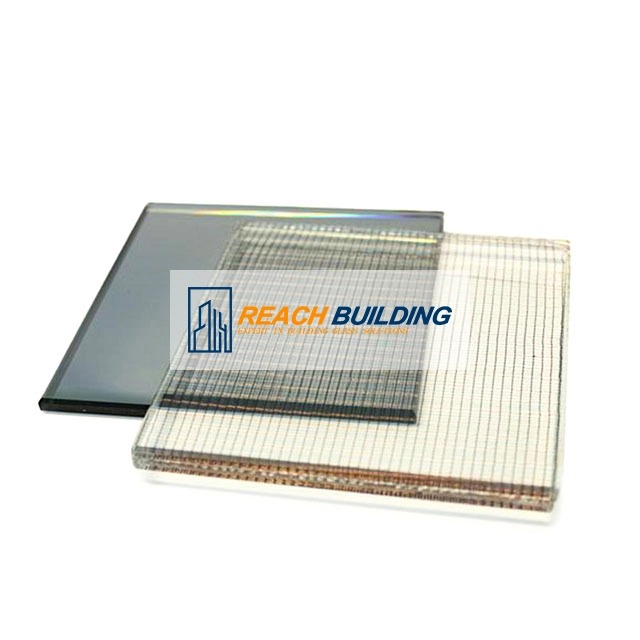
While the standard square mesh is common, we can manufacture glass using hexagonal, diamond, or even "woven" bronze meshes. This transforms a safety product into a Decorative masterpiece. We can also tint the glass during the furnace stage to create bronze, grey, or blue-tinted wired panes.
Custom Sizing and Edge Work
Precision cutting is vital. Because of the internal wire, you cannot easily cut this glass with a standard hand-held cutter. We use water-jet cutting or diamond-saw tables to ensure the edges are clean and the wire is not frayed. This ensures the glass fits perfectly into Laminated assemblies or specialized fire-rated frames.
Conclusion
Understanding how wire glass is made reveals why it remains an essential material in the construction industry. From the precision of the twin-roller sandwich method to the clarity achieved through being Polished, every step is designed to maximize safety. Whether you need a product that is Fire rated, Impact resistant, or purely Decorative, the manufacturing process ensures that the "mesh glass" performs when it matters most.
By combining the strength of steel with the transparency of glass, we create a barrier that protects against both fire and force. It is a testament to how traditional manufacturing can be refined with modern technology to meet the high standards of 2026 architecture.
FAQ
Q1: Is wire glass stronger than tempered glass?
Actually, standard wire glass is physically weaker than tempered glass in terms of impact. However, it is superior in fire situations because the wire holds the glass in place after it cracks. For the best of both worlds, we recommend a Laminated and Impact resistant version.
Q2: Can I use wire glass in my home for a decorative look?
Absolutely! It is increasingly popular as a Decorative element in kitchen cabinets, office partitions, and even shower doors. The Polished version offers a beautiful retro-industrial aesthetic.
Q3: Does the wire rust inside the glass?
No. Because the wire is completely encased in the glass during the rolling process, it is vacuum-sealed away from oxygen and moisture. It will only rust if the glass is broken and the wire is exposed to the elements for a long time.
About Our Factory and Manufacturing Strength
As a leading innovator in the architectural glass industry, I take great pride in our manufacturing facility. Our factory is equipped with the latest CNC machinery and high-precision rolling lines specifically designed for high-performance wire glass. We aren't just a supplier; we are masters of the craft. Our production lines integrate the entire process—from raw material melting to the final Polished finishing—under one roof. This allows us to maintain strict quality control and ensure every sheet we ship is certified Fire rated and ready for the most demanding environments.
Our strength lies in our ability to customize. Whether you require specialized Laminated structures for high-security buildings or unique Decorative meshes for interior design, we have the technical expertise to deliver. We have served global B2B clients for years, providing reliable, high-volume solutions without compromising on the fine details that make our glass stand out. When you work with us, you are partnering with a factory that values safety, durability, and the cutting edge of glazing technology.