Buyers routinely choose low iron glass for one primary reason: maximizing optical clarity. Standard glass contains inherent iron oxides. These oxides create a distinct green tint. You can easily eliminate this unwanted color by switching to a low iron composition. This upgrade guarantees pristine transparency for your architectural designs.
However, achieving this crystal-clear aesthetic becomes complicated as panel dimensions grow. When you increase glass thickness and expand overall panel size, structural demands soar. Heavy glass requires precise load calculations. Fabrication risks also multiply rapidly during the manufacturing process. A thick, oversized panel demands careful handling and exact tempering controls to prevent visual distortion.
This article offers a purely specification-driven framework for your next project. You will learn how to select the correct thickness and calculate size constraints. We also explore how to navigate safety compliance seamlessly. By following these guidelines, you can ensure your final installation perfectly matches your project tolerances.
Key Takeaways
- The visible green edge in standard glass multiplies with thickness; specifying low iron is critical for structural sizes (1/2" and above) to maintain optical clarity.
- Panel dimensions and load-bearing requirements directly dictate minimum thickness to prevent structural deflection.
- Choosing between annealed and tempered glass impacts both safety compliance and visual fabrication tolerances.
- Vetting a supplier requires evaluating their edge-finishing capabilities, jumbo-size handling, and batch-to-batch iron content consistency.
The Visual Impact of Thickness in Glass Sourcing
Standard clear glass contains varying levels of iron oxides. These natural elements cause a noticeable green tint. You might not notice this discoloration on small, thin panes. However, this green tint scales exponentially as thickness increases. Light travels further through a thicker glass edge. This extended travel path amplifies the green hue dramatically. A half-inch panel of standard glass looks noticeably darker than a quarter-inch panel.
Upgrading to low iron glass represents a functional necessity, not just a premium aesthetic choice. Modern architecture frequently requires exact color-matching. Designers often place white painted walls or brightly colored displays behind glass panels. Standard glass distorts these background colors. Low iron alternatives maintain high light transmission. They preserve the true color rendering of any materials placed behind them. This optical neutrality is critical for high-end retail displays and museum enclosures.
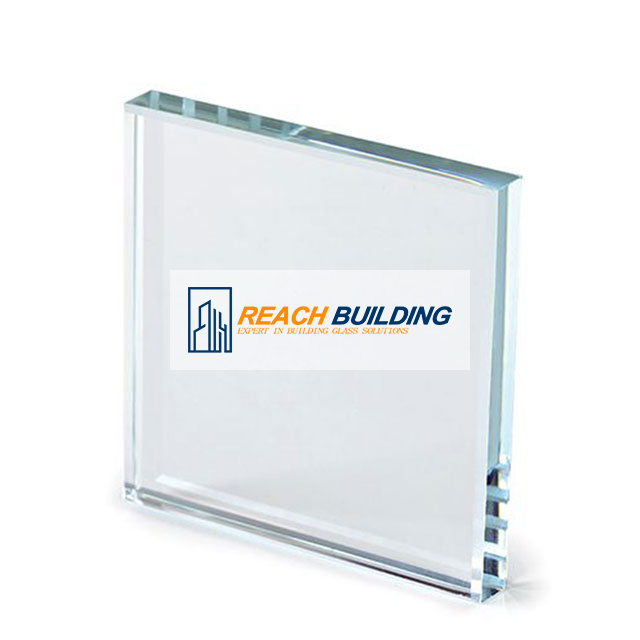
You must evaluate this visual impact by comparing edge profiles. Comparing the edge of a 1/4" standard clear panel against a 1/4" low iron panel reveals minimal differences. Most observers barely spot the variance in thin applications. However, comparing a 3/4" standard clear edge against a 3/4" low iron edge reveals a drastic visual discrepancy. The standard edge looks thick and black-green. The low iron edge remains bright and faintly icy blue. This difference dictates your material choice for any heavy architectural installation.
Best Practices for Evaluating Visual Clarity:
- Always request physical samples at the exact thickness of your final installation.
- Hold the glass samples against a pure white background.
- Inspect the polished edge under natural daylight rather than artificial warehouse lighting.
Low Iron Glass Specifications: Matching Thickness to Application
Selecting the right thickness requires a structured decision framework. You must group your low iron glass specifications by expected load and structural necessity. We categorize these specifications into three common commercial and residential application tiers.
Light-Duty & Decorative (1/8” to 3/16”)
Thin profiles serve specific, low-impact purposes. You will typically use these thicknesses for cabinetry inserts, picture framing, and small display cases. These applications do not endure heavy physical pressure or wind loads.
The primary implementation risk here involves high fragility. Manufacturers usually only offer these thin profiles in annealed form. Tempering extremely thin glass often causes severe warping. Therefore, you must handle these panes delicately. Do not specify light-duty thickness for areas where human impact is possible.
Medium-Duty & Surface Applications (1/4” to 3/8”)
This mid-range thickness offers excellent versatility. It works best for protective table covers, standard shelving units, and interior accent windows. Retailers often use this range for jewelry cases and mid-sized product displays.
Specifying this range balances structural stability perfectly. It keeps lightweight installation requirements manageable for fabrication teams. Installers can maneuver these panels without heavy machinery. At 3/8", you gain enough rigidity to span moderate distances without center bowing. However, you still cannot use this category for unsupported structural walls.
Heavy-Duty & Structural (1/2” to 3/4”+)
Heavy architectural applications demand robust material choices. You need 1/2" to 3/4" profiles for frameless shower enclosures, conference room partitions, stair treads, and glass balustrades. These installations rely entirely on the glass itself for structural integrity.
This thickness category carries significant implementation risks. High weight loads require specialized mounting hardware. A 3/4" thick glass panel weighs approximately 9.75 pounds per square foot. Installers must anchor these panels into reinforced structural beams. Furthermore, you must strictly calculate maximum deflection tolerances. Even heavy glass can bend under sustained wind pressure or crowd loads. Engineering teams must sign off on these structural applications.
Common Mistakes in Thickness Specification:
- Specifying 1/4" glass for frameless doors, leading to dangerous flexibility.
- Ignoring the weight capacity of hinges when moving from 3/8" to 1/2" profiles.
- Assuming all thin glass can be easily tempered for safety compliance.
Dimension Constraints and Deflection Limits
Architects love specifying massive, seamless glass walls. However, manufacturing constraints dictate strict scalability limits. Standard raw glass sheets are known as stoces. These raw stoces max out at specific industry dimensions. Jumbo float glass typically measures around 130" x 204". Finding continuous panels larger than this requires highly specialized, oversized float lines.
You must carefully calculate your size-to-thickness ratio. A larger surface area mandates stepping up in thickness. This prevents center bowing, known as deflection. Deflection occurs when wind load or physical pressure pushes against a large glass expanse. If the panel is too thin, it bends inward. Excessive deflection breaks seals, distorts reflections, and can ultimately cause structural failure.
Standard Size and Deflection Principles
| Glass Thickness | Typical Max Unsupported Span | Primary Deflection Risk |
| 1/4" (6mm) | Under 48 inches | High bending under minimal human pressure. |
| 3/8" (10mm) | Up to 84 inches | Moderate flexibility; requires sturdy edge framing. |
| 1/2" (12mm) | Up to 108 inches | Stable for standard frameless doors. |
| 3/4" (19mm) | Up to 144 inches | Extremely rigid; minimal deflection under load. |
Oversized panels bring intense handling realities to your job site. Heavy materials require commercial-grade vacuum lifters. Your installation crew might also need cranes to hoist jumbo panels into multi-story lobbies. You must evaluate specific site access considerations early. Narrow hallways or tight stairwells will block oversized panels. These logistical hurdles significantly impact total project feasibility beyond the material itself.
When Your Project Requires Tempered Glass
Security and compliance codes heavily influence your material choices. You must distinguish exactly when your low iron panels require thermal treatment. Building codes universally mandate safety glazing in high-traffic zones. You must use safety glass for doors, side lites, and low-level installations near the floor. Wet environments, such as shower enclosures, also demand strict safety compliance.
Understanding the difference between annealed and tempered glass is crucial. Standard annealed glass breaks into large, hazardous shards. These jagged pieces cause severe injuries. In contrast, the tempering process makes the glass four to five times stronger. When a tempered panel fails, it shatters instantly into small, blunt pebbles. This crumbling effect prevents deep lacerations and meets local safety regulations.
However, thermal treatment introduces specific implementation realities. Tempering large, thick panels can cause minor visual distortions. As glass travels on heated rollers inside the tempering furnace, it can develop a slight waviness. Industry professionals call this "roller wave distortion." The reflective surface of the glass might look slightly warped from certain angles.
High-end architectural evaluation requires mitigating this distortion. You must specify strict optical tolerances prior to the tempering process. Ask your fabrication partner about their millidiopter distortion limits. Modern tempering furnaces use advanced convection heating to minimize roller wave. Ensure your manufacturer utilizes this technology for your highly visible aesthetic installations.
How to Vet Your Low Iron Glass Supplier for Custom Projects
Choosing the right fabrication partner ensures project success. You must apply stringent shortlisting logic. Do not evaluate manufacturers based solely on basic per-square-foot pricing. Look deeper into their specific machining capabilities and quality control processes. A reputable low iron glass supplier protects your investment through precision engineering.
Edge Finishing Capabilities
Designers specifically choose low iron compositions for exposed edges. The clarity of the edge acts as a primary design feature. Therefore, your supplier must offer flawless edge finishing capabilities. They should provide options like flat polish, pencil polish, or precision beveling. The polishing process must leave no micro-fractures along the edge. Micro-fractures ruin the aesthetic and create weak points where future cracks might originate. Verify their CNC machining capabilities before placing an order.
Batch Consistency
Large projects often require multi-panel installations, such as long glass walls or expansive facades. Batch consistency becomes a critical quality metric here. Different float glass manufacturers use slightly different raw silica sources. This creates tiny variations in the residual iron content. If your fabricator mixes glass from two different float plants, the edge colors might clash. Ensure your supplier uses the same float glass manufacturer for your entire order. This prevents slight color temperature variations across adjacent panels.
Packaging, Tolerances, and Lead Times
Fabrication tolerances dictate whether your glass actually fits into its hardware. Require transparent dimensional tolerances in writing. A standard architectural tolerance is often +/- 1/16". If the glass arrives too large, it will not fit the metal channel. You cannot cut tempered glass on-site. Therefore, precision is mandatory.
Finally, verify their crating procedures for oversized custom cuts. Heavy glass is highly susceptible to transit breakage. Suppliers should use robust A-frames or heavily padded wooden crates. A poorly packaged panel delays construction schedules by weeks. Ensure they define their lead times clearly and guarantee safe transport methods.
Conclusion
Combining the correct thickness with accurate sizing guarantees long-term performance. You never have to sacrifice the prized clarity of low iron glass when you specify materials correctly. Thicker profiles provide necessary structural rigidity for frameless applications. Proper safety treatments ensure your installation passes building codes while protecting occupants.
To move forward successfully, finalize your precise dimension blueprints first. Identify all local safety code requirements regarding thermal treatment. Then, request a technical consultation from a qualified fabrication partner. Always demand a physical sample to verify edge clarity before approving the final purchase order.
FAQ
Q: Does increasing the thickness of low iron glass reduce its transparency?
A: Transparency reduction remains negligible compared to standard glass. You will maintain high light transmission even at 3/4" thicknesses. However, the exposed edge will deepen slightly in color. Instead of the dark green seen in standard panels, thick low iron edges exhibit a pale, icy blue or cyan tint.
Q: What is the maximum size available for heavy structural low iron glass?
A: Size limits depend on jumbo float manufacturing capabilities and tempering furnace dimensions. Standard limits often cap around 130" x 280". However, practical transport limits usually dictate smaller panel breaks. You must consider site access and elevator capacities before ordering maximum jumbo sizes.
Q: Can 1/4" low iron glass be used for frameless walls?
A: No. A 1/4" panel lacks the necessary rigidity for floor-to-ceiling frameless spans. It will flex dangerously under minimal pressure. Frameless applications generally require 3/8" or 1/2" minimum thicknesses. These heavier profiles prevent hazardous deflection and ensure structural stability.


