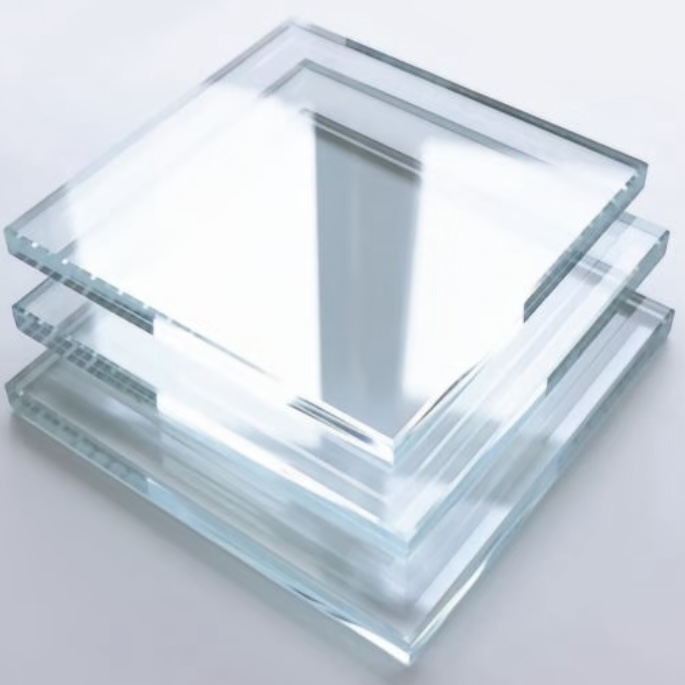
Low-iron glass, also known as ultra-clear glass, is a type of float glass valued for its high transparency and neutral appearance. Commonly supplied as annealed glass sheets, it can be further processed into tempered, laminated, coated, or insulated glass to meet different architectural and commercial requirements.
For buyers, selecting a reliable low iron glass supplier involves more than comparing optical specifications and prices. The quality of the base glass, consistency between production batches, and the supplier's ability to provide the required processing all influence the final product.
This guide explains how to evaluate low iron glass suppliers, verify material quality and fabrication capabilities, and identify the key specifications to confirm before placing a bulk order.
1. Low-Iron Glass Sheets vs. Processed Glass
Low-iron glass can be supplied as annealed float glass sheets or processed into finished glass products. While both use low-iron glass as the base material, their specifications and quality requirements differ.
The distinction is important when comparing suppliers. Annealed sheets are typically selected based on material properties and suitability for further processing, while fabricated products must also meet specific dimensional, structural, and performance requirements.
Low-Iron Float Glass Sheets
Processed Low-Iron Glass
Supply Form
Annealed glass sheets
Tempered, laminated, coated, or insulated glass
Typical Purpose
Further processing or applications suitable for annealed glass
2. How to Check the Quality of Low-Iron Float Glass Sheets
When comparing low-iron glass sheets, focus on measurable quality standards rather than descriptions such as "premium" or "high quality." The following four checks help determine whether the glass meets your requirements.
Light Transmission and Color Consistency
For uncoated 6 mm low-iron float glass, approximately 91% visible light transmission is a useful reference. This means about 91% of visible light passes through the glass.
To compare products accurately:
Request light transmission data tested according to EN 410.
Compare glass of the same thickness, since thicker sheets generally transmit less light.
Examine samples against a white background to identify any noticeable green tint.
For large projects, approve a reference sample and compare subsequent deliveries against it.
If several glass panels will be installed side by side, color differences between batches can become noticeable. Ask how the supplier keeps the appearance consistent across deliveries.
Glass thickness must fall within an acceptable range, especially when the sheets will be cut, tempered, or laminated.
EN 572-2 specifies the following thickness tolerances for float glass:
Ordered Thickness
Allowed Variation
3–6 mm
±0.2 mm
8–12 mm
±0.3 mm
15 mm
±0.5 mm
19 mm
±1.0 mm
For example, a 6 mm sheet can measure between 5.8 and 6.2 mm under this standard.
Also check the available sheet sizes against your cutting requirements. A suitable stock size can reduce wasted glass, particularly when cutting large quantities of smaller panels.
Before ordering, confirm the actual thickness range, sheet dimensions, and permitted size differences in the quotation.
Surface Defects and Visual Quality
Scratches, bubbles, small particles trapped inside the glass, and visible distortion can affect the appearance of finished products.
EN 572-2 provides limits and inspection methods for these defects. When checking glass quality, focus on:
Scratches: Look for noticeable surface marks, especially in areas that will remain visible after installation.
Bubbles and particles: Check whether their size and number fall within the limits of the agreed standard.
Visual distortion: Look through the glass at straight lines or reflected objects to identify obvious waviness.
For large orders, request inspection records and agree on how sheets that fail the specified quality requirements will be replaced.
Glass Source and Consistency Between Orders
Low-iron glass from different factories or production batches may show slight differences in color and transparency.
Before placing a large or repeat order, confirm:
Original manufacturer: Which factory produced the float glass?
Batch records: Can the supplier identify which production batch the delivered sheets came from?
Repeat orders: Can the supplier provide glass matching the previously approved samples?
These checks are particularly important when glass from different shipments will be used in the same project. Keeping the material source and approved appearance consistent helps prevent noticeable differences between finished panels.
3. How to Evaluate Low-Iron Glass Processing Capabilities
Good-quality low-iron float glass does not automatically guarantee a high-quality finished product. Cutting errors, heat distortion, lamination defects, or poor sealing can affect the appearance and performance of processed glass.
When comparing suppliers, focus on their ability to meet the required specifications and provide evidence of finished-product quality.
Cutting, Drilling, and Edge Finishing
Accurate cutting and edge processing are essential for glass that must fit into frames, hardware, or custom assemblies.
Before ordering, confirm:
Dimensional accuracy: Can the supplier meet the length, width, and shape tolerances specified in your drawings?
Holes and cutouts: Are hole diameters, positions, and distances from the glass edges suitable for the required processing?
Edge quality: Are polished, ground, or beveled edges available, with no chips exceeding the agreed limits?
For complex shapes, request an approved production drawing or sample before mass production. All cutting, drilling, and notching must be completed before tempering, as fully tempered glass cannot be cut afterward.
Tempering Quality and Optical Distortion
Tempering increases glass strength and resistance to temperature differences, but heating and rapid cooling can introduce visible waviness or bending.
For low-iron tempered glass, check:
Safety performance: Request fragmentation test records according to EN 12150-1, where this standard applies.
Flatness: Check the permitted overall bow and roller-wave distortion against the required standard.
Visual appearance: Examine finished samples for noticeable distortion, especially in large glass panels and highly visible installations.
EN 12150-1 provides requirements for fragmentation, flatness, and dimensional tolerances. For large architectural panels, examining a full-size sample can reveal appearance issues that small samples may not show.
For laminated glass, confirm the glass thicknesses, interlayer material, and total construction before production.
Check finished samples for trapped bubbles, visible impurities, and separation between the glass and interlayer. ISO 12543-6 provides criteria for evaluating the appearance of laminated glass.
For insulated glass units (IGUs), pay attention to:
Glass configuration: Confirm which panes use low-iron glass, the thickness of each pane, and the cavity width.
Edge sealing: Check for continuous seals and clean, properly assembled edges.
Gas filling: For gas-filled units, request the specified gas concentration and relevant quality records.
Long-term durability: EN 1279-2 and EN 1279-3 cover moisture penetration and gas leakage testing.
These checks help determine whether the finished unit can maintain its intended appearance and performance over time.
Finished-Product Inspection
Before shipment, the finished glass should be checked against the approved drawings and order specifications. For customized orders, request inspection records covering final dimensions, edge finishing, visible defects, and any required safety or performance tests. Where several fabrication processes are involved, confirm that the supplier can identify which operations are completed in-house and which are outsourced. This helps clarify responsibility for quality control and resolving production defects.
4. How to Evaluate a Reliable Low Iron Glass Supplier
Product quality is only one part of a successful purchase. A reliable low iron glass supplier must also manage order schedules, coordinate shipments, and resolve problems without disrupting the overall project.
Production Capacity and Lead Time
A short quoted lead time does not necessarily mean a supplier can deliver on schedule. Actual delivery depends on current production commitments, order volume, and the complexity of the required glass.
To assess delivery reliability:
Check previous orders: Ask for examples of completed orders with similar quantities or processing requirements.
Confirm production schedules: For custom glass, request an estimated timeline covering production, final inspection, and packing.
Clarify lead time: Establish whether the quoted period starts after payment, drawing approval, or material confirmation.
For large orders, ask whether the supplier can reserve production capacity and provide a realistic shipment schedule rather than an estimated completion date without supporting details.
Handling Mixed and Changing Orders
Architectural glass orders often include multiple sizes, thicknesses, or glass configurations. Managing these items together requires careful production planning.
Confirm whether the supplier can provide an itemized production schedule and coordinate different products within the same shipment. If drawings or quantities change after order confirmation, ask how the changes will affect costs and delivery dates. A clear change approval process helps prevent incorrect production and unexpected charges.
Export Packaging and Shipping
Glass packaging should match the panel dimensions, weight, and transportation method.
For international shipments, confirm:
Packaging method: Suitable wooden crates, steel racks, and protective materials for the glass size and type.
Container loading: A loading plan that keeps glass secure and uses container space efficiently.
Shipment records: Packing lists, crate labels, and loading photos for checking quantities and identifying goods upon arrival.
For oversized glass panels, confirm packaging dimensions and loading feasibility before production is completed. This can prevent finished glass from being delayed because it cannot be loaded as planned.
Damage Claims and Replacement Procedures
Even with proper production and packaging, shipping damage or order discrepancies may occur.
Before confirming an order, establish the procedure for reporting damaged, missing, or incorrect glass. The agreement should specify:
What photos, documents, and inspection records are required for a claim.
How quickly the supplier will review the reported problem.
Whether replacement, repair, or compensation applies.
Who is responsible for additional production and shipping costs.
A supplier with a clear claims procedure is better prepared to resolve problems without lengthy disputes or unnecessary project delays.
REACH BUILDING has established after-sales procedures for shipping damage and spontaneous tempered glass breakage after installation. See our Glass Breakage and Warranty Guide for more details.
5. What to Specify When Ordering Low-Iron Glass
Clear specifications help suppliers provide accurate quotations and avoid misunderstandings during production.
Dimensions & Quantity: Required thickness, sizes, and order volume.
Processing Requirements: Edge finishing, holes, cutouts, or other custom features.
Quality Standards: Applicable standards, performance requirements, or approved samples.
Delivery Details: Destination, required delivery date, and packaging needs.
For custom glass orders, include technical drawings to ensure the finished products match the required specifications.
Conclusion
Choosing the right low-iron glass supplier requires careful attention to material quality, processing accuracy, and delivery reliability. With a 90,000 m² production base, 46 production lines, and automated glass processing equipment, REACH BUILDING offers both low-iron float glass sheets and custom fabricated glass, supported by quality control, international shipping, and established after-sales procedures. Contact us to discuss your requirements and get a tailored quote.
FAQ
Q: What is the maximum thickness available for ultra clear low iron glass?
A: Manufacturers typically provide availability ranging from 3mm up to 19mm (3/4 inch). You should note that edge neutrality is best judged at thicker dimensions. Standard glass looks extremely green at 19mm, making ultra clear formulations mandatory for thick structural applications.
Q: Does low iron glass cost significantly more than standard clear glass?
A: Yes, it carries a cost premium typically 20-40% higher. However, you justify this investment through superior aesthetic clarity and excellent color fidelity. In retail, it boosts merchandise perceived value. In energy applications, the increased solar transmission directly improves power yields.
Q: Can low iron glass be insulated (IGU) or laminated?
A: Yes, it offers full compatibility with standard IGU fabrication. You must emphasize the need for ultra-clear PVB or SentryGlas® (SGP) interlayers. Using standard laminating interlayers will re-introduce a yellow tint, defeating the purpose of pristine substrates in laminated applications.
Q: Why do some low iron glasses still have a slight blue or yellow tint?
A: Residual trace elements remain even after purification. The specific float manufacturing process can leave microscopic color shifts. Sometimes this creates a very faint azure blue edge. This reality reinforces the need for strict supplier batch testing and single-campaign sourcing for large projects.
Miracle Co-founder of Reachbuilding
Miracle owns a glass factory that has been in operation for 40 years. His family has been engaged in the construction industry for over 60 years and possesses extensive engineering and production experience. At Reach Building, he focuses on product technical support, custom solutions, and industry trend analysis for global dealers, contractors, and builders.In his column, Miracle shares practical insights, project case studies, and expert advice to help construction professionals select the right glass for safer, more energy-efficient buildings.
With nearly 30 years of experience in building materials, REACH BUILDING provides customized glass products and technical solutions for global construction and interior projects.